

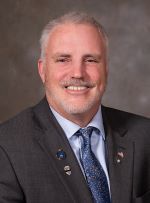
Photo of Howard Pearl
R New Hampshire Senate · District 17 On the 2026 ballot

Sen. Howard Pearl

Compare
Total votes
1,631
all sessions
Attendance
87%
242 missed
Near the chamber average
With party
93%
of cast votes
Near the chamber average
Bipartisan score
4%
crosses aisle rarely
Near the chamber average
Sponsored
594
bills & resolutions
Higher than 91% of chamber peers
Committees
3
assignments
594 bills and resolutions

Sponsored bills

Total
594
Primary
76
Co-sponsor
518
This page
594
matching current filters
Co-sponsor SB 411
Signed into law · New Hampshire Senate · Co-sponsor
relative to the procedure concerning search warrant inventories.

Maddy summarySB 411 revises the procedure for creating inventories of property seized under search warrants in New Hampshire. It requires that the inventory be made in the presence of the person from whom property was taken (if present) or, if they are not present, in the presence of at least one neutral third-party witness. For electronic searches, officers may skip the witness requirement if they personally attest to the inventory's accuracy. This change applies to all law enforcement officers executing search warrants and takes effect January 1, 2027.

Signed into law May 12, 2026 1 co-sponsor
Co-sponsor SB 669
Passed · New Hampshire Senate · Co-sponsor
relative to on-premises licenses for licensed barbershops and salons.

Maddy summarySB 669 allows licensed barbershops and salons (already registered under New Hampshire's professional licensing rules) to serve one alcoholic drink per customer during appointments. It sets specific limits: one 16-ounce drink, 6-ounce wine, or 1.5 ounces of liquor per person per visit, requires responsible beverage service training for staff, and mandates recordkeeping for both alcohol service and training. The bill imposes a $480 license fee, prohibits serving alcohol in private residences, and requires minors to be present but not served. It also mandates annual facility inspections and an annual report to the legislature detailing licenses, inspections, and violations.

Passed May 7, 2026 1 co-sponsor
Co-sponsor HB 1676
Passed · New Hampshire House · Co-sponsor
limiting consumer access to certain high-risk rodenticides.

Maddy summaryHB 1676 restricts the sale of certain rodenticides containing high-risk active ingredients (like brodifacoum, bromadiolone, and warfarin) to unlicensed individuals in New Hampshire. It requires sellers to verify that buyers are certified pesticide applicators or registered agricultural operations before any sale - whether in-person, online, or via catalog - documenting this verification for three years. The law prohibits internet or remote sales without this verification and imposes civil penalties of up to $5,000 per violation. It takes effect January 1, 2027, directly affecting consumers and retailers selling these products.

Passed May 5, 2026 1 co-sponsor
Co-sponsor SB 459
Failed · New Hampshire Senate · Co-sponsor
exempting classification of individuals based on biological sex from the definition of an unlawful discriminatory practice in certain limited circumstances.

Maddy summarySB 459 requires New Hampshire schools to designate athletic teams and locker rooms based on students' biological sex at birth, as listed on their birth certificates. It applies to grades 6-12 (excluding K-5 and intramural/club sports) and mandates separate housing for prison inmates based on biological sex as recorded on their birth certificates. The bill creates legal remedies for athletes harmed by violations, including injunctions and attorney fees, while exempting schools from liability for following the law. It takes effect January 1, 2027.

Failed Apr 23, 2026 1 co-sponsor
Co-sponsor SB 450
Failed · New Hampshire Senate · Co-sponsor
relative to a state parks pass pilot program for recovery centers and community mental health centers.

Maddy summarySB 450 establishes a 3-year pilot program (2026-2029) allowing community mental health centers registered with the Department of Health and Human Services to receive state park passes for their clients. Participating centers must submit annual anonymized reports on pass usage and program impact, with funding coming from state/federal grants and donations (costing under $10,000 annually). The program directly affects mental health centers and their clients by providing subsidized park access. It expires automatically in 2029 per the bill’s repeal clause.

Failed Apr 23, 2026 1 co-sponsor
Co-sponsor SB 510
Failed · New Hampshire Senate · Co-sponsor
ensuring state-operated, publicly accessible spaces have designated smoking areas undetectable to visitors.

Maddy summarySB 510 requires state-operated public spaces (like government buildings, parks, or facilities open to visitors) that permit smoking to provide designated smoking areas where smoke is not detectable by sight or smell in public or common areas. This applies only to publicly accessible locations, excluding state-controlled areas not open to the public. The bill mandates physical containment measures, such as enclosed or specially engineered structures, to prevent smoke from escaping into shared spaces. It does not require smoking to be allowed in these areas but sets standards for smoke containment if permitted. The fiscal note estimates construction costs of about $2,600 per location for initial setup, with additional maintenance expenses, though the bill does not allocate state funding for these costs.

Failed Apr 23, 2026 1 co-sponsor
Co-sponsor SB 580
Failed · New Hampshire Senate · Co-sponsor
relative to establishing a school cooperative purchasing program.

Maddy summarySB 580 establishes a state-administered school cooperative purchasing program for New Hampshire school districts, school administrative units (SAUs), and chartered public schools. The program enables these entities to join state-negotiated contracts for major school expenses like textbooks, transportation, food services, and heating fuel, replacing individual bidding processes with bulk-purchased rates. Participation is voluntary - school boards or trustees decide whether to join specific contracts, and local schools remain responsible for their own purchases and compliance. The bill streamlines procurement by allowing schools to use state-awarded contracts without needing separate competitive bids, while the state board of education oversees the program.

Failed Apr 23, 2026 1 co-sponsor
Co-sponsor SB 447
Failed · New Hampshire Senate · Co-sponsor
enabling electric utilities to own, operate, and offer advanced nuclear resources, and relative to purchased power agreements for electric distribution utilities and limitations on community customer generators.

Maddy summarySB 447 allows New Hampshire electric utilities to own, operate, and offer advanced nuclear power as part of their energy mix, alongside renewable sources. It increases the annual capacity cap for low-income community solar projects from 6 MW to 18 MW and expands eligibility for group net metering to include public housing authorities. The bill also updates rules for customer generators, permitting members to join multiple group hosts under load limits, and clarifies processes for utilities to issue requests for proposals (RFPs) on long-term energy agreements. These changes aim to diversify energy sources, stabilize costs, and support community solar access while maintaining regulatory coordination with New England states.

Failed Apr 23, 2026 1 co-sponsor
Co-sponsor SB 511
Failed · New Hampshire Senate · Co-sponsor
relative to state park fee discounts for state residents.

Maddy summarySB 511 requires New Hampshire state parks to charge residents no more than 50% of the entry fee charged to non-residents, effective April 2027. It allows separate fee schedules for specific park services (like camping, boat rentals, or parking), where residents pay no more than 90% of non-resident rates for those services. The bill also permits discounted or waived fees for veterans and school/student groups. Residency verification will use state IDs, utility bills, or vehicle registrations. This policy directly affects all park visitors, with potential revenue impacts for the State Park Fund estimated between a $1.5 million decrease and $2 million increase annually.

Failed Apr 23, 2026 1 co-sponsor
Co-sponsor SB 559
Failed · New Hampshire Senate · Co-sponsor
reducing the minimum allowable speed limit on locally controlled roads.

Maddy summarySB 559 lowers the minimum speed limit on locally controlled roads from 25 mph to 20 mph in certain areas, including outside urban districts and within business or urban residential zones. Local authorities must base any speed limit reduction on engineering or traffic studies before implementing it. The bill does not require new funding or change existing enforcement, as it only modifies the minimum limit threshold in state law. This affects municipalities and town officials responsible for setting speed limits on local roads.

Failed Apr 23, 2026 1 co-sponsor
Showing 101 to 110 of 594 bills
Previous 1 … 10 11 12 … 60 Next