Home / States / New Hampshire
2026 Regular Session · Adjourned

New Hampshire General Court

Follow 1,393 active bills, 417 legislators, and every floor vote of 2026 Regular Session.

Adjourned
Ended Jun 30, 2026
Bills filed
1,393
this session
Bills passed
702
50% pass rate
Legislators
417
24 Senate · 393 House
Committees
40
active bodies

Your address is never stored.

Loading map...

2026 general election in New Hampshire

Races & candidates

See who is on the ballot this cycle: incumbents, challengers, and the races shaping New Hampshire's next legislature.

Want to keep track of what matters to you?

Follow bills and legislators: we'll keep you updated as things change.

Sign in

Recent legislative activity

passed · New Hampshire · Senate Aug 27, 2026

SB 570: relative to legislative ethics.

SB 570 amends New Hampshire's legislative ethics rules by clarifying key definitions related to conflicts of interest for legislators. It defines "public at large" to include groups like professions or property owners affected by laws, and creates a new "direct benefit" standard that excludes financial impacts from normal marketplace participation. The bill also revises recusal rules to clarify that registered lobbyists do not automatically "exercise substantial influence" over organizations. These changes directly affect legislators and their household members when voting on bills that could impact their personal finances. The amendments aim to make conflict-of-interest determinations more precise without altering the legislative ethics committee's structure.
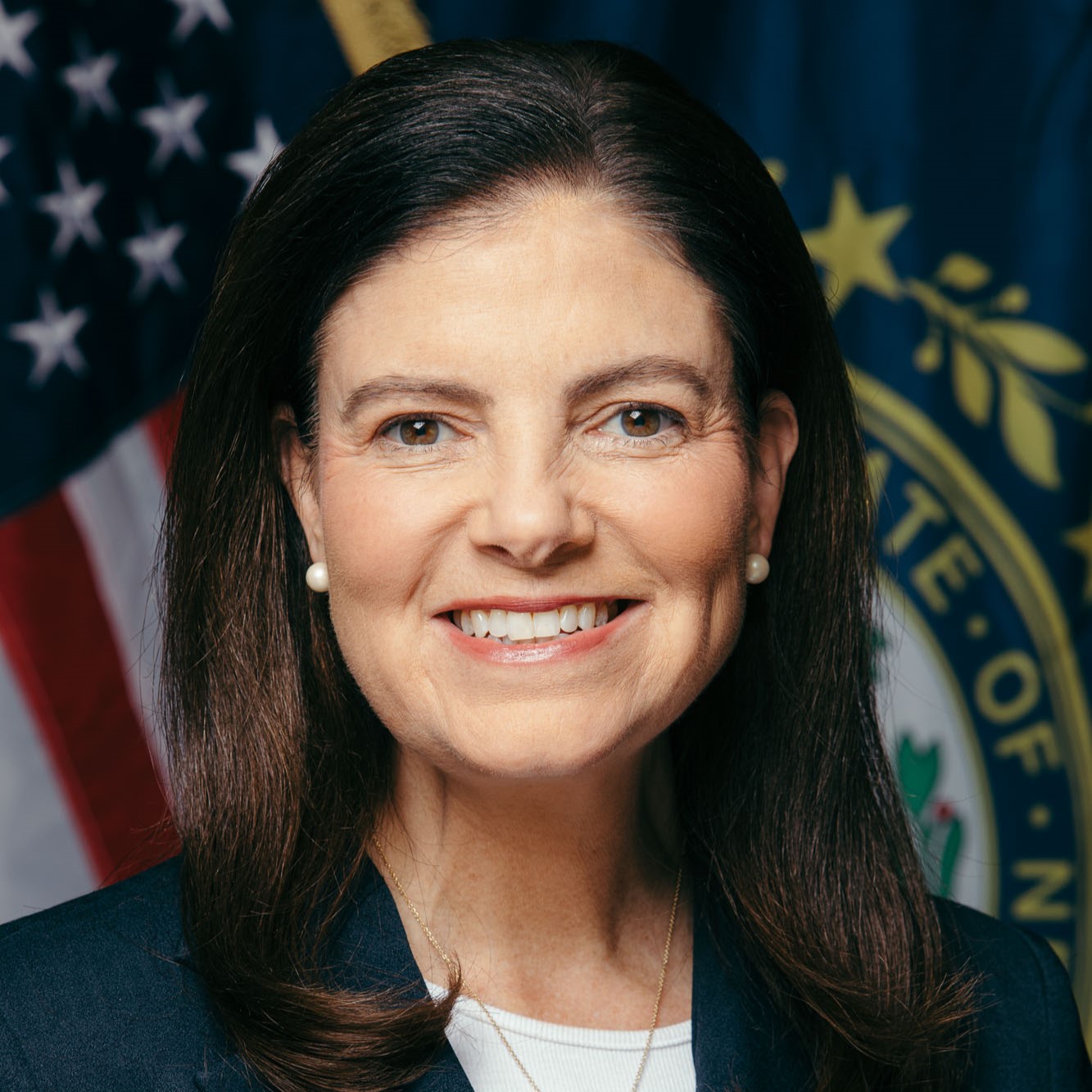
Sharon Carson (R) · 1 co-sponsor
in committee · New Hampshire · House Aug 27, 2026

HB 1648: providing property tax exemptions for qualifying residences.

HB 1648 creates a property tax exemption for owner-occupied primary residences in New Hampshire, directly affecting homeowners who live in their homes year-round. It allows eligible properties to deduct up to $300,000 from their taxable assessed value (capped at the property’s actual value), reducing annual property taxes. To qualify, applicants must own and occupy the home as their primary residence for over six months, file an annual application by April 15 with their local assessor, and be New Hampshire residents. The exemption excludes rental properties, commercial uses, corporate-owned homes, and non-residents.
David Luneau (D) · 2 co-sponsors
in committee · New Hampshire · House Aug 27, 2026

HB 1692: relative to the legislative youth advisory council.

HB 1692 modifies New Hampshire's Legislative Youth Advisory Council by expanding its youth membership from 16 to 20 members (total council size: 24), requiring a new digital application process for youth members aged 14-22, and clarifying the council's duties. The bill directs the council to review legislation affecting youth priorities - such as education, housing, health, and civic engagement - and submit annual policy recommendations to the legislature. It establishes specific appointment rules (including geographic/socioeconomic diversity requirements) and penalties for membership violations, while adding a formal application process requiring recommendation letters from educators or officials. This bill directly affects New Hampshire youth seeking council roles and shapes how the legislature engages youth perspectives on policy.
James Thibault (R) · 3 co-sponsors
passed · New Hampshire · Senate Aug 27, 2026

SB 542: limiting the game dates available to charities at gaming facilities.

SB 542 reduces the maximum number of game dates charities can use at gaming facilities from ten to seven per year. It requires each gaming facility to contract with two charitable organizations for every game date and mandates that game operators hold exactly seven annual game dates for the host community. Charities will now be limited to seven game dates per calendar year under the revised licensing rules, with 35% of daily gross revenues distributed equally to partnering charities or the host community.
Tim Lang (R) · 7 co-sponsors
in committee · New Hampshire · House Aug 27, 2026

HB 1800: relative to statewide education property taxes.

HB 1800 increases the statewide education property tax rate to $5 per $1,000 of property valuation starting in 2027, affecting all property taxpayers. It creates tax credits for primary homeowners (20%), residents without school-age children (10%), and seniors over 65 (10%), while revising how school funding is calculated to require $10,000 per student and $4,000 per qualifying student annually (with 2% yearly increases). The bill also changes how education tax revenue is distributed to municipalities and repeals statutes related to "extraordinary need grants." These changes aim to fund school districts through revised tax collection and distribution mechanisms, effective July 1, 2027.
Terry Spilsbury (R) · 2 co-sponsors
Ask Maddy · AI policy assistant

Bills, votes, and legislation, in plain English.

Ask about any New Hampshire or federal bill. Maddy reads the full text and answers with cited sources.

Scope: NH
M Maddy
I'm Maddy, your AI guide to New Hampshire legislation. I can explain bills in plain English, look up voting records, or surface bills on topics you care about. What would you like to know?
Try one of these
i Maddy answers using official bill text and legislative records. Always verify before sharing.
Sources cited inline

Are you registered to vote in New Hampshire?

NH voter portal

Make your voice heard. Confirm your registration or sign up through New Hampshire's official voter resources.

Recently passed

Bills that made it through

signed · New Hampshire · House Jul 20, 2026

HB 1109: relative to notice requirements regarding public employee suspensions and investigations and recognizing certain positions in the department of corrections as group II positions.

HB 1109 requires state agencies to provide suspended state employees with written notice of the suspension reasons within 7 days and periodic updates on investigation status every 90 days until a final decision is made. It directly affects state employees suspended with pay, excluding those covered by collective bargaining agreements. The bill establishes clear timelines for communication during investigations to ensure transparency. This policy change applies to all state employee investigations handled under the Department of Administrative Services, effective 90 days after enactment.
Jack Flanagan (R)
signed · New Hampshire · House Jul 20, 2026

HB 1300: establishing a school district local tax cap question for the state general elections of 2026 and 2028 and related limitations on central office administrative expenses in school districts.

HB 1300 redraws New Hampshire's two congressional districts for the U.S. House of Representatives by redefining their boundaries. The first district now includes Belknap, Rockingham, and Strafford counties, plus specific towns in Carroll, Hillsborough, and Merrimack counties. The second district covers Cheshire, Coos, Grafton, and Sullivan counties, along with additional towns in Carroll, Hillsborough, and Merrimack counties. The changes take effect immediately upon passage and do not impact current officeholders elected before the bill's enactment.
Aidan Ankarberg (I)
signed · New Hampshire · House Jul 20, 2026

HB 1194: relative to credits for assessments paid by insurers and relative to the application of criminal gambling statutes.

HB 1194 allows New Hampshire insurance companies to use credits for assessments paid to the Life and Health Insurance Guaranty Association (NHLHIGA) to reduce their state tax liability. Specifically, insurers can offset up to 20% of eligible assessments annually for five years, but this rate drops to 10% if total credits exceed $10 million in a single year. The bill prohibits carrying forward unused credits and requires insurers to repay any refunds received from the NHLHIGA to the state. This policy directly affects insurers participating in the NHLHIGA, which protects policyholders if an insurer becomes insolvent. The change limits potential state revenue loss during years with large NHLHIGA assessments.
John Janigian (R)
signed · New Hampshire · House Jul 20, 2026

HB 1042: relative to the cap on outstanding obligations for which the housing finance authority is allowed.

HB 1042 raises the state's unified contingent credit limit for New Hampshire's Business Finance Authority from $200 million to $450 million, effective June 1, 2026. This change directly affects the authority's ability to provide state-backed loans and guarantees for eligible business projects and programs. The bill modifies RSA 162-A:22 to increase the aggregate limit on these state guarantees, allowing the authority to support more financing for businesses without requiring new legislative approval for each project.
Joe Sweeney (R) · 1 co-sponsor
signed · New Hampshire · House Jul 20, 2026

HB 1279: relative to the use of physical force in defense of a person.

HB 1279 modifies New Hampshire's self-defense law to clarify when physical force can be used against someone committing a felony. It specifies that force is justified if a person reasonably believes another is "likely to use any unlawful force in the commission of a felony" against them or a third person within their vehicle, dwelling, or immediate property (curtilage). The bill expands the legal standard by focusing on the likelihood of a felony occurring, not just an immediate threat. This change directly affects individuals defending themselves or others in their home, car, or nearby property during potential felony crimes. The law takes effect January 1, 2027.
Yury Polozov (R) · 8 co-sponsors

State Leadership

Legislative Leadership

Legislative session

2026 Regular Session

Adjourned
Convened
Jan 8, 2026
Thursday
Duration
173days
session ended
Adjourns
Jun 30, 2026
Tuesday
Chamber control
Republican Trifecta Republican Trifecta Governor R Senate R16–8 House R214–179 One party controls the executive and both chambers. The majority's bills typically face no veto risk.
Senate R maj.16 – 8
0 13 for majority 24
House R maj.214 – 179
0 197 for majority 393
Bills this session
Passage rate
702 of 1,393 introduced bills have passed at least one chamber.
50.4%

Leaders by Topic

Bipartisan Leaders

Cross-party voting Party cohesion →

State Legislators

Contested battles

  1. HB 1542 Party-line 101-102 establishing a committee to study New Hampshire's electric renewable portfolio standard and the renewable energy fund. D 0-102 · R 100-0 · Other 1-0 passed both
  2. HB 1299 Party-line 93-95 permitting classification of individuals based on biological sex under certain limited circumstances and establishing that certain biological sex distinctions do not qualify as discrimination. D 0-95 · R 92-0 · Other 1-0 passed
  3. CACR 4 Party-line 97-94 relating to voting eligibility. Providing that only legal resident citizens who are at least 18 years of age or older who reside in the place they claim as a domicile shall be eligible voters. D 0-94 · R 96-0 · Other 1-0 passed
  4. CACR 10 Party-line 96-96 the adoption of tax laws. D 1-96 · R 94-0 · Other 1-0 passed
  5. HB 1824 Party-line 93-98 relative to school district financial distress. D 93-0 · R 0-97 · Other 0-1 in committee
  1. SB 33 Party-line 95-93 relative to the regulation of public school materials. D 0-92 · R 94-1 · Other 1-0 passed both
  2. SB 567 Party-line 84-82 relative to the composition of the board of dental examiners and relative to the practice of dentistry and when radiographic examinations are required. D 1-82 · R 82-0 · Other 1-0 passed both
  3. SB 34 Party-line 97-94 relative to parental consent for student participation in Medicaid to schools program. D 1-94 · R 95-0 · Other 1-0 passed both
  4. SB 653 Party-line 85-90 enabling counties to change the dates of their biennial budgets and relative to the adopting of a municipal budget committee and electing members thereof. D 0-89 · R 84-1 · Other 1-0 passed both
  5. SB 643 Party-line 85-91 requiring municipalities, towns, and cities to submit documentation to the department of revenue administration proving they are in compliance with local budget and tax caps and requiring municipalities to hold a public hearing and conduct a roll call vote when seeking to override a tax or spending cap. D 0-89 · R 84-2 · Other 1-0 passed both

Most likely to pass