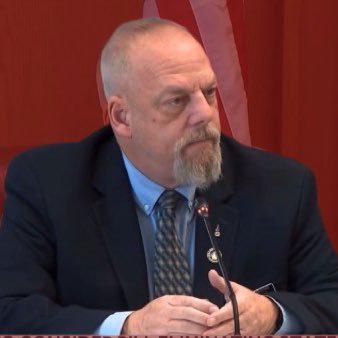
HB 1515 repeals the child care grant program that provided recruitment and retention grants to New Hampshire child care employers through the Department of Health and Human Services. The bill removes the $7.5 million annual appropriation (from federal TANF funds) that was intended to support these grants, though the program was already unworkable due to federal restrictions. This change directly affects child care providers who previously could have accessed these grants. The repeal has no fiscal impact as the program could not operate under federal guidelines, and no new funding or changes to services are enacted.
SB 654 creates two new tax credits for businesses in New Hampshire. First, it offers a 20% credit on costs for on-site or nearby childcare services, up to $100,000 per year, for businesses housing childcare in their main building, shared facility, or adjacent buildings in the same park. Second, it provides a 20% credit on health insurance costs up to $10,000 per year per employee for workers with dependents whose work hours fall entirely between 9 a.m. and 3 p.m. on weekdays. Businesses must maintain childcare facilities for three years to keep the credit, with repayment required if they close the facility early, and credits can roll over for up to four years. The bill takes effect July 1, 2027.
SB 655 requires employee leasing companies and their client companies to ensure leased workers have workers' compensation coverage. It mandates that either the leasing company or client company must purchase and maintain this insurance, with options for one policy (voluntary market) or two policies (one voluntary, one residual market). The bill clarifies that both parties share the same legal protections under workers' compensation law and neither is vicariously liable for the other's workplace actions. This directly affects employee leasing businesses and their client employers in New Hampshire. The law takes effect 60 days after passage.
SB 569 requires hearing officers in New Hampshire's Department of Labor to be licensed attorneys with relevant adjudicative experience. This applies specifically to officers handling workers' compensation cases. The bill mandates that hearing officers must be in good standing with the bar, have experience conducting administrative hearings, and complete 15 hours of annual continuing education plus 15 hours of training with the attorney general's office. It also requires the commissioner to establish a code of ethics for these officers.
HB 1179 sets minimum staffing requirements for nursing homes in New Hampshire, directly affecting licensed facilities and their residents. The bill mandates 24-hour registered nurse (RN) coverage, a minimum of 0.75 RN hours per resident daily, 0.55 licensed practical nurse (LPN) hours per resident daily, and a total of 4.1 nursing hours per resident daily. These standards apply to all nursing homes licensed under RSA 151:9 and take effect 60 days after enactment. The law establishes concrete, measurable staffing targets without specifying enforcement mechanisms or penalties.
HB 1433 creates a tax credit for New Hampshire businesses that create or expand child care programs. Businesses can claim a credit equal to 50% of qualifying expenses for building new facilities or expanding existing ones by at least 12 child care seats not available before January 1, 2027. The credit applies against business profits or enterprise taxes and can be carried forward for up to four years if not fully used in a given year. To qualify, businesses must create or expand licensed child care seats (either directly or through third parties) and submit an application to the Department of Revenue Administration.
SB 416 replaces New Hampshire's state rule on tip pooling with the federal Fair Labor Standards Act (FLSA) rules governing how tipped employees can share tips. It directly affects workers in service industries like restaurants and bars who rely on tips, such as servers and bartenders. The bill removes state restrictions and aligns the state with federal regulations, including specific FLSA provisions (29 C.F.R. §§ 531.42, 531.50, 531.54) that allow tip pooling among eligible employees. The law takes effect 60 days after enactment.
HB 1661 expands New Hampshire's Housing Finance Authority's "Community Heroes" program to provide homeownership assistance to essential workers. It appropriates $750,000 for fiscal year 2027 and $1.5 million annually thereafter from the General Fund to fund the program, with no more than 10% allowed for administrative costs. The program specifically targets eligible workers in healthcare, childcare, elder care, law enforcement, firefighting, education, and active military service, allowing them to use funds for down payments, closing costs, or interest rate reductions. The bill requires the Housing Finance Authority to establish rules defining eligibility and takes effect July 1, 2028, for the annual appropriation.
HB 1788 prohibits state agencies and public schools from entering contracts with diversity, equity, and inclusion (DEI) requirements, such as mandating DEI programs, training, or reporting. It defines DEI as initiatives classifying individuals by certain characteristics to achieve demographic outcomes (excluding health services, ADA compliance, and student organizations), making any contract violating this automatically void. Taxpayers could then sue public entities for entering such contracts, seeking court orders to cancel the contracts and recover legal fees. The bill applies to all state contracts and public school agreements, directly affecting government entities and their contractors.
SB 88 prohibits New Hampshire state government entities from requiring or banning contractors from having agreements with labor organizations in public construction contracts or grants. It directly affects state agencies awarding construction projects (like roads or buildings) and the contractors bidding on those projects. The bill removes language from contracts that could force or block labor organization agreements, ensuring contractors aren't discriminated against based on such agreements. Exceptions apply only to avoid immediate threats to public health or safety, and the bill does not stop voluntary labor agreements or affect federal labor law.