

Maddy summarySB 472 removes the maximum age limit (currently 65 years) for the deputy adjutant general position within New Hampshire's Department of Military Affairs and Veterans Services. This change directly affects the deputy adjutant general, who oversees state military operations and must have prior National Guard or military service. The bill amends RSA 110-B:8-b by deleting the phrase "or until the officer has reached the age of 65 years" from the tenure provisions. The change allows the appointee to serve beyond age 65, subject to reappointment and other existing requirements like minimum rank and service history. The bill takes effect 60 days after enactment.
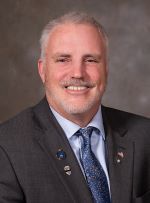
Sen. Howard Pearl
Sponsored bills
Maddy summarySB 622 expands New Hampshire's identity fraud law to explicitly protect businesses, government agencies, and other organizations (referred to as "entities") alongside individuals. It adds a clear definition of "entity" to include corporations, trusts, government bodies, and their departments, and updates the offense to cover fraud committed against these entities. The bill makes it a crime to obtain or use someone's personal information (like account numbers or passwords) without authorization to impersonate an entity or assist others in doing so. This change directly affects organizations that could face financial harm from identity fraud targeting their accounts or data. The law takes effect January 1, 2027, with no estimated state or local cost impact.
Maddy summaryHB 1157 requires anyone operating a physical facility to transfer 30 or more dogs, cats, ferrets, or 50 or more birds (or other common household pets) to obtain a license as a pet vendor. It directly affects commercial pet sellers or breeders handling large volumes of animals through physical locations. The key provision adds a new licensing requirement to state law, prohibiting unlicensed operation when combined animal transfers exceed these thresholds. The bill has minimal fiscal impact (under $10,000 annually) and takes effect 45 days after enactment.
Maddy summarySB 504 allows licensed healthcare providers to dispense up to a 30-day supply of certain cancer medications directly to patients under a doctor's supervision, requiring clinics to maintain a full-time pharmacist available for consultation. It removes the requirement for pharmacists' names on controlled drug labels and permits advanced pharmacy technicians to perform remote medication processing. The bill updates the definition of "practice of pharmacy" to include modern services like medication therapy management and collaborative care. These changes streamline access to cancer medications while maintaining safety protocols for pharmacy operations.
Maddy summarySB 567 requires one member of New Hampshire's board of dental examiners to be a general dentist, in addition to existing membership requirements. It also expands temporary licensing for out-of-state professionals from health care to all professions regulated by a licensing board or the Office of Professional Licensure and Certification. Temporary licenses would remain valid for up to 120 days or until a full license application is processed, with no renewal allowed. This bill directly affects dental board appointments and out-of-state professionals seeking temporary work in regulated fields while applying for full licensure.
Maddy summaryHB 1793 prohibits New Hampshire public colleges and universities from restricting the possession or carrying of firearms and non-lethal weapons (like pepper spray or stun guns) on campus. It directly affects public institutions of higher education and any student, faculty, staff, or visitor who lawfully carries such items under state law. The bill requires schools to allow constitutional carry without requiring permits or licenses and permits individuals harmed by school policies to sue for at least $10,000 in damages. This law takes effect January 1, 2027, aligning with New Hampshire’s existing constitutional carry framework.
Maddy summarySB 400 requires New Hampshire's Therapeutic Cannabis Medical Oversight Board to review medical and scientific evidence about qualifying conditions for medical cannabis every two years. The board must also submit an annual report by January 1st, including specific citations to the evidence reviewed. This directly affects the oversight board, mandating structured updates to their review process and reporting transparency. The bill focuses on ensuring the board's decisions are consistently supported by current medical research.
Maddy summarySB 409 amends penalties for disobeying law enforcement officers during traffic stops or pursuits. It increases penalties for specific violations: disobeying orders to stop (subparagraph I(c)) now carries a class B felony if a motor vehicle accident causes serious injury, and a class A felony if the accident causes death or injury to another person. The bill directly affects drivers who refuse to comply with officers during traffic enforcement, particularly in situations involving collisions. These changes enhance criminal penalties for dangerous disobedience during pursuits, without adding new financial costs to state or local governments.
Maddy summarySB 425 lowers the retirement age for the adjutant general and deputy adjutant general from 65 to 64. It changes the adjutant general's term to a maximum of 5 years or until age 64 (previously age cap alone) and sets the deputy adjutant general's term at 4 years or until age 64. The bill also creates a new appointment process for the commandant of the New Hampshire veterans' home, requiring nomination by the home's board of managers and appointment by the governor and council for a 4-year term. These changes directly affect leadership roles in the New Hampshire National Guard and the veterans' home.
Maddy summarySB 503 amends New Hampshire's building code to allow New Hampshire-grown spruce-pine-fir-south (SPFS) lumber - currently graded as a separate, slightly weaker classification - to be used interchangeably with Canadian-sourced spruce-pine-fir (SPF) lumber in construction. This directly affects local sawmills, loggers, and builders who previously faced higher costs and logistical hurdles when using New Hampshire wood, as it was often exported, regraded as SPF in Canada, and reimported. The key provision requires building codes to accept SPFS lumber (harvested and milled in New Hampshire) wherever SPF is specified, using published SPFS design values for structural calculations. This removes an artificial barrier based on political borders, recognizing that New Hampshire's climate and wood quality are comparable to Canadian SPF. The bill does not change grading standards but ensures local wood meets code requirements without requiring re-importation.