

Maddy summaryThis House Resolution (HR 34) urges the federal government to consider the economic impacts of tariffs on trade with Canada and Mexico. It directly affects Michigan businesses, particularly in agriculture (where Canada is the top export market), manufacturing, and auto production, which rely on stable North American supply chains. The resolution reaffirms support for the U.S.-Mexico-Canada Agreement (USMCA) and highlights Michigan’s $3 billion annual agricultural exports and $55 billion in annual trade with Ontario. As a non-binding resolution, it does not create new laws but formally advocates for fair trade negotiations to protect Michigan’s economy.
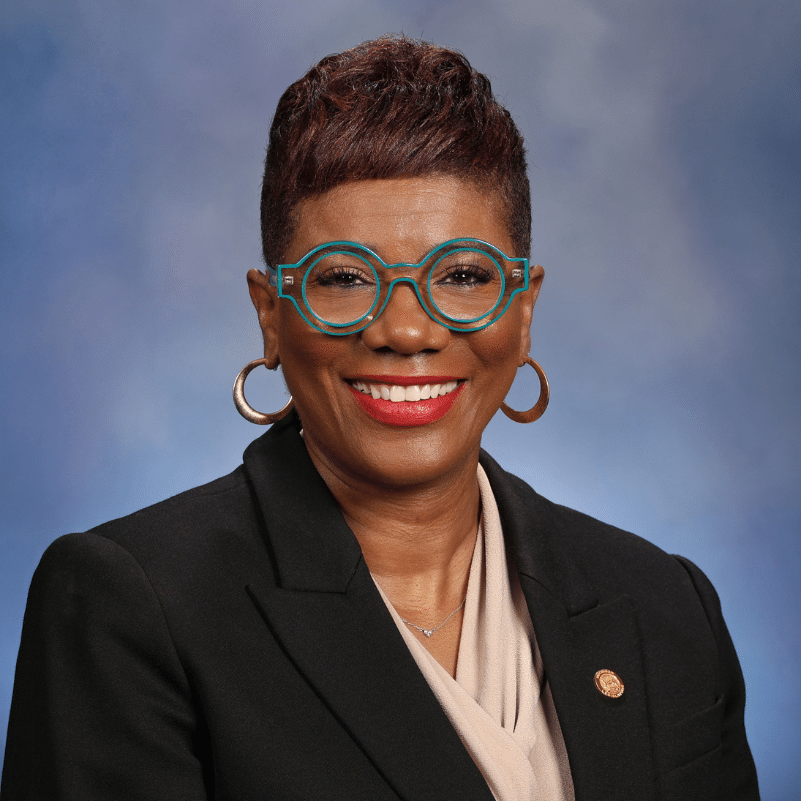
Rep. Cynthia Neeley
Sponsored bills
Maddy summaryHB 4121 prohibits local governments (counties, cities, townships, villages) from adopting property tax caps that automatically reduce tax rates when revenue hits a fixed dollar limit. It voids any existing local tax cap with this automatic reduction feature and requires local units to disregard such caps. The bill specifically targets caps imposed by local charter, ordinance, or policy - not state-mandated limits - making them unenforceable. This change ensures local tax revenue limits cannot trigger automatic rate cuts based solely on annual dollar amounts.
Maddy summaryHB 4093 updates Michigan's Uniform Condemnation Procedures Act to correct an outdated reference in jury selection rules for eminent domain cases. It amends Section 12 (MCL 213.62) to properly reference current jury selection procedures under the Revised Judicature Act, replacing obsolete language. The bill directly affects property owners and government entities involved in condemnation proceedings where jury trials for "just compensation" are requested. This procedural update only takes effect if companion bill HB 4091 is enacted, ensuring alignment with related legislative changes.
Maddy summaryHB 4094 modifies Michigan's jury eligibility rules to remove disqualifications for most criminal records, allowing prospective jurors with past convictions to serve unless the crime is similar to the current case. It also prohibits excluding jurors based on protected statuses (such as race, gender, or religion under Michigan's Elliot-Larsen Civil Rights Act) or using peremptory challenges for invalid reasons like a juror living in a high-crime neighborhood. The bill requires courts to deny peremptory challenges if protected status appears to be a factor, with specific examples of invalid justifications provided. These changes aim to address historical discrimination in jury selection while keeping the process accessible for all eligible residents.
Maddy summaryHB 4091 replaces local jury boards with a centralized state system for jury selection across Michigan courts. It directs the State Court Administrative Office (under the Supreme Court) to create a statewide jury pool using driver's license and state ID data provided by the Secretary of State, eliminating county-level processes. The bill mandates electronic transmission of jury lists to courts, establishes a standard juror questionnaire, and requires annual updates to the jury pool list. This change directly affects all Michigan courts (circuit, probate, district, and municipal) and potential jurors statewide by standardizing jury selection procedures.
Maddy summaryHB 4092 is a technical amendment to Michigan's Probate Code (MCL 712A.17) that corrects outdated references following a prior repeal. It updates procedural language about court hearings, including requirements for adjournments (e.g., 14-day written notice for continuances) and jury demands in non-criminal probate cases. The bill does not create new policies but ensures the code accurately reflects current law. It depends on the passage of companion bill HB 4091 to take effect, as noted in its enacting section. This is a procedural correction affecting court procedures in probate matters, not a substantive policy change.
Maddy summaryThis resolution declares February 11, 2025, as "White Shirt Day" in Michigan to commemorate the 88th anniversary of the United Auto Workers' (UAW) first contract with General Motors. It honors the UAW's history, including the 1937 Flint Sit-Down Strike, and recognizes the tradition of UAW members wearing white shirts to symbolize equality and respect for blue-collar workers. The resolution is purely ceremonial, with no new policies or direct impacts on legislation or affected groups. It was introduced and adopted by the Michigan House of Representatives on February 11, 2025.
Maddy summaryThis is a symbolic resolution, not a policy bill. It declares February 2025 as "American Heart Month" and February 5, 2025, as "National Wear Red Day" in Michigan. The resolution aims to raise public awareness about heart disease, particularly its impact on women, through educational efforts and community recognition. It does not create new laws, allocate funding, or impose requirements on any group.
Maddy summaryHB 4036 removes an expiration date (sunset provision) from Michigan's distance education reciprocal exchange program, which allows colleges and universities to share courses across state lines. The bill repeals Section 7 of the 2015 Higher Education Authorization and Distance Education Reciprocal Exchange Act (MCL 390.1697), making the program permanent. This directly affects Michigan colleges and out-of-state institutions participating in the reciprocal course-sharing agreement, ensuring the program continues without needing annual renewal.
Maddy summaryThis resolution declares January 2025 as National Stalking Awareness Month in Michigan. It does not create new laws or change existing policies; instead, it symbolically recognizes stalking as a serious crime and acknowledges efforts by victim services and law enforcement. The resolution highlights Michigan's legal definition of stalking and relevant statistics (like 18,000 stalking reports in 2022) to underscore the importance of public awareness. It was introduced and adopted by the Michigan House of Representatives on January 28, 2025.