

Maddy summaryThis is a symbolic resolution designating November 2025 as "Michigan Assisted Living Month." It recognizes assisted living communities for providing care to seniors, supporting families, and contributing to Michigan's economy (with 4,300+ facilities and a $2.5 billion industry). The resolution has no policy changes, funding, or direct impact on residents or providers - it serves only as a formal acknowledgment. Introduced and adopted by the House on November 6, 2025.
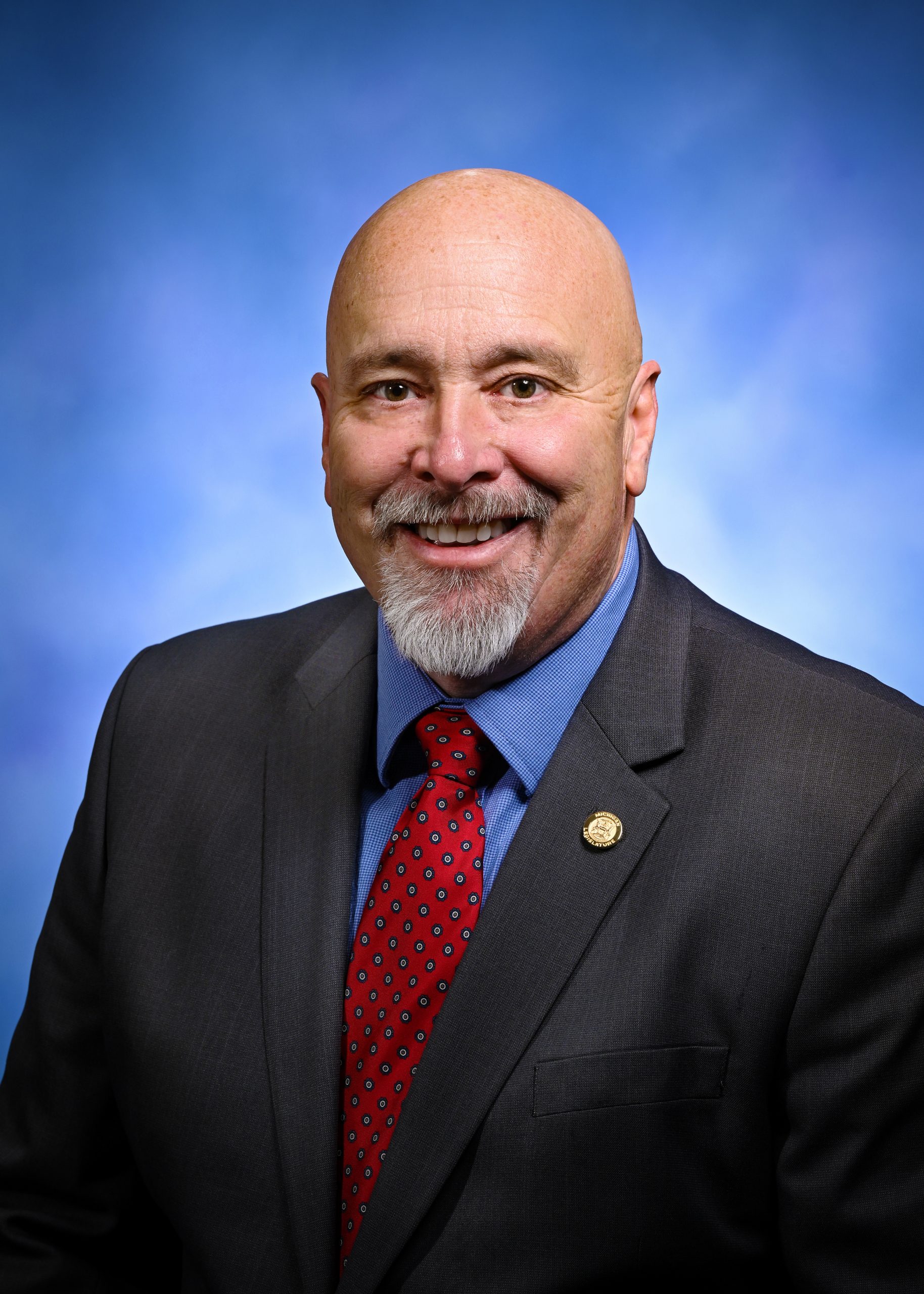
Rep. Steve Frisbie
Sponsored bills
Maddy summaryHB 4399 modifies Michigan law to expand the scope of practice for registered nurses certified as nurse practitioners. Specifically, it changes rules allowing these nurses to perform certain medical tasks - like diagnosing conditions and prescribing medications - without requiring direct physician oversight. The bill directly affects certified nurse practitioners in Michigan who currently face restrictions under existing law. It amends sections of the 1978 Public Health Code related to health occupations to clarify and broaden their authorized duties. The changes aim to adjust legal boundaries for these nurses' clinical responsibilities.
Maddy summaryHB 5111 allows for electronic transfer of ownership titles for off-road vehicles (ORVs) and watercraft between private owners, replacing the current paper-based process. It requires the Michigan Department of State to establish an electronic system for these transfers, excluding dealers, and sets rules for its operation and data protection. This change directly affects private ORV and watercraft owners who sell or transfer these vehicles, streamlining title transfers without needing physical certificates. The bill updates existing title transfer rules under Michigan's Natural Resources and Environmental Protection Act to modernize the process.
Maddy summaryHR 195 is a resolution opposing Michigan's proposed Health Education Standards Framework. It urges the Michigan Department of Education to redraft the standards or the Michigan State Board of Education to reject them, specifically requesting the exclusion of content related to gender identity, gender expression, and sexual orientation from health education standards. The resolution cites parental rights and existing law requiring local control and opt-out provisions for sex education as justification. It directly targets state education officials, not students or schools, and serves as a non-binding request for policy revision.
Maddy summaryHB 5160 modifies Michigan's rules for personalized vehicle registration plates. It updates fee structures for obtaining (a $8 initial fee plus $2/month for additional months) and renewing (a $15 fee) personalized plates, and clarifies that duplicate plates cost an extra $5. The bill affects Michigan vehicle owners who request personalized plates for eligible vehicles like passenger cars, trucks, or motorcycles. It also specifies how fees fund transportation programs and sets rules for plate expiration and duplicate requests.
Maddy summaryHB 4642 amends Michigan's campaign finance law to require the secretary of state to refer violations involving themselves, their immediate family, or a connected campaign to the attorney general for resolution. This change ensures that cases where the secretary of state is a party are handled by an independent office, avoiding potential conflicts of interest. The bill does not alter the secretary of state's authority over other campaign finance matters. It specifically clarifies the process for referring such cases to the attorney general under the existing law.
Maddy summaryHB 4432 creates a $2,500 refundable state income tax credit for qualified volunteer emergency medical services (EMS) personnel in Michigan, effective for tax years beginning January 1, 2025. To qualify, volunteers must serve at least 10 hours monthly with a life support agency (like EMS organizations), receive no hourly wage or salary, and only be reimbursed for reasonable expenses or receive customary benefits. The credit requires a signed verification statement from the agency confirming the volunteer’s service hours, compliance with training standards, and non-salary compensation. This directly affects unpaid EMS volunteers who meet these criteria, reducing their state tax liability or providing a refund if the credit exceeds their tax bill.
Maddy summaryHB 4691 amends Michigan's Vehicle Code to increase penalties for drivers who flee or elude police officers. It creates four tiers of felony sentencing based on the severity of the violation: fourth-degree (up to 2 years for basic evasion), third-degree (1-5 years if collision occurs or in low-speed zones), second-degree (2-10 years for serious injury or prior convictions), and first-degree (5-15 years if death results). The bill specifically defines "serious injury" to include loss of limbs, brain damage, or coma. This directly affects drivers who fail to stop for police in uniform with marked vehicles, with penalties escalating based on outcomes like collisions, injuries, or prior offenses.
Maddy summaryHB 4039 requires Michigan state agencies to eliminate at least two existing regulations for every new rule they propose. This directly affects all state agencies that create or change regulations, mandating they submit a list of rescinded rules alongside new rule requests. The bill establishes a process where the Michigan Office of Regulatory Reinvention must approve these requests before agencies can proceed, ensuring new rules don’t expand regulation without removing older ones. It aims to reduce regulatory burden by making rulemaking more streamlined and transparent.
Maddy summaryHB 4690 mandates fixed prison sentences for certain violent or gun-related crimes by amending Michigan's sentencing law (MCL 750.479a). It directly affects defendants convicted of these specific offenses, as judges must now impose predetermined terms instead of exercising discretion. The key provision requires minimum sentence lengths for these cases, removing judicial flexibility in sentencing. This policy change applies to new convictions under the amended law.