

Maddy summaryHB 4107 requires Michigan schools to include specific health education content for students in grades 7-12. It mandates instruction in cardiopulmonary resuscitation (CPR), automated external defibrillator (AED) use, and first aid response kits (including tourniquets and bleeding control supplies) as part of the health curriculum. Schools may use trained personnel like Red Cross instructors, EMTs, or properly trained teachers to deliver this instruction, with hands-on practice encouraged but not required for all students. The bill exempts 100% online schools from requiring hands-on CPR practice.
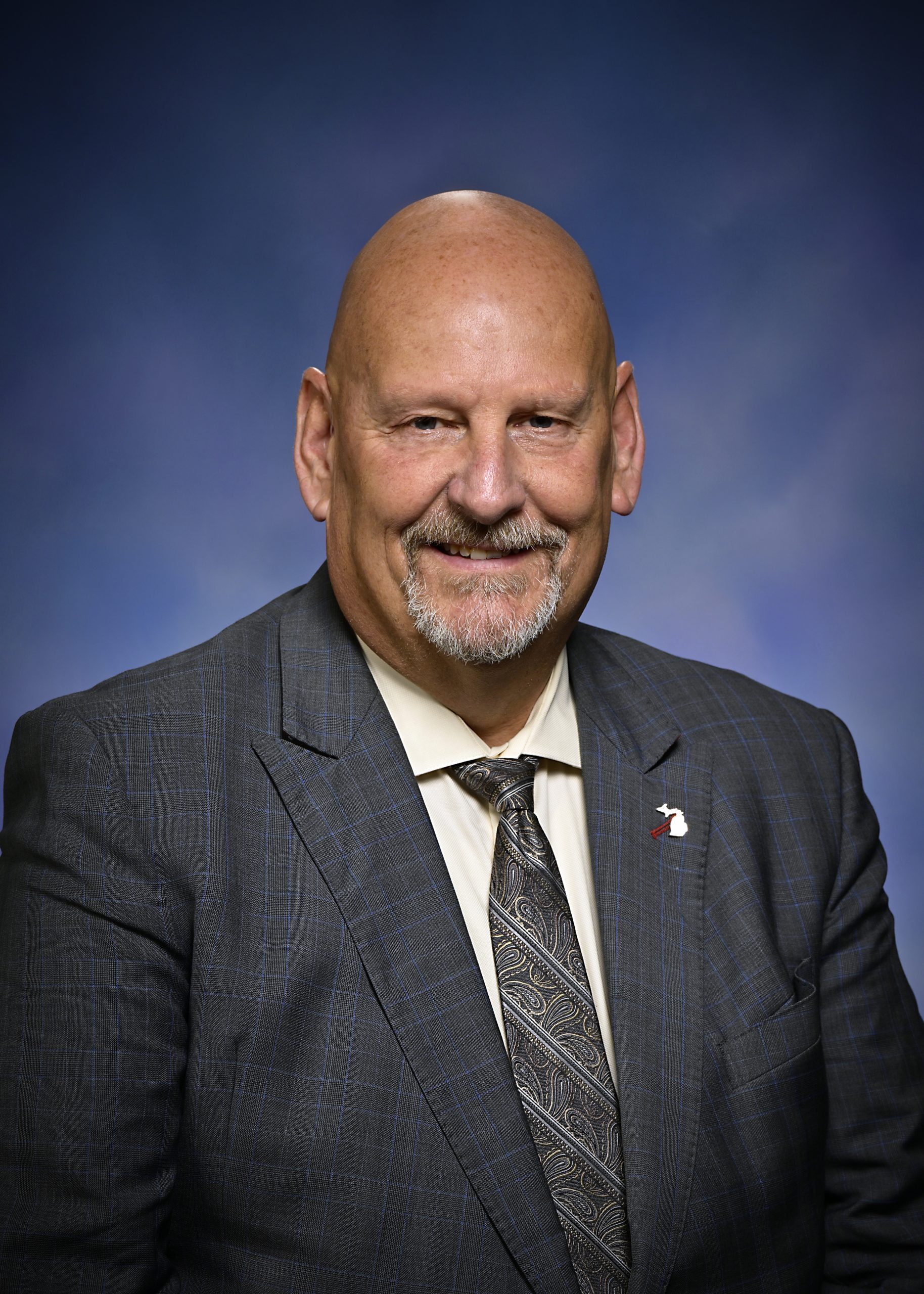
Rep. Curt VanderWall
Sponsored bills
Maddy summaryHB 4160 prevents Michigan state agencies from creating rules stricter than federal standards, unless they prove a "clear and convincing need" for stricter rules. It directly affects all state agencies that create regulations, requiring them to justify any rule exceeding federal benchmarks. The bill mandates that agencies must either cite specific state law authorizing stricter rules or provide detailed justification for exceptional circumstances. This applies whether federal rules exist or not, though it excludes special education rules from this restriction. The law aims to align state regulations with federal standards unless compelling state-specific reasons exist.
Maddy summaryHB 4998 amends Michigan's Strategic Fund Act to require detailed annual reporting on state economic development funding. It mandates that the fund publicly disclose specific data for all recipients - including jobs created (including salaries), project types, financial assistance amounts, and repayment details - via its website and to lawmakers. The bill also requires immediate public reporting of bankruptcies involving recipients of large incentives ($500,000+), along with expanded reporting on tourism promotions, business development campaigns, and community revitalization projects. These provisions aim to increase transparency and accountability for how state funds are used to support nonprofits and businesses.
Maddy summaryHB 4999 creates the Michigan Nonprofit Development Fund (ND Fund) within the state treasury to support nonprofit organizations. The fund receives state appropriations and other assets, which the treasurer invests, with earnings credited back to the fund. Money in the fund can be used for grants to statewide nonprofit organizations, interest-free micro bridge loans, or administrative costs (up to 10% of annual funding), with excess funds over $5 million annually transferred to the general fund. This bill directly affects qualifying nonprofits receiving grants or loans, providing a dedicated funding mechanism for their services.
Maddy summaryThis resolution symbolically declares September 22-26, 2025, as Farm Safety and Health Week in Michigan. It recognizes the state's agricultural workforce (including approximately 44,000 farms) and aligns with the national observance focused on safety practices like equipment handling, rural roadway safety, and youth protection on farms. As a ceremonial resolution, it does not create new laws or directly affect any individuals or entities. The declaration serves to honor agricultural workers and promote safety awareness during peak farming season.
Maddy summaryHB 4664 prohibits blocking state highways during assemblies of individuals, amending Michigan's existing traffic law (MCL 257.676b). It directly affects protesters or assembly participants who obstruct highway traffic, making such obstruction a misdemeanor offense. The key provision adds a specific penalty for blocking highways while engaging in group assemblies, moving beyond general traffic violations. This law clarifies that highway obstruction during protests is a criminal act, not merely a traffic infraction.
Maddy summaryHB 4883 amends Michigan’s regulations for hearing aid dealers by modifying sections 303a and 411 of the Occupational Code (MCL 339.303a and 339.411) and removing outdated provisions related to hearing aid dealer licensing (repealing MCL 339.1301-339.1309 and MCL 338.2231). The bill directly affects licensed hearing aid dealers in Michigan by updating their regulatory requirements and eliminating obsolete rules. Key changes include streamlining licensing standards and removing redundant administrative sections from the code. This is a procedural regulatory update with no new policy requirements, focusing solely on modernizing existing law.
Maddy summaryHB 4362 requires law enforcement to share missing senior or vulnerable adult reports with local police, broadcasters, and newspapers, which must then broadcast a public alert with the person's description and relevant details. The state will establish a system using existing wireless emergency networks to send text alerts directly to mobile devices in the affected area. This alert system can only activate after law enforcement completes a report and receives approval from the state police. The bill creates a standardized process to rapidly disseminate information about missing individuals, aiming to improve public awareness and search efficiency.
Maddy summaryHB 4017 modifies workplace safety reporting rules by reducing the maximum penalty for failing to report a death if the death occurs on a family farm. It specifically lowers the penalty amount for employers who don't report fatalities involving certain individuals (like family members) working on their own farm. The bill affects employers in Michigan who operate family farms and are subject to workplace safety laws under MCL 408.1035. This change directly alters the penalty structure for reporting requirements related to farm-related workplace deaths.
Maddy summaryHB 4832 amends Michigan's Public Health Code to establish a new licensure process for anesthesiologist assistants (AAs), directly affecting AAs seeking to practice in the state and the Michigan Board of Medicine. The bill adds new sections defining AA qualifications, supervision requirements, and scope of practice, while updating existing licensing statutes to include AAs as a distinct licensed profession. Key provisions require AAs to complete state-approved education programs and work under physician supervision, with specific standards for training and clinical responsibilities. This bill is procedural in nature, creating the regulatory framework for AA licensure rather than changing patient care standards. It was introduced on August 27, 2025, and referred to the Health Policy Committee.