Maddy summaryThis bill designates euchre as the official game of the state of Michigan. It creates a new act to formally establish this title in state law. The legislation does not impose any regulations or restrictions on how the game is played, but rather serves as a symbolic designation for the state.

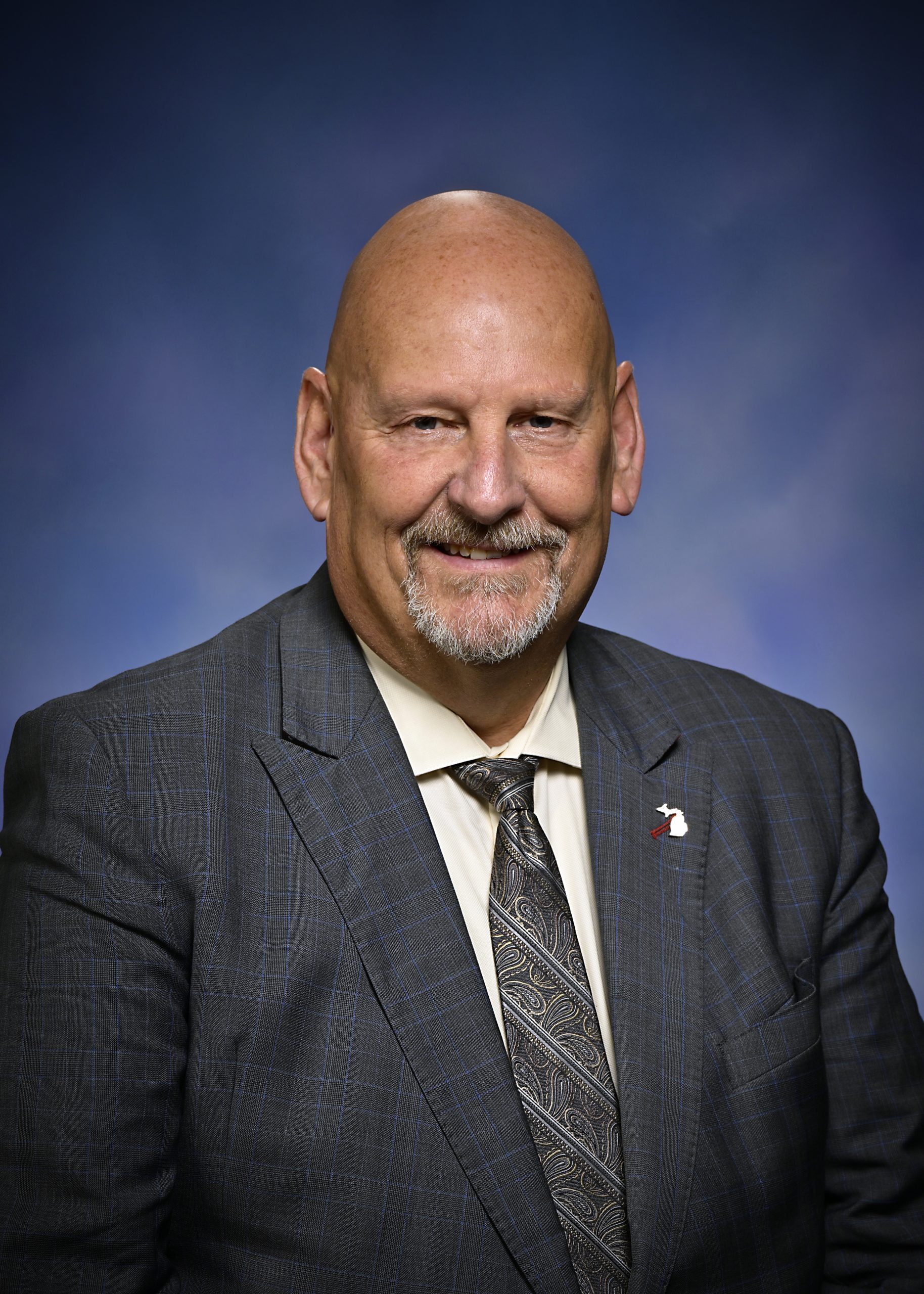
Rep. Curt VanderWall
Sponsored bills
Maddy summaryMichigan House Bill 6281 amends the Motor Fuels Quality Act to update regulations for gasoline and diesel fuel sold in the state. The bill directs the director of the Department of Environment, Great Lakes, and Energy to establish specific standards for fuel purity, additives, and octane ratings, while mandating a vapor pressure limit of 9.0 psi for most retail outlets during the summer months from June 1 to September 15. It also clarifies that certain counties with stricter air quality requirements must continue using lower vapor pressure fuels of 7.0 or 7.8 psi unless federal and state agencies determine those standards are no longer necessary. Additionally, the legislation permits the year-round sale of E15 fuel, which contains 10.5% to 15% ethanol, provided that dispensing pumps are clearly labeled in accordance with federal law.
Maddy summaryMichigan House Bill 6249 establishes that ownership of subsurface pore space, which can be used for storing carbon dioxide or other substances, is vested in the owner of the surface land unless it has been previously separated. The bill allows this pore space to be sold, leased, or otherwise transferred independently from the surface estate, provided that any such separation clearly describes the specific geological formation, depth, and scope of surface use rights involved. It clarifies that selling mineral rights does not automatically transfer pore space ownership, which must be explicitly stated in the agreement. This legislation takes effect only if two related companion bills are also enacted into law.

Maddy summaryMichigan House Bill 6271 creates a new individual income tax credit for taxpayers who pay local building permit fees to construct a new single-family home. Starting with the 2027 tax year, eligible individuals can claim a credit equal to their actual permit costs, up to a maximum of $2,500 per year. The bill requires taxpayers to provide reasonable proof of these expenses to the state department if requested. If the total credit amount is greater than the taxpayer's annual income tax liability, the excess portion must be refunded to the taxpayer rather than being lost.
Maddy summaryHB 5940 allows electric utilities and other providers to install electronic transmission infrastructure, such as high-voltage power lines, within existing highway rights-of-way without needing separate consent from local governments. The bill establishes specific standards for underground placement to avoid increasing road maintenance costs and introduces a fee structure where utilities pay a one-time permit fee, with revenues dedicated to highway capital and maintenance. Additionally, the legislation creates a coordination process between the state transportation department and utilities to identify suitable routes and includes protections that prevent the state from relocating transmission lines for at least five years once a route is approved.
Maddy summaryThis bill prohibits health care providers in Michigan from charging facility fees for certain services starting January 1, 2027. It directly affects hospitals, urgent care clinics, and other health facilities that currently bill patients for facility fees separate from professional medical fees. The law bans facility fees for telemedicine services, services provided in non-hospital facilities, and outpatient hospital services except in emergency rooms or during observation periods. Providers must clearly identify facility fees on bills and inform patients about the fee amount before services are rendered. Patients who believe they were improperly charged can sue for damages, with court costs and attorney fees awarded to successful plaintiffs.
Maddy summaryThis bill requires K-5 teachers and literacy support staff in Michigan to complete specific professional training focused on reading and literacy instruction by the 2029-2030 school year. The legislation designates a single state-approved provider to deliver the training, which must cover evidence-based reading methods, assessment strategies, and a multitiered system of supports for addressing learning difficulties. School districts must report annual compliance data to the state department, which will publish public reports on implementation progress and recommend funding adjustments as needed. The training includes mandatory components on phonics, vocabulary, comprehension, and data-driven decision-making, with phased implementation beginning in the 2026-2027 school year.
Maddy summaryHB 5570 would allow single exit stairways in small multi-family buildings (up to 4 floors above ground or 3 floors with an occupiable roof) under strict safety conditions. It applies to buildings with no more than 4 units per floor and 4,000 square feet per floor. Required safety features include fire alarms, smoke detectors in common areas (like hallways and laundry rooms), and sprinklers meeting NFPA standards. This change would affect housing developers building qualifying new or renovated apartment buildings.
Maddy summaryHB 5571 allows single interior exit stairways in multi-family apartment buildings with 4-6 levels (or 3-5 levels with an occupiable roof), directly affecting developers and builders of such structures. The bill requires buildings to have no more than 4 units per level, limit floor area to 4,000 sq ft per level, and ensure exit access travel is ≤125 feet from any point. Key safety provisions include mandatory smoke detectors in common areas (like hallways and laundry rooms), manual fire alarms, automatic smoke detection systems, and sprinklers meeting NFPA standards. It also mandates that the building’s fire department must be accredited by the Commission on Fire Accreditation International and hold a Class 1-2 public protection rating. The bill is contingent on HB 5570 passing into law.
Maddy summaryHB 4350 amends Michigan's Natural Resources and Environmental Protection Act to allow individuals to feed wild birds and other wildlife under specific conditions. This bill permits such feeding if it occurs within 300 feet of a residence and the total amount of feed does not exceed two gallons. It clarifies that this allowance does not apply to activities like baiting for hunting, normal agricultural practices, or feeding conducted in a way that excludes deer and elk. This aims to create limited exceptions for recreational or preventative feeding of wildlife by residents.