

Maddy summaryHB 4590 adds Part 9 to Michigan's Clean and Renewable Energy Act, requiring the Michigan Public Service Commission (MPSC) to create rules for "Locally Distributed Shared Solar Facilities" (LDSS). This bill directly affects community solar projects and subscribers, mandating that LDSS facilities must use solar panels not made in China, North Korea, or Iran, have at least three subscribers, limit any single subscriber to 40% of output, and meet specific size caps (5 MW or 20 MW). Key provisions include requiring facilities to provide bill credits proportional to each subscriber's contribution and ensuring 60% of capacity is subscribed by small users (40 kW or less). The MPSC must establish these rules to govern community solar programs under this new framework.
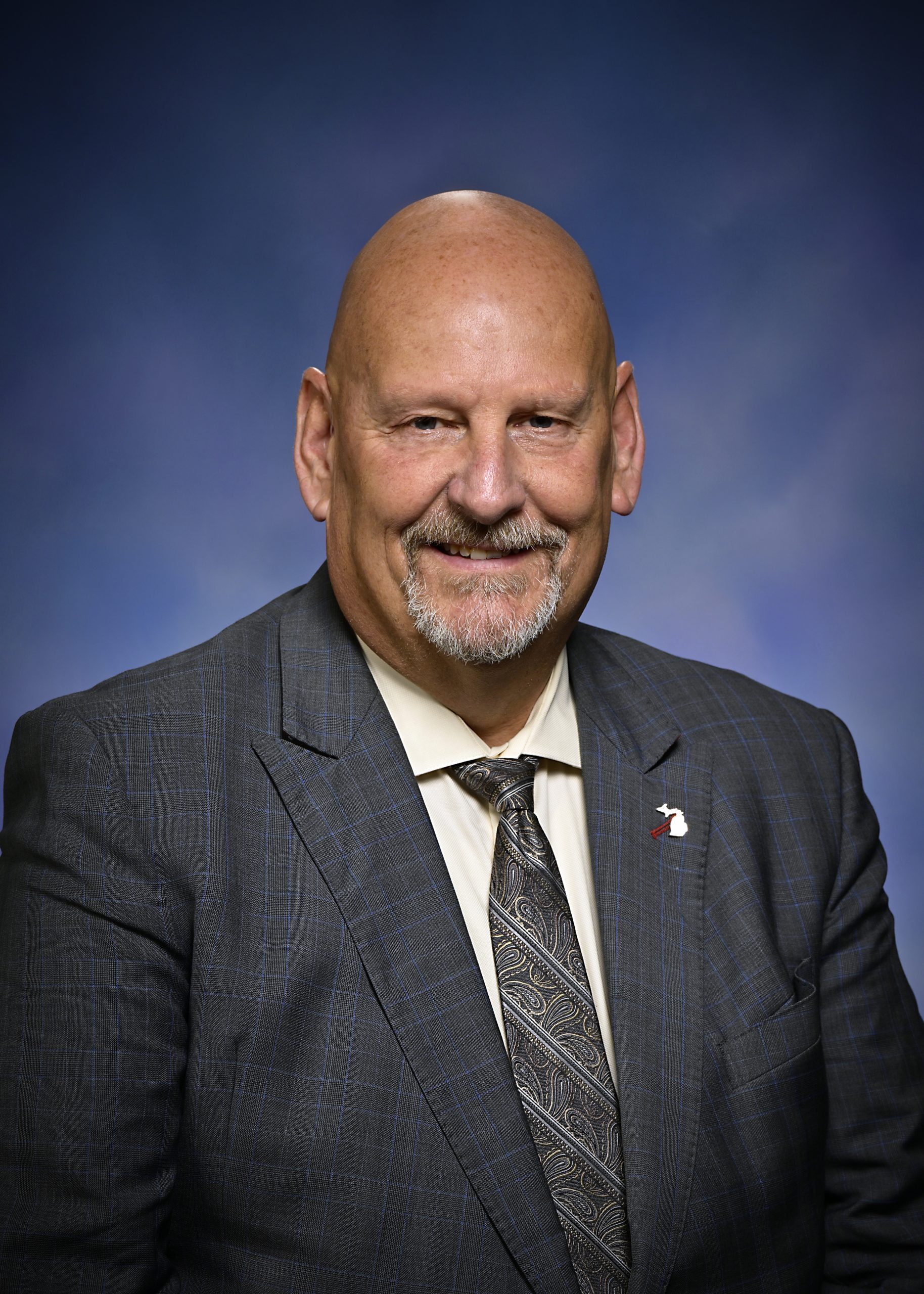
Rep. Curt VanderWall
Sponsored bills
Maddy summaryHB 4392 creates a funding mechanism to allocate money from the Natural Resources Trust Fund to the Department of Natural Resources (DNR). It specifies how these trust fund resources will be used for DNR operations, directly affecting the department's budget management. This procedural bill does not establish new programs but formalizes existing funding transfers. The bill was enacted as PA 21'25 with immediate effect after approval by the Governor.
Maddy summaryThis bill (HB 4182) amends Michigan's use tax law to add a new exemption for motor fuel sales. It specifically creates a new section (4gg) in the law to exempt certain motor fuel transactions from use tax. The bill directly affects businesses selling motor fuel, potentially reducing their tax burden on qualifying sales. However, the provided context does not specify the exact scope of the exemption or who qualifies for it, so the summary cannot detail the precise mechanisms or affected parties beyond the general tax exemption for motor fuel.
Maddy summaryHB 4180 removes the sales tax requirement for motor fuel sales in Michigan by amending the state tax code. It directly affects gas stations and fuel retailers by exempting motor fuel transactions from the standard sales tax. The bill creates a new tax exemption provision (Section 4gg) in the tax code, specifically excluding motor fuel sales from taxable transactions. This change became effective immediately upon the Governor's approval on October 7, 2025.
Maddy summaryHB 4181 removes a sales tax exemption for certain motor fuel purchases by amending Michigan's 2004 tax code (MCL 205.173 & 205.175). The bill directly affects businesses and consumers purchasing motor fuel by eliminating an existing tax exemption, meaning these purchases will now be subject to sales tax. It streamlines the tax code by clarifying that motor fuel is no longer exempt from sales tax under the specified sections. The bill was enacted on October 7, 2025, and is now law as Public Act 18 of 2025.
Maddy summaryHB 4183 increases the motor fuel tax rate and expands the types of fuels subject to the tax under Michigan law. It directly affects motor fuel sellers (like gas stations) and consumers through higher costs for gasoline and other taxed fuels. The bill amends Section 8 of the 2000 Motor Fuel Tax Act (MCL 207.1008) to implement these changes, which became law immediately upon approval by the Governor on October 7, 2025.
Maddy summaryThis resolution ceremonially recognizes physical therapy professionals in Michigan by designating October 2025 as Physical Therapy Month. It encourages all Michigan residents to learn about physical therapy benefits, express gratitude to practitioners, and explore how the field supports community health. The bill has no binding policy changes or funding provisions - its purpose is purely symbolic recognition of the profession's role in healthcare. It directly affects Michigan residents and physical therapy practitioners by highlighting their contributions during a designated month.
Maddy summaryThis is a ceremonial resolution, not a law with policy changes. It declares October 2025 as "Pastor Appreciation Month" in Michigan to recognize pastors' contributions to their congregations and communities. The resolution expresses support for pastors' work through "wise counsel" and spiritual leadership, based on religious references in the text. It has no legal effect or direct impact on any specific group beyond symbolic recognition.
Maddy summaryHB 5056 requires Michigan's state construction code to adopt specific international codes, including the International Residential Code and International Energy Conservation Code, as the baseline for building safety and energy standards. It eliminates the current advisory committee and creates a new 19-member advisory committee with representatives from architects, contractors, fire services, building officials, energy efficiency specialists, disability advocates, and low-income housing groups. The committee must review updates to these international codes, evaluate proposed changes based on public health, safety, economic impact, and technical feasibility, and submit recommendations to the state director within 45 days. This bill directly affects construction professionals, building inspectors, and developers who must comply with the updated code requirements. The new process ensures public input through accessible meetings and transparent voting on code revisions.
Maddy summaryHB 5057 requires Michigan's housing director to convene a meeting with a commission within 90 days of the bill's effective date. The commission must develop recommendations for modifying housing codes to allow triplexes, quadplexes, 5-plexes, or 6-plexes in residential areas, specifically considering water supply, fire department response times, and public safety. These recommendations would guide the director in updating rules or codes by January 1, 2027, if needed. The bill does not immediately permit multi-unit housing but establishes a process for future rule changes to potentially expand housing options in residential zones.