

Maddy summaryHB 4509 creates a licensure compact for audiologists and speech-language pathologists in Michigan, allowing professionals licensed in participating states to practice across state lines without obtaining separate Michigan licenses. This directly affects audiologists and speech-language pathologists seeking to work in multiple states, particularly those in states that have joined the compact. The bill amends Michigan law to establish reciprocal licensing agreements, adding new provisions (sections 16187, 16804, and 17603a) to facilitate this process. It does not change patient care standards but streamlines professional mobility for these healthcare providers. The bill passed unanimously in the Michigan House with immediate effect on October 30, 2025.
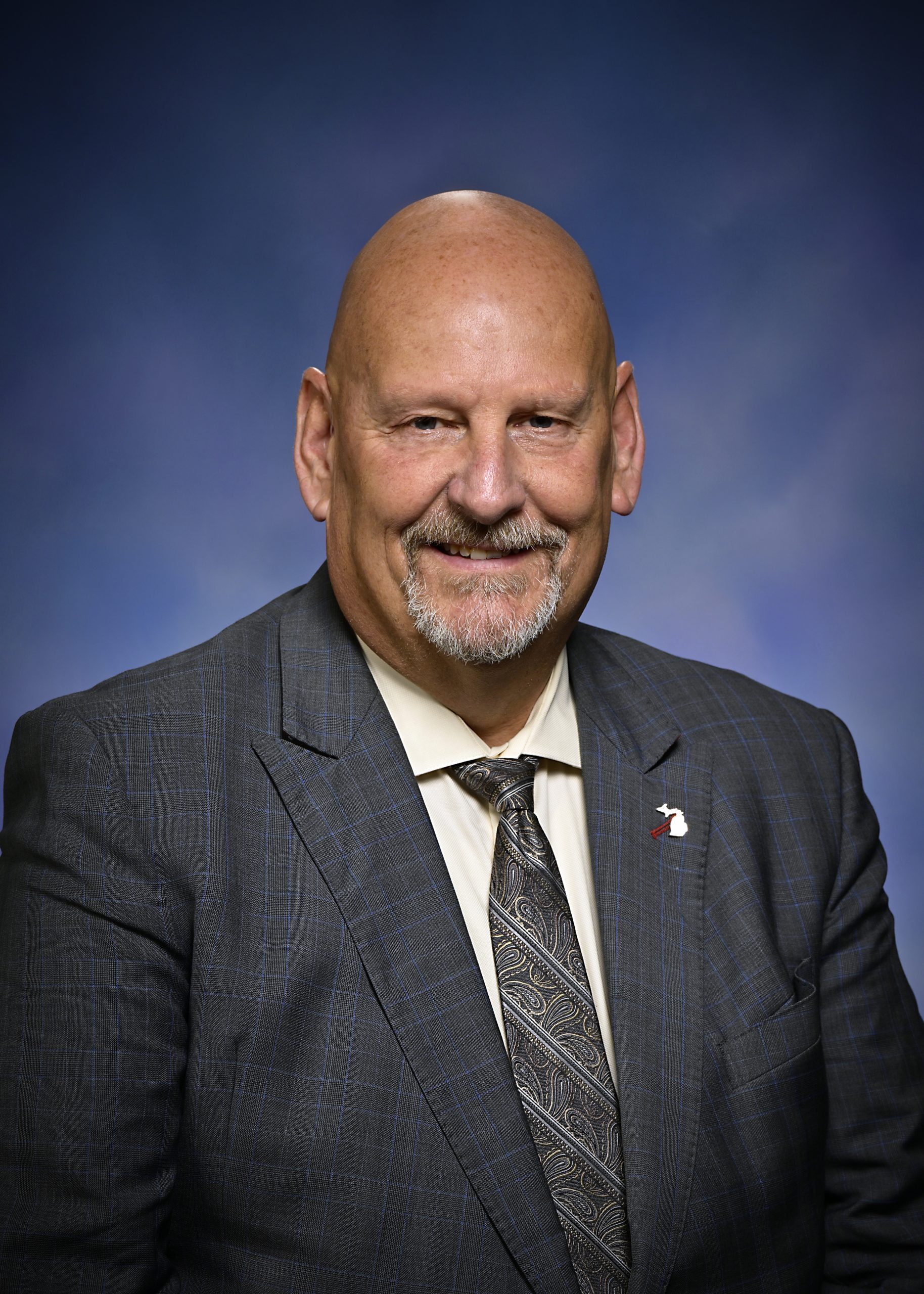
Rep. Curt VanderWall
Sponsored bills
Maddy summaryHB 5117 removes population-based quotas for "specially designated merchant" liquor licenses in Michigan. It eliminates the requirement that only one such license may be issued per 1,000 residents (or fraction thereof) for certain applicants, including large grocery stores meeting size/sales criteria, pharmacies, and gas station retailers with motor fuel licenses. The bill also clarifies that licenses issued under these exemptions cannot be transferred to new locations. This change directly affects businesses seeking new licenses or renewing existing ones, particularly those operating large retail food establishments or combining alcohol sales with other services.
Maddy summaryHB 4484 amends Michigan's Social Welfare Act to allow licensed speech-language pathologists (SLPs) to seek reimbursement for audiological rehabilitation and speech-language therapy services, regardless of whether they hold a certificate of clinical competence. This change directly affects SLPs practicing in Michigan who previously faced potential barriers to reimbursement under existing department rules. The bill removes a prior requirement for the clinical certificate, ensuring reimbursement eligibility solely based on state licensure. It applies to all coverage policies under the Social Welfare Act (MCL 400.1-400.119b), streamlining access to payment for these healthcare services.
Maddy summaryHB 4823 updates Michigan's liquor distribution rules by amending sections covering licensing, delivery, and sales (1998 PA 58). It directly affects liquor distributors, retailers, and manufacturers by modifying existing regulations and adding a new Section 412. The bill updates specific provisions related to how alcohol is distributed and sold, though the exact changes to each section aren't detailed in the provided context. It passed overwhelmingly in the House (100-3) and was referred to the Regulatory Affairs committee.
Maddy summaryHB 4825 would create a tax credit for businesses that sell beverages in returnable containers (like soda cans or bottles), allowing them to deduct $0.005 per container sold from their Michigan corporate income tax starting in 2026. The credit amount would automatically increase each year based on inflation (using the U.S. Consumer Price Index) beginning in 2027. To claim the credit, businesses must attach a specific report (required under existing law) with their annual tax return. This policy directly affects beverage distributors who manage deposit systems for returnable containers, reducing their tax liability or generating refunds if the credit exceeds their tax bill.
Maddy summaryThis resolution declares October 12-18, 2025, as "Homeschool Week" in Michigan. It symbolically recognizes homeschooling families and affirms parental rights to choose this educational path under Michigan law. The resolution has no legal effect - it does not create new laws, change funding, or alter school policies. It serves solely as a ceremonial acknowledgment of homeschooling families' contributions to education. The declaration directly affects homeschooling parents and guardians across the state.
Maddy summaryHB 5098 prevents Michigan's Unemployment Insurance Agency from stopping its fraud detection software except for brief, documented maintenance needed to keep the system running. The bill requires the agency to immediately restore the software after any maintenance and limits such maintenance to what's strictly necessary. This directly affects the agency's operations and people filing unemployment claims, as the software helps identify potentially fraudulent applications. The law amends Michigan's Employment Security Act to mandate continuous use of the fraud detection tools, with specific rules for temporary maintenance periods.
Maddy summaryThis resolution declares October 2025 as Italian-American Appreciation Month in Michigan. It directly recognizes the cultural contributions, historical impact, and community involvement of Italian-Americans in Michigan's development. The resolution does not create new laws or policies but formally designates a month for celebrating Italian-American heritage, including their roles in Michigan's neighborhoods, economy, and civic life. The declaration is symbolic and applies statewide.
Maddy summaryThis House Resolution (HR 184) urges the U.S. Congress to pass H.R. 1156, the Pandemic Unemployment Fraud Enforcement Act. The resolution states that H.R. 1156 would extend the statute of limitations for prosecuting pandemic unemployment fraud from five to ten years, allowing federal and state authorities more time to investigate complex fraud cases - such as those involving identity theft or money laundering - and recover misused taxpayer funds. It references Michigan's estimated $8.5 billion in potentially fraudulent pandemic unemployment benefits as context for the need for extended enforcement. As a procedural resolution, HR 184 itself does not create new law but seeks to advance H.R. 1156.
Maddy summaryHB 4709 prohibits the construction of commercial wind turbines for electricity production in the Great Lakes or their connecting waters, and bans operating any such turbines built in violation of this rule. It directly affects commercial wind energy developers planning projects in these waters, preventing new installations. The bill also states that renewable energy credits cannot be issued for electricity generated by prohibited turbines, and allows the attorney general to seek court injunctions to stop violations. This amendment adds a specific environmental protection measure to Michigan's Clean Energy Act.