Issue · Criminal Justice

Criminal Justice

Every criminal justice bill, vote, and legislator stance in Michigan, automatically classified by Maddy, our AI policy reader.

Total bills
239
2025-2026 Regular Session
Top supporter
Amos O'Neal
100% support rate
Top opponent
Lana Theis
27% support rate
Ranked legislators
10
5 support · 5 oppose
Key legislators

Who's moving criminal justice in Michigan

Legislators moving criminal justice in Michigan
Legislator Party Stance Support rate Votes
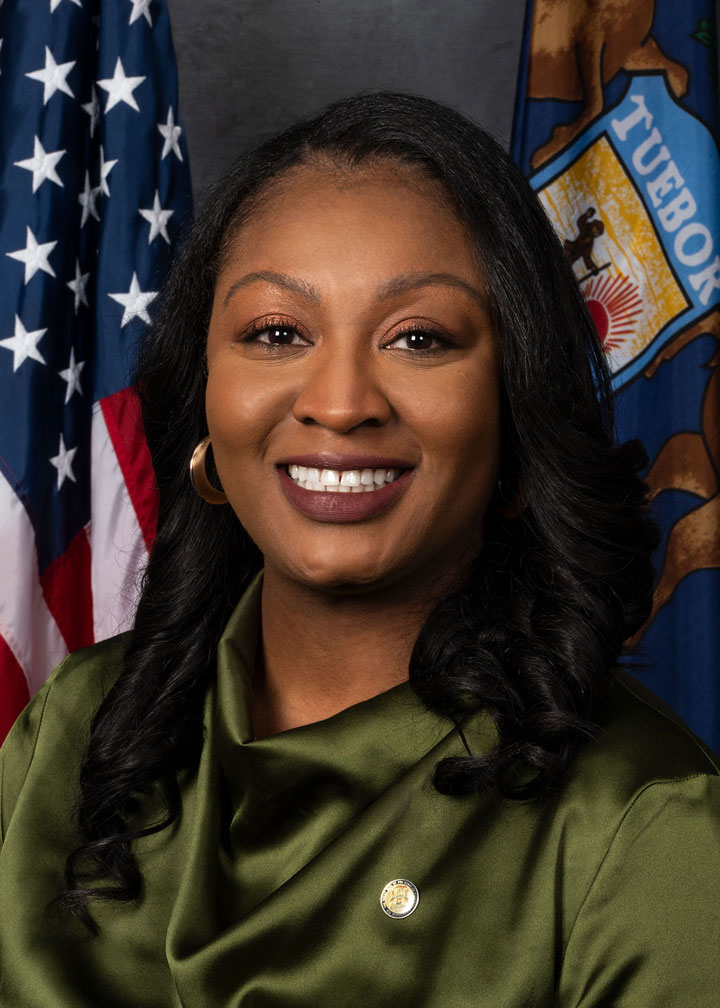
Amos O'Neal
Amos O'Neal House · District 94
D
Strong +
100% 18
Erika Geiss
Erika Geiss Senate · District 1
D
Support
77% 43
Jeremy Moss
Jeremy Moss Senate · District 7
D
Support
73% 48
Veronica Klinefelt
Veronica Klinefelt Senate · District 11
D
Support
73% 48
Sarah Anthony
Sarah Anthony Senate · District 21
D
Support
73% 48
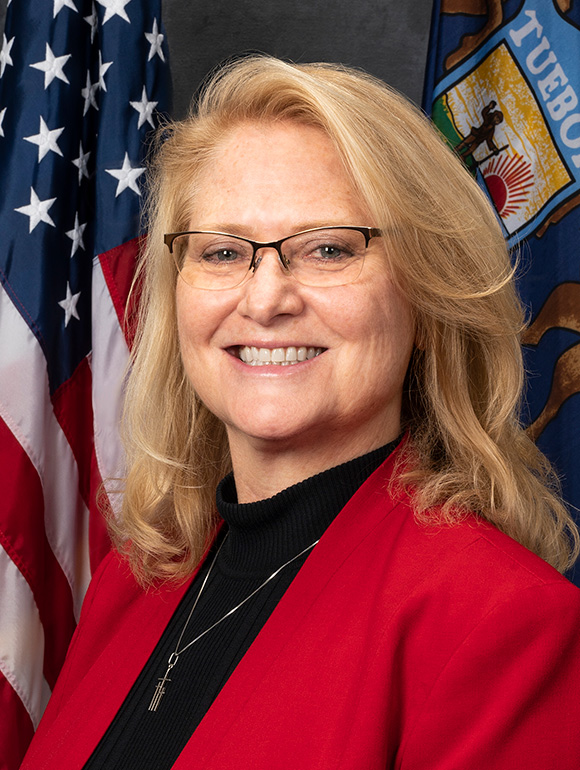
Lana Theis
Lana Theis Senate · District 22
R
Oppose
27% 43
Thomas Albert
Thomas Albert Senate · District 18
R
Oppose
27% 48
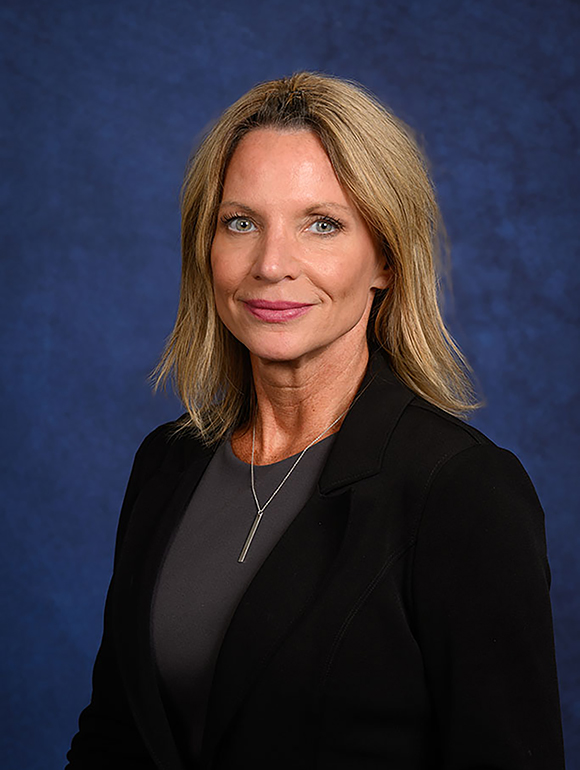
Michele Hoitenga
Michele Hoitenga Senate · District 36
R
Oppose
27% 48
Jonathan Lindsey
Jonathan Lindsey Senate · District 17
R
Oppose
27% 47
Jon Bumstead
Jon Bumstead Senate · District 32
R
Oppose
29% 44
Showing 81–90 of 239 bills

All criminal justice bills

in committee · Michigan · House Mar 19, 2026

HB 5758: Civil procedure: other; firearm industry responsibility act; provide for. Amends 1961 PA 236 (MCL 600.101 - 600.9947) by adding sec. 3845. TIE BAR WITH: HB 5760'26

This bill would add a new section to Michigan's civil procedure laws that allows the state attorney general and private individuals to sue firearm industry members for creating or maintaining a public nuisance through the sale, manufacture, or marketing of firearms and related products. The legislation requires these companies to establish reasonable controls over their products to prevent sales to prohibited persons, prevent theft, and stop the installation of devices like pistol converters, without needing to prove the company intended to cause harm. If a company violates these requirements, the attorney general can seek injunctions, damages, and other relief, while private victims of harm can also file lawsuits for compensatory and punitive damages. The bill defines firearm industry members broadly to include sellers, manufacturers, and distributors, and explicitly includes 3D printers and other manufacturing equipment in its scope.
Sub-Topics Courts Firearms
in committee · Michigan · House Mar 10, 2026

HB 5684: Crimes: penalties; threats or assaults against department of health and human services designated caregivers; prohibit, and provide penalties. Amends 1931 PA 328 (MCL 750.1 - 750.568) by adding sec. 81f. TIE BAR WITH: HB 5685'26

This bill would add new protections for designated caregivers in Michigan's Department of Health and Human Services by creating specific criminal penalties for threats, intimidation, harassment, and physical assaults against them. It directly affects foster parents, kinship caregivers, fictive kin, and adoptive parents of children formerly in foster care, whether or not they receive payment for their care. The legislation establishes misdemeanor charges for threats, intimidation, or harassment, while creating felony charges for physical assaults that cause injury, with harsher penalties for serious bodily harm. The bill also clarifies legal definitions for harassment and intimidation while ensuring that convictions under this law do not prevent additional charges under other applicable laws.
passed · Michigan · Senate Jun 10, 2026

SB 891: Law enforcement: reports; communications under the Amber alert act; modify. Amends title & secs. 1, 2 & 5 of 2002 PA 713 (MCL 28.761 et seq.). TIE BAR WITH: SB 0892'26

This bill updates Michigan's Child Abduction Broadcast Act to rename it the Child Abduction and Missing Child Broadcast Act and expand how radio and television stations can share information about missing children. It allows broadcasters to disseminate child abduction alerts through various channels, including social media, when they receive information from the Michigan Department of State Police under the existing Amber Alert system. The legislation also provides legal immunity to broadcasters who accurately share this information from the state police. The bill will not take effect unless it is passed together with a companion bill, SB 892.
passed both · Michigan · House Jun 16, 2026

HB 5511: Criminal procedure: sentencing; delayed entry of judgment of conviction when sentencing is delayed; allow with exceptions. Amends 1927 PA 175 (MCL 760.1 - 777.69) by adding sec. 1a to ch. XI. TIE BAR WITH: HB 5510'26

HB 5511 would allow courts to delay officially recording a conviction (entry of judgment) until sentencing occurs, under specific conditions. This applies when the prosecutor agrees after consulting the victim, and either the court finds good cause to delay or the defendant enters a specialty rehabilitation program. The bill does not apply to certain traffic offenses involving vehicle operation (even if felony/misdemeanor) or convictions already eligible for delayed sentencing under other laws. The delay mechanism aims to support rehabilitation efforts while ensuring victims are consulted, but the bill requires another related bill (HB 5510) to pass first.
Sub-Topics Courts Sentencing
passed both · Michigan · House Jun 11, 2026

HB 5575: Crimes: public office and officers; certain terms related to the crime of intimidating or harassing an individual based on actual or perceived employment as a first responder; define. Amends 1931 PA 328 (MCL 750.1 - 750.568) by adding sec. 409d. TIE BAR WITH: HB 5574'26

HB 5575 defines specific terms related to harassment of first responders in Michigan law. It adds a new section to the penal code clarifying that "first responder" includes law enforcement officers, corrections officers, firefighters, and emergency medical personnel. The bill defines "harass" as intentionally causing substantial emotional distress through a course of conduct with no legitimate purpose. This creates a clear legal standard for prosecuting harassment against these public safety workers, directly affecting their protection under state law.
passed both · Michigan · House Jun 16, 2026

HB 5510: Criminal procedure: sentencing; time period allowed for delayed sentencing; modify. Amends sec. 1, ch. XI of 1927 PA 175 (MCL 771.1). TIE BAR WITH: HB 5511'26

HB 5510 allows Michigan courts to delay final sentencing for up to one year (or longer for specific cases) for certain non-violent offenses, giving defendants time to participate in rehabilitation programs like drug court. It requires courts to collect supervision fees ($30-$60 per month, depending on electronic monitoring) during the delay period, with maximum limits of 12 months for most cases or 60 months for child support violations. The bill exempts juveniles in specific cases and permits courts to waive fees for indigent defendants. This modifies existing sentencing procedures to prioritize rehabilitation while adding structured financial obligations during the delay.
in committee · Michigan · Senate Feb 26, 2026

SB 800: Criminal procedure: sentencing guidelines; sentencing guideline for facility that receives or maintains an adult who requires residential psychiatric care when the facility's license has been revoked or suspended or it has refused to renew its license; enact. Amends sec. 13j, ch. XVII of 1927 PA 175 (MCL 777.13j). TIE BAR WITH: SB 0799'26

SB 800 amends Michigan's sentencing guidelines to add specific provisions for cases involving adults requiring residential psychiatric care who are placed in facilities with revoked, suspended, or unrenewed licenses. It directly affects courts and correctional facilities by establishing a new sentencing guideline (under MCL 777.13j) for such placements. The bill creates a standardized sentencing consideration when a facility loses its license but continues to house patients needing psychiatric care. This change ensures courts account for facility licensing status when determining sentences for these cases. (Note: The bill text provided does not include specific policy details beyond the title and amendment reference.)
Sub-Topics Sentencing
passed both · Michigan · House Jun 11, 2026

HB 5574: Crimes: public office and officers; intimidating or harassing an individual based on actual or perceived employment as a first responder; prohibit, and provide penalties. Amends 1931 PA 328 (MCL 750.1 - 750.568) by adding sec. 409c. TIE BAR WITH: HB 5575'26

HB 5574 prohibits approaching within 25 feet of a first responder who is lawfully performing their duties after being verbally warned not to approach, if the person intends to interfere, threaten, or harass them. It directly affects individuals who target first responders (like police, firefighters, or EMTs) during emergency operations. Violations are misdemeanors punishable by up to 60 days in jail or $500 fines, but become felonies causing injury (up to 2 years) or death (up to 15 years), with fines up to $7,500. The law focuses on preventing direct obstruction or harm during critical incidents, not general public behavior.
Sub-Topics Corrections Policing
in committee · Michigan · House Feb 26, 2026

HB 5587: State agencies (proposed): other; grants for community violence intervention services; provide for. Creates new act. TIE BAR WITH: HB 5586'26

HB 5587 creates a state grant program to fund community-based violence prevention initiatives in areas with high homicide rates. It establishes a "community violence intervention and prevention fund" to award grants to eligible local governments (e.g., cities or counties with 35+ homicides in 2 of 3 years) or community nonprofits with proven experience addressing violence. Grants must support evidence-based strategies focused on trauma care, economic opportunities, and reducing violence without increasing incarceration, with at least 75% of funds directed to community organizations - not law enforcement. The program requires grantees to report on outcomes and coordinate with other violence prevention efforts, and mandates annual reports on best practices from the administering office.
in committee · Michigan · Senate Feb 26, 2026

SB 802: Controlled substances: penalties; conduct associated with qualified psychoactive substances; exempt from criminal penalties in certain circumstances. Amends secs. 7401, 7403 & 7404 of 1978 PA 368 (MCL 333.7401 et seq.).

SB 802 amends Michigan's controlled substances law to exempt non-commercial possession or distribution of specific psychoactive substances - including psilocybin (found in "magic mushrooms"), MDMA, and LSD - from criminal penalties, provided no money or valuable item is exchanged for the substance itself. Individuals may still charge reasonable fees for related services like counseling or spiritual guidance when these substances are used under supervision. This change primarily affects people in religious, therapeutic, or community settings using these substances without commercial transactions. The bill does not legalize these substances for general use but modifies penalties for specific non-commercial activities.
Sub-Topics Drug Policy
Showing 81 to 90 of 239 bills
Previous 1 8 9 10 24 Next