Issue · Criminal Justice

Criminal Justice

Every criminal justice bill, vote, and legislator stance in Michigan, automatically classified by Maddy, our AI policy reader.

Total bills
337
2025-2026 Regular Session
Top supporter
Amos O'Neal
100% support rate
Top opponent
Lana Theis
27% support rate
Ranked legislators
10
5 support · 5 oppose
Key legislators

Who's moving criminal justice in Michigan

Legislators moving criminal justice in Michigan
Legislator Party Stance Support rate Votes
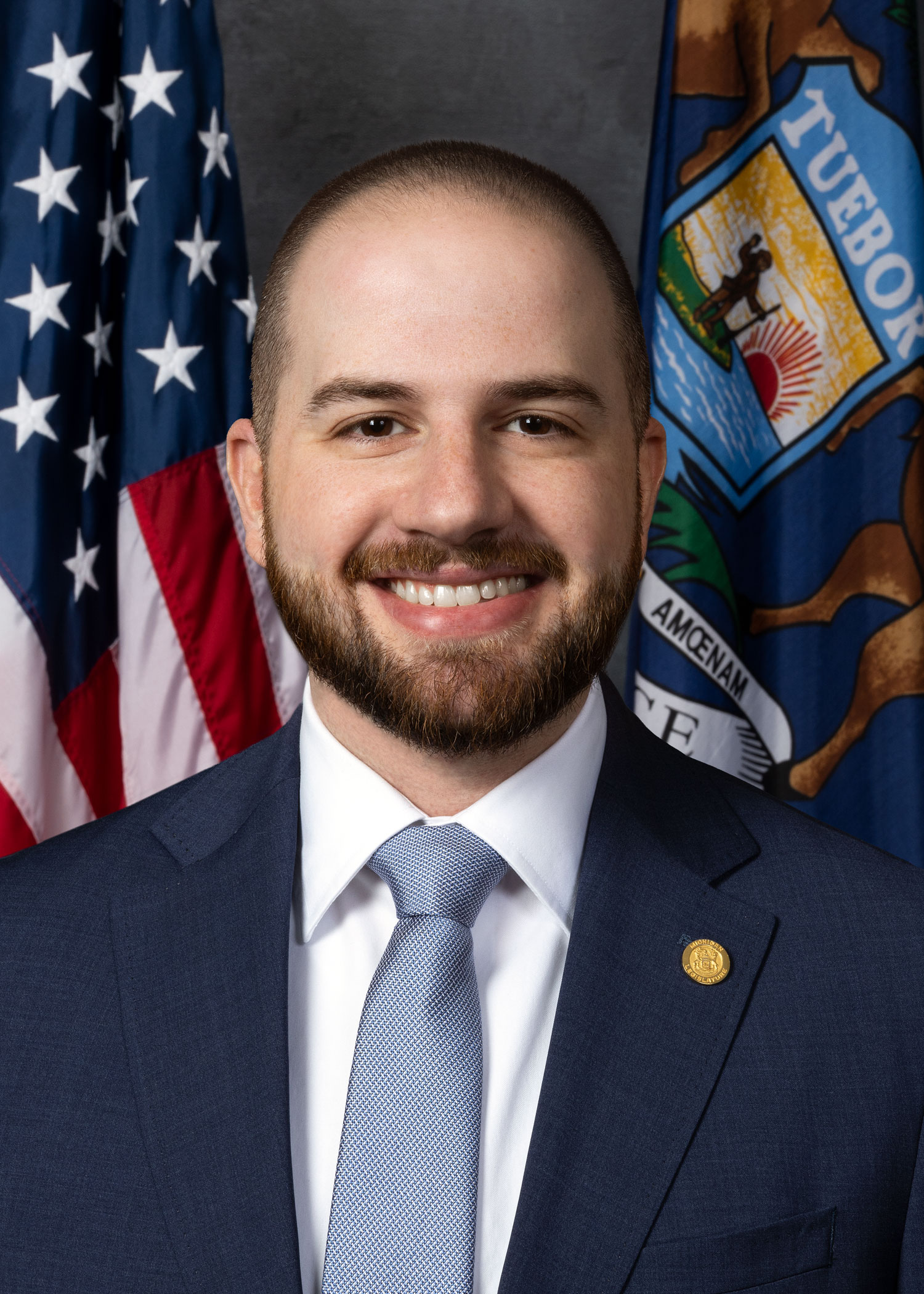
Amos O'Neal
Amos O'Neal House · District 94
D
Strong +
100% 18
Erika Geiss
Erika Geiss Senate · District 1
D
Support
77% 43
Jeremy Moss
Jeremy Moss Senate · District 7
D
Support
73% 48
Veronica Klinefelt
Veronica Klinefelt Senate · District 11
D
Support
73% 48
Sarah Anthony
Sarah Anthony Senate · District 21
D
Support
73% 48
Lana Theis
Lana Theis Senate · District 22
R
Oppose
27% 43
Thomas Albert
Thomas Albert Senate · District 18
R
Oppose
27% 48
Michele Hoitenga
Michele Hoitenga Senate · District 36
R
Oppose
27% 48
Jonathan Lindsey
Jonathan Lindsey Senate · District 17
R
Oppose
27% 47
Jon Bumstead
Jon Bumstead Senate · District 32
R
Oppose
29% 44
Showing 141–150 of 337 bills

All criminal justice bills

in committee · Michigan · House Jan 28, 2026

HB 5477: Traffic control: driver license; program to provide driver license and state identification cards to parolees; provide for. Amends sec. 307 of 1949 PA 300 (MCL 257.307). TIE BAR WITH: HB 5475'26, HB 5474'26

HB 5477 allows parolees in Michigan to use an identification card issued by the Department of Corrections as valid proof of identity when applying for a driver's license or state ID card. The bill amends Michigan's vehicle code to require the Secretary of State to accept these correctional facility ID cards, which include the parolee's legal name, photograph, and identifying information. This change directly affects individuals recently released from prison who need to establish legal identification for driving and other purposes. The key mechanism is adding this specific ID card as an accepted document under existing identity verification rules for license applicants. This eliminates a barrier to obtaining essential identification for parolees reentering communities.
in committee · Michigan · House Jan 28, 2026

HB 5474: Corrections: other; program to provide driver license and state identification cards to parolees; provide for. Amends sec. 34c of 1953 PA 232 (MCL 791.234c). TIE BAR WITH: HB 5477'26, HB 5475'26

HB 5474 requires Michigan's Department of Corrections to proactively help prisoners obtain driver's licenses and state ID cards before release. Specifically, the department must collect required documents and photos 60 days prior to release, send them to the Secretary of State, and assist with social security verification. It creates a "reentry success fund" to cover these administrative costs, ensuring prisoners have essential identification for reintegration. This directly affects parolees and prisoners nearing release who need these IDs to access employment, housing, and other services.
in committee · Michigan · House Jan 28, 2026

HB 5483: Crimes: assaultive; harassing, interfering with, or injuring a letter carrier; prohibit, and provide penalties. Amends sec. 81d of 1931 PA 328 (MCL 750.81d).

HB 5483 amends Michigan's penal code to specifically protect United States Postal Service letter carriers by adding them to the list of protected individuals under assault laws. The bill increases penalties for assaulting, obstructing, or endangering these workers based on injury severity: up to 2 years for basic assault, 4 years for serious injury requiring medical care, 15 years for serious bodily impairment, and 20 years if the assault causes death. It clarifies that existing penalties for assaulting law enforcement or emergency personnel also apply to letter carriers when they are performing their duties. The law takes effect 90 days after enactment and does not affect other potential charges for the same incident.
passed · Michigan · House May 12, 2026

HB 5320: Criminal procedure: sentencing guidelines; sentencing guidelines for flying over or trespassing on a key facility or critical infrastructure with an unmanned aircraft or vehicle; provide for. Amends 16b, ch. XVII of 1927 PA 175 (MCL 777.16b). TIE BAR WITH: HB 5319'25

HB 5320 amends Michigan's criminal sentencing guidelines to specifically address unauthorized drone flights over or trespassing on critical infrastructure, such as power plants or bridges. It would establish new sentencing standards for individuals operating unmanned aircraft or vehicles near these facilities, directly affecting drone operators who violate these restrictions. The bill modifies Section 16b of the Michigan Code of Criminal Procedure (MCL 777.16b) to create clear penalties for such offenses, moving beyond general trespass laws. This change aims to strengthen legal consequences for drone-related threats to public safety infrastructure.
in committee · Michigan · House Dec 31, 2025

HB 5447: Criminal procedure: probation; achievement credits for individuals on probation; provide for. Amends sec. 2, ch. XI of 1927 PA 175 (MCL 771.2).

HB 5447 modifies Michigan's probation rules to allow eligible individuals to seek early termination from probation. It permits probationers to apply for early discharge after completing half their original probation term (for both felonies and misdemeanors), provided they've completed required programming and made good-faith efforts to pay fines/fees. The bill prohibits disqualification solely due to unpaid financial obligations but excludes certain offenses like domestic violence (MCL 750.81/81a), sexual assault, or drug crimes from early discharge eligibility. Courts must consider victim input in cases involving specific offenses and report annual early discharge data to legislative committees.
in committee · Michigan · House Dec 16, 2025

HB 5355: Housing: other; Michigan fair chance access to housing act; create. Creates new act.

HB 5355, the "Michigan Fair Chance Access to Housing Act," prohibits landlords from requiring or considering an applicant's criminal record during initial rental screening. Landlords must issue a conditional offer after checking income, credit, or rental history, then may only consider specific serious offenses (like arson, human trafficking, or sex offenses requiring registration) or recent felonies within 3 years after a conditional offer is made. Landlords must disclose if they consider criminal records and allow applicants to submit evidence of rehabilitation or mitigating factors before denying housing. This bill directly affects landlords across Michigan and rental applicants with criminal records, aiming to reduce barriers to housing based solely on past convictions.
passed both · Michigan · House May 7, 2026

HB 5425: Criminal procedure: sex offender registration; employment of a registered sex offender at a business that provides services to minors; prohibit. Amends 1994 PA 295 (MCL 28.721 - 28.730) by adding sec. 5d.

HB 5425 prohibits registered sex offenders from working at businesses primarily serving minors under 18, such as dance studios, summer camps, youth sports venues, and tutoring services. It creates a misdemeanor for first violations (up to 1 year in jail or $1,000 fine) and a felony for repeat violations (up to 4 years in jail or $2,000 fine). The law requires registration authorities to provide written notice of these employment restrictions during initial registration and verification. This bill directly affects individuals required to register under Michigan's sex offender registry, aiming to restrict their employment in settings with unsupervised minor access.
Sub-Topics Corrections
in committee · Michigan · House Dec 17, 2025

HB 5372: Tobacco: other; minors that purchase, possess, or use tobacco products, vapor products, or alternative nicotine products; sunset criminal penalties and civil sanctions for. Amends sec. 2 of 1915 PA 31 (MCL 722.642). TIE BAR WITH: HB 5370'25, HB 5371'25, HB 5368'25, HB 5369'25

HB 5372 changes penalties for minors who purchase, possess, or use tobacco, vapor, or alternative nicotine products. It replaces criminal misdemeanor penalties for first and second violations with civil penalties (fines up to $50 and community service up to 32 hours), while third or subsequent violations remain misdemeanors. The bill also adds exemptions for minors in approved undercover operations or compliance checks. It requires four related bills to pass before taking effect.
in committee · Michigan · House Dec 11, 2025

HB 5341: Weapons: licensing; penalty for failure to comply with certain licensing requirements; modify. Amends sec. 227 of 1931 PA 328 (MCL 750.227).

HB 5341 modifies Michigan's weapon carrying laws by changing penalties for first-time violations of concealed pistol licensing rules. It specifies that individuals who carry a concealed pistol without a current license (but with an expired license under 1 year old and eligibility for a new license) will now face only a $330 civil fine instead of potential felony charges. The bill directly affects people who carry concealed weapons without a valid permit but meet these specific criteria. It does not change the requirement for a license or the underlying prohibition on concealed carry without one. The key change is replacing criminal penalties with a civil fine for this narrow category of first-time violations.
Sub-Topics Firearms
in committee · Michigan · House Dec 16, 2025

HB 5361: Crimes: animals; restitution for care and treatment of certain forfeited animals; impose penalty on ownership of animal to person convicted of certain crimes against animal. Amends sec. 50b of 1931 PA 328 (MCL 750.50b).

HB 5361 strengthens penalties for animal cruelty in Michigan by requiring courts to order convicted offenders to pay restitution for the care, housing, and veterinary treatment of seized companion animals (like pets or service animals). It clarifies that companion animals receive enhanced protections, with stricter penalties for intentional harm (e.g., killing or torturing a pet). The bill mandates restitution covering investigation, prosecution, and animal care costs - not previously required - and prohibits convicted individuals from owning animals during probation or permanently. It excludes lawful activities like hunting, farming, or veterinary care from these provisions.
Showing 141 to 150 of 337 bills
Previous 1 14 15 16 34 Next