

Maddy summaryHD 4152 amends Chapter 40A of the General Laws to remove a provision that previously prohibited municipalities from unreasonably regulating solar energy installations in zoning rules. This change directly affects local governments (municipalities) by limiting their ability to restrict solar panels or solar collection structures through zoning ordinances, except where necessary for public health, safety, or welfare. The key mechanism is the deletion of the specific language that allowed such restrictions, streamlining the process for installing solar energy systems on properties. This bill focuses on clarifying and expanding municipal zoning powers regarding solar energy, without altering existing health and safety exceptions.
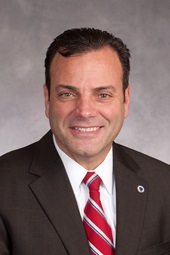
Rep. Paul McMurtry
Sponsored bills
Maddy summaryThis bill requires towing facilities to notify both vehicle owners and lienholders (such as banks with a financial claim on the car) about storage costs within 7 days of towing. If the owner or lienholder doesn't respond within 21 days, the vehicle can be sold after 60 days with written notice and a public sale. Towing facilities must send this notice by registered mail and detail storage charges, with proceeds covering costs before any remaining funds being held by the court for the owner or lienholder. The law aims to ensure transparency in towing and storage fees for those with a financial stake in the vehicle.
Maddy summaryH 4974 requires contractors working on public construction projects costing over $10 million to hire registered apprentices, phasing in minimum apprentice-hour requirements: 5% after one year, 10% after three years, and 15% after four years. It mandates that contractors maintain approved apprentice training programs and register apprentices with the state, while allowing limited waivers for specific trades if qualified bidders aren't available. The bill also establishes a new commission to study apprenticeship programs and expands a high school career pathway program for building/transportation careers. These requirements apply to all public works projects, contractors, subcontractors, and public agencies involved in qualifying construction contracts.
Maddy summaryH 4994 requires public agencies to mandate that contractors for public construction projects exceeding $10 million in cost must include registered apprentices in their workforce. Specifically, it sets increasing minimums: starting at 5% of total hours for each trade in 2026, rising to 10% in 2027, and 15% by 2028, all performed by apprentices in programs approved by the Division of Apprentice Standards. Contractors must register apprentices with this division and maintain required apprentice-to-journeyperson ratios. Public agencies may grant limited exemptions for specific trades if no qualified bidder with an apprentice program is available, but must document and report these exemptions. The bill directly affects public agencies, construction contractors, and subcontractors working on large public projects.
By Representative McMurtry of Dedham, a petition (accompanied by bill, House, No. 441) of Paul McMurtry relative to notifying automobile lien holders of certain towing and storage costs. Consumer Protection and Professional Licensure.
Maddy summaryThis bill extends the deadline for the House Committee on Labor and Workforce Development to finalize reports on seven specific pending documents (2094, 2095, 2115, 2120, 2162, 2163, 2176, 4208) from the standard timeframe to Wednesday, March 18, 2026. It directly affects the Labor and Workforce Development committee by granting them additional time to complete their review of these documents. The key mechanism is a procedural override of House Rule 27, which normally sets reporting deadlines, allowing the committee to work beyond the usual schedule. This is a routine procedural adjustment with no substantive policy changes.
Maddy summaryThis bill requires public employers (like state fire departments, cities, towns, or fire districts) to provide full-time firefighters with cancer screenings starting three years after they begin working and every three years thereafter. It directly affects firefighters employed by Massachusetts fire departments, including those at military reservations, air bases, and specific regional zones. The screenings must cover 11 specific cancers (such as colon, lung, breast, and prostate), with all costs covered by the employer's health plan - no co-pays, deductibles, or out-of-pocket expenses for firefighters. This mandates a regular, employer-funded health benefit without requiring firefighter contributions.
Maddy summaryThis bill amends Massachusetts' prevailing wage law to require that approved apprenticeship and training programs pay the same prevailing wages as other covered entities, such as pension and health funds. It specifically adds these programs to the list of initiatives subject to prevailing wage requirements under Chapter 149 of the General Laws. The change applies to all state-approved apprenticeship programs that meet standards outlined in Chapter 23, ensuring they comply with existing wage rules for public works projects. This policy update extends current wage protections to apprenticeship participants without creating new programs.
Maddy summaryThis bill (H 2085) aims to help apprentices complete their training programs by creating pathways to finish their required hours and certifications. It directly affects apprentices in Massachusetts who are working toward skilled trades careers and the employers who sponsor their training. The key mechanism involves establishing structured opportunities for apprentices to meet training requirements without disruption. The goal is to strengthen the state's skilled workforce by ensuring more apprentices successfully complete their programs and enter the labor market.
Maddy summaryThis bill requires insurance companies to notify an agent of record (broker) at least 21 days before a life, disability, or long-term care insurance policy lapses. It directly affects insurance agents/brokers and insurers, ensuring brokers receive advance notice of potential coverage endings. Key provisions mandate written or electronic notification to the broker unless the insurer uses an automated system that independently alerts brokers, lacks agent records, or the broker works for the insurer. Exceptions cover situations where insurers already provide automatic broker notifications through existing systems. The law aims to give brokers time to help policyholders maintain coverage without making brokers liable for lapses.