

Maddy summaryThis bill increases the Medicaid exemption for permanent life insurance policies from the previous amount to $10,000 in face value for applicants and recipients. It specifically applies to whole life, universal life, and other permanent policies that accumulate cash value, while term life insurance (which has no cash value) remains excluded. The exemption will automatically adjust for inflation every five years using the Consumer Price Index, rounded to the nearest $100. The law also requires the Medicaid office to report every three years on the policy's financial impact and effects on beneficiary access to life insurance benefits.
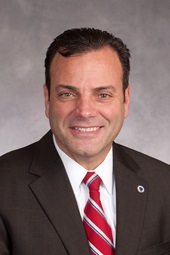
Rep. Paul McMurtry
Sponsored bills
Maddy summaryHD 895 creates a state-run retirement savings program (Secure Choice) for private-sector workers in Massachusetts. It requires eligible employers (non-government businesses with employees working 750+ hours annually) to automatically enroll workers in a retirement plan unless the employer already offers a qualified plan or payroll deduction IRA. Key mechanisms include automatic enrollment with an opt-out option, default contribution rates set by the Board, and two program types: IRAP (individual accounts) and MERP (multiple-employer plans). The program is designed to be ERISA-exempt and professionally managed, with contributions made via payroll deductions. This directly affects private employers and their eligible employees who don't already have access to a retirement plan through their employer.
Maddy summaryHD 1926 prohibits payment card networks and large credit card issuers (with over $85 billion in assets) from fixing interchange fees or engaging in anti-competitive practices like forcing merchants to accept certain cards. It requires credit card companies to clearly disclose interchange fees on consumers' monthly statements and bans charging these fees on taxes or gratuities when merchants provide those amounts during transactions. The bill also prevents networks and issuers from penalizing merchants for lawful price-setting or charging fees for disputed transactions without written notice of responsibility. This directly affects merchants, consumers, and major financial institutions handling credit/debit card transactions.
By Mr. O'Connor, a petition (accompanied by bill, Senate, No. 2190) of Patrick M. O'Connor for legislation to establish a special commission to study the feasibility of incorporating conductive concrete in future public works projects. State Administration and Regulatory Oversight.
Maddy summarySD 511 establishes a special commission to study improvements for the VFW Parkway (a highway in Dedham and West Roxbury, Boston). The commission, composed of local officials, state legislators, community members, and business owners, will examine traffic patterns, funding sources, recreational land use, and aesthetic enhancements. It must submit a final report with recommendations by June 30, 2026, to the Boston City Council and state legislature. The bill does not create new laws or funding but directs a study to inform future planning. This procedural bill directly affects the communities along the VFW Parkway corridor.
Maddy summaryThis bill (H 4297) mandates that a specific percentage of Chapter 70 state education funds must be allocated to arts education programs in Massachusetts public schools. It directly affects school districts receiving Chapter 70 funding by requiring them to dedicate a defined portion of those resources to arts education, aligning with the Lowell Mason Act's goals. The key provision is the mandatory allocation requirement, shifting how districts use a portion of their state education funding. This policy change ensures dedicated financial support for arts programs within the public school system.
Maddy summaryHD 1353 increases monthly benefits for low-income households receiving state assistance programs. It mandates a 20% annual benefit increase starting July 1, 2025, until payments reach 50% of the federal poverty level for each household size. Once this target is met, benefits will automatically adjust each July to maintain at least 50% of the federal poverty level. The bill also includes adjustments for clothing allowances and rental costs for eligible households. This directly affects low-income families relying on these state assistance programs.
Maddy summaryThis procedural bill extends the Labor and Workforce Development committee's deadline for reporting on House document 3375 from its original date to Wednesday, March 18, 2026. It overrides standard House Rule 27, which would otherwise require the committee to report on the document by an earlier date. The bill directly affects the committee's schedule for reviewing this specific legislative document. It passed quickly with no opposition, as shown in its recent actions.
Maddy summaryThis bill requires the state to cover health insurance premiums for qualifying adjunct faculty at public higher education institutions. It defines eligible faculty as those teaching at least two 3-credit courses per semester (or four annually), regardless of funding source or employment term. The state will gradually increase its share of premium costs over five years, starting at 25% in the first year and reaching 75% by the sixth year. A working group must study adjunct faculty retirement benefits, compensation, and career pathways, reporting findings by December 2026. The bill directly affects adjunct faculty at state universities, community colleges, and UMass campuses.
By Mr. Rush, a petition (accompanied by bill, Senate, No. 286) of Michael F. Rush and Paul McMurtry for legislation relative to the fair distribution and pricing of event tickets. Consumer Protection and Professional Licensure.