

Maddy summaryThis bill establishes the Faculty Restoration and Equity Fund to require public colleges in the state to: (1) ensure at least 75% of undergraduate courses are taught by full-time faculty, (2) maintain at least 75% full-time support staff in departments, and (3) provide part-time and non-tenure track faculty with pay and benefits equal to full-time faculty. It also amends retirement laws to grant part-time faculty teaching four or more courses yearly full retirement credit, equal pay on a pro-rata basis, and formal processes for assignment priority and tenure-track consideration. The fund prioritizes institutions with high reliance on part-time faculty, and all provisions are subject to collective bargaining. The bill directly affects public higher education institutions and their part-time/non-tenure track faculty.
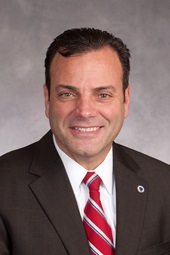
Rep. Paul McMurtry
Sponsored bills
By Mr. Cronin, a petition (accompanied by bill, Senate, No. 215) of John J. Cronin for legislation updating the definition of physical therapy. Consumer Protection and Professional Licensure.
Maddy summaryThis bill amends Massachusetts law to explicitly include dental insurance as a covered service under veterans' dental benefits. It directly affects veterans enrolled in the state's dental assistance program by expanding their coverage to include dental insurance costs. The key change modifies existing language to add "dental insurance" to the list of covered items like medical visits, prescriptions, and procedures. The secretary of veterans' services will continue to determine specific covered treatments through regulations.
Maddy summarySD 768 creates a new "Veteran Employment and Reemployment Rights Division" within the Executive Office of Veterans Services to help veterans and service members resolve workplace disputes after military service. The division will have intake officers, investigators, and mediators to address violations of federal (USERRA) and state laws regarding job reemployment rights. If mediation fails, cases are referred to the Attorney General for further action. This bill directly affects veterans/service members facing employment issues and employers who may violate reemployment protections under federal and state law.
Maddy summaryThis bill (SD 596) expands access to veteran health care by requiring the Secretary of Veterans’ Services to create regulations that make veterans with incomes below 300% of the Federal Poverty Level eligible for medical care coverage if they meet other qualification criteria. It directly affects low-income veterans seeking health services, ensuring they can access medical care without additional non-medical benefits. The key mechanism is a new regulatory requirement mandating eligibility for "Medical Only" coverage based on income thresholds. The bill does not change existing benefits but clarifies and broadens access for a specific income group.
Maddy summaryThis bill creates a reimbursement program for municipalities to cover costs of local veterans' outreach. It requires the Secretary of Veterans' Services to establish regulations reimbursing cities and towns 75% of eligible outreach expenses by local veterans' service departments, up to a maximum of $2,000 per municipality. The provision directly affects municipal governments operating veterans' service offices. Key mechanisms include setting a 75% reimbursement rate and a $2,000 annual cap on reimbursements for outreach activities. The bill does not change veterans' eligibility for services, only the funding mechanism for local outreach efforts.
Maddy summaryHD 4087 creates a PFAS Remediation Trust Fund to address contamination from harmful chemicals (PFAS) in Massachusetts drinking water and environmental media. The fund, financed by settlements with PFAS manufacturers and other sources like grants and donations, will cover costs for public water systems, private well owners, municipalities, and regional water systems to test, treat, and remediate PFAS in water, soil, and groundwater. The Department of Environmental Protection will administer the fund, prioritizing vulnerable communities and requiring applicants to disclose any third-party payments to avoid duplicate funding. The fund operates without annual appropriation, with leftover balances carrying over to future years to ensure sustained support for PFAS cleanup efforts.
Maddy summaryThis bill (SD 593) amends Massachusetts law to change how income is calculated for veteran benefits eligibility. It requires the Secretary of Veterans’ Services to create regulations ensuring that monthly deposits under $300 are not counted as income when determining eligibility under Chapter 115. This directly affects Massachusetts veterans who receive small recurring payments (like part-time income or modest pensions) that could previously disqualify them from benefits. The key provision clarifies that such small deposits must be excluded from income calculations, while still allowing officials to review full bank statements for other eligibility investigations. The change aims to prevent minor income sources from unfairly blocking access to veteran benefits.
Maddy summaryThis bill requires all newly constructed, reconstructed, or remodeled Massachusetts state-owned public buildings (like libraries, community centers, or government offices) to install at least one universal changing station in public restrooms by January 1, 2028. The stations must support 350 pounds, measure at least 70 inches long by 30 inches wide, and be positioned 20-25 inches off the floor, with clear signage and ADA-compliant safety features like rails and privacy. It directly affects parents, caregivers, and individuals with disabilities who need assistance with diapering or changing in public spaces. Limited exemptions apply for historic properties, non-public buildings, or projects under $10,000 in cost.
Maddy summaryHD 982 requires all Massachusetts state-owned public buildings (like government offices or libraries) that are newly built, reconstructed, or remodeled after January 1, 2025, to install at least one universal changing station in public restrooms. These stations must support up to 350 pounds, measure at least 70 inches long by 30 inches wide, have adjustable height (17-38 inches), include safety rails, and be located in private or enclosed areas. The bill mandates clear signage for location and operation, and compliance with accessibility standards, while allowing exemptions for historic properties or if installation costs exceed $10,000. It directly affects state building owners and contractors planning new construction or renovations after 2025.