

Maddy summarySB 428 establishes Maryland’s Leaders in Environmentally Engaged Farming (LEEF) Program to incentivize farmers adopting conservation practices that protect the Chesapeake Bay watershed. The bill creates a special fund to support tiered recognition for farmers who implement specific practices like cover crops, riparian buffers, soil health management, and community-focused initiatives (e.g., supporting local food systems or mentoring new farmers). It directly affects Maryland farmers participating in the program, requiring the Department of Agriculture to develop evaluation criteria and promote eligible practices that reduce nutrients/sediment while enhancing farm profitability. Key provisions include defining "community best practices," mandating the Department to coordinate with conservation and agricultural groups, and authorizing state funds to accelerate adoption of these environmentally beneficial farming methods.
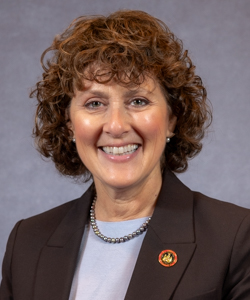
Sen. Shelly Hettleman
Sponsored bills
Maddy summarySB 342, the "Voting Rights Act of 2025," prohibits counties and municipalities from using election methods that dilute or abridge voting rights for protected classes (defined as racial, color, or language minority groups under federal law). It directly affects voters in these local jurisdictions by requiring election systems to allow members of protected classes to elect candidates of their choice. The key mechanism establishes that a violation occurs if elections show "polarized voting" (where voting patterns differ between protected classes and the broader electorate) and the election method dilutes their voting strength. Courts must evaluate this using federal methodologies for enforcing the Voting Rights Act of 1965, applying only to local county and municipal elections - not statewide contests.
Maddy summaryThis bill requires all Maryland public school districts to join the National Association of State Directors of Teacher Education and Certification (NASDTEC) and use its Educator Identification Clearinghouse for background checks. It mandates that school districts screen all current educators by July 1, 2025, and all new educator applicants after that date through this centralized system. The law replaces local screening processes with a standardized national clearinghouse to verify educator backgrounds. This affects every local education agency in Maryland and their hiring and employment practices for school staff. The requirement takes effect on July 1, 2025.
Maddy summarySB 656 changes how seven members of the Baltimore County Board of Education are elected, shifting from current council districts to new school board districts starting in the 2034 general election. It establishes a redistricting process requiring the County Board to propose updated school board district boundaries after each U.S. decennial census (beginning after 2030), ensuring districts are substantially equal in population, with the Baltimore County Delegation to the Maryland General Assembly introducing legislation to implement these changes within a year. The bill also sets residency requirements for elected members (living in their district for at least two years) and limits consecutive terms to three, with a four-year cooling-off period after serving three terms. This directly affects Baltimore County voters who will elect school board members from their new districts and reshapes how the school board's geographic representation is determined.
Maddy summarySB 706 requires the Maryland Department of Health to conduct prevalence studies measuring problem and pathological gambling rates for both in-person and mobile gambling, with the initial in-person study due by July 1, 2009 (likely a typo in the bill text), and the initial mobile study due by July 1, 2030. The bill modifies how gambling proceeds are distributed, directing 6.25% of the state's share (after operators retain 84%) to the Problem Gambling Fund for treatment and prevention programs, while 93.75% goes to the Blueprint for Maryland’s Future Fund. It mandates annual reports to the General Assembly on fund expenditures and requires replication studies every five years to track trends. This bill directly affects gambling operators, the Problem Gambling Fund, and Maryland residents seeking gambling treatment services.
Maddy summaryMaryland Senate Bill 1045 modifies the state's sales and use tax code to include labor and services for "alterations" (such as construction, renovation, or installation work) under taxable business services. It directly affects contractors, renovation firms, and businesses providing on-site labor for building modifications. The bill amends tax definitions to explicitly make "labor or service for application or installation" subject to sales tax when performed for alterations, removing previous exemptions. This change applies to commercial properties and services where the work is part of a taxable transaction, as specified in revised sections of Maryland's tax code (11-101(l)(3) and 11-104(l)).
Maddy summarySB 8 establishes the Maryland Civic Excellence Program, a voluntary initiative for public school systems in Maryland to recognize student civic engagement. Starting in the 2026-2027 school year, participating schools must award a "Seal of Civic Excellence" to students who pass a government assessment, earn A or B grades in U.S. history, modern world history, and American government, and complete 75 hours of community service (including at least 30 hours on a civic project). Schools may also earn a "Center of Civic Excellence" designation if 50% or more of their graduating students receive the seal. Participating school systems must submit annual reports on the program starting in 2027.
Maddy summarySB 330 expands Maryland's property tax credit for dwellings owned by disabled or fallen law enforcement officers/rescue workers. It directly affects disabled officers who die (regardless of cause), their surviving spouses, and cohabitants by broadening the definition of "fallen officer" to include disabled officers who pass away. Key changes include removing the previous 10-year deadline for purchasing a home after disability or death, allowing the tax credit amount for new homes to align proportionally with credits for prior dwellings, and giving counties flexibility to set their own acquisition timelines or eligibility limits. The bill amends Maryland's Property Tax Code (Section 9-210) to implement these policy adjustments.
Maddy summarySB 998 requires Maryland gas companies to file detailed plans with the Public Service Commission for safety and reliability infrastructure projects (like pipe replacements to reduce leaks or improve public safety). These plans must include project descriptions, timelines, cost analyses comparing alternatives (such as leak repair or electrification), and 2-year advance customer notifications allowing time to switch to electric options. The bill establishes a capped monthly surcharge ($2 max for residential customers) to recover project costs separately from regular rate increases, ensuring ratepayers aren’t overcharged while protecting them from unexpected bills. It directly affects gas utilities and their natural gas customers across Maryland, with the Commission reviewing all plans for compliance.
Maddy summarySB 914 allows supervisory employees at Baltimore County Public Library to form unions and engage in collective bargaining, directly affecting library supervisors who previously could not join unions. The bill redefines "management employee" to include supervisors whose duties require independent judgment (not just routine tasks), clarifying which roles qualify for unionization. It establishes a separate bargaining unit for supervisory staff alongside the existing unit for non-supervisory employees. The law preserves all existing collective bargaining agreements in place before June 30, 2025, and takes effect July 1, 2025.