

Maddy summarySB 945 requires Maryland licensing authorities to provide interested parties (such as families of residents or nearby neighbors) with the specific criteria used to approve or renew licenses for community-based residential facilities. It also mandates that each licensing authority designate a single point of contact to handle complaints or concerns about these facilities. The bill applies to facilities licensed under Maryland’s health codes for community residential care, including those regulated under Titles 7.5, 8, 10, or 14 of the state’s laws. The law takes effect October 1, 2025.
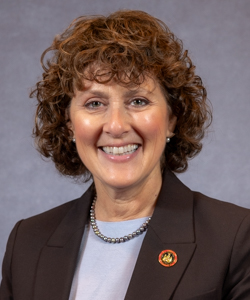
Sen. Shelly Hettleman
Sponsored bills
Maddy summarySB 859, the "Fair Share for Maryland Act of 2025," is a comprehensive tax code revision affecting Maryland taxpayers and businesses. It modifies estate tax rules (capping the exemption at $2 million for decedents dying in 2016-2017), adjusts child tax credits by changing income thresholds and phase-out amounts, and imposes new business transportation fees on corporations and pass-through entities. The bill also limits net operating loss deductions, requires certain corporations to file combined tax returns, and adjusts income tax brackets for high earners. These changes directly impact estates, families claiming child credits, and businesses operating in Maryland, with automatic annual inflation adjustments for credit thresholds.
Maddy summarySB 952 requires Maryland's Public Service Commission to consider "grid enhancing technologies" when reviewing applications for certificates of public convenience and necessity for overhead transmission lines. These technologies include high-performance conductors and storage systems designed to improve grid capacity, efficiency, reliability, and resilience. The bill amends existing law (Section 7-207(f)) to add these considerations to the Commission's decision-making process, directly affecting utility companies seeking approval for new transmission projects. This policy change expands the Commission's evaluation criteria without altering other existing requirements for transmission line reviews.
Maddy summarySB 853 prohibits the Public Service Commission from authorizing new overhead transmission line construction unless an applicant proves existing power line paths are insufficient. It requires developers to demonstrate that current transmission corridors cannot accommodate new lines before approval. The bill also limits local governments from conditioning permits on approvals like "conditional use" or "special exception" for new power lines. This directly affects utility companies seeking to build new transmission infrastructure and local governments issuing construction permits. The law takes effect July 1, 2025.
Maddy summaryMaryland's SB 847 requires all public and private higher education institutions to adopt and enforce policies addressing racial, ethnic, and religious violence, harassment, and intimidation. These policies must include mandatory training for staff on responding to hate incidents, clear complaint procedures with anonymous reporting options, and disciplinary actions following investigations. The bill also mandates that institutions publish time, place, and manner rules for campus expression and hold annual meetings with student organizations to discuss these policies and campus incidents. Additionally, institutions must align their diversity programming with the state's annual hate bias report data.
Maddy summarySB 913 requires owners of public electric vehicle (EV) charging stations (those available to the public for a fee) to register with Maryland’s Secretary of Agriculture by October 1, 2026. It applies testing standards for accuracy (like weight/measure regulations) to these chargers, mandates reliability reporting, and sets procedures for inspections and decommissioning. The bill excludes private home chargers and shared private equipment (e.g., apartment building chargers) from these requirements. Key provisions include registration deadlines, annual testing to ensure equipment meets standards, and consumer reporting rules developed with the Public Service Commission. This directly affects businesses and organizations operating public EV charging networks across Maryland.
Maddy summarySB 702 restricts the placement of pregnant incarcerated individuals in restrictive housing (locked cells for 17+ hours daily) in Maryland correctional facilities, barring most involuntary placements. It allows exceptions only for immediate risks of physical harm, flight, or communicable disease spread that cannot be managed otherwise, requiring facility staff to document why less restrictive options weren't possible. The bill mandates medical assessments every 8 hours, housing in the least restrictive setting, and specialized treatment plans developed by women’s health staff. It also requires written reviews of placements every 24 hours, detailed reporting to oversight officials, and specific infirmary care protocols for pregnant individuals.
Maddy summarySB 694 requires Maryland's Office of the Correctional Ombudsman to hire an independent consultant by October 1, 2026, to conduct a comprehensive assessment of the state's correctional system. The assessment must cover infrastructure (facilities, cell design, technology), staffing ratios and training, programming effectiveness, health services compared to national standards, and restrictive housing policies. It also mandates including stakeholder input (via interviews, surveys, and public hearings) and producing a report with cost-benefit analysis, comparisons to states like New York and New Jersey, and actionable recommendations with implementation timelines. This bill directly affects the Correctional Ombudsman's office, the state correctional system, and incarcerated individuals through the assessment process. The findings must be included in the Ombudsman's annual report to the Governor and General Assembly starting in 2027.
Maddy summarySB 943 requires petitioners in Maryland domestic violence cases to provide detailed information about respondents' firearms (e.g., make/model, storage locations, access points) when seeking protective orders. This affects both victims seeking protection and alleged abusers facing firearm surrender requirements. The bill also establishes a Task Force to study firearm use in domestic violence situations. These changes aim to improve safety planning by giving courts more specific details about firearm risks.
Maddy summarySB 827 limits the use of restrictive housing (like solitary confinement) for minors in Maryland juvenile facilities. It prohibits placing minors in restrictive housing solely for discipline, punishment, staff convenience, or retaliation. The bill requires facilities to justify such placement only when there’s an immediate safety risk, with no other alternatives, and mandates mental health screening within one hour. Minors can be placed in restrictive housing at their request (and can revoke this request), but such placement cannot exceed six hours, and facilities must develop a plan to return them to general population quickly. The bill directly affects all minors held in Maryland juvenile correctional facilities.