

Maddy summarySB 949 establishes rules for operating fully autonomous vehicles (level 4 or 5 systems) on Maryland highways without a human driver. It requires these vehicles to achieve a "minimal risk condition" if the system fails, display manufacturer certification labels, and meet federal safety standards. Transportation companies using autonomous vehicles must submit law enforcement interaction plans (detailing communication, towing, and recognition protocols) and proof of security to the state administration. The bill directly affects manufacturers, ride-hailing services, and other ground transportation companies operating autonomous fleets in Maryland. It treats the automated driving system as the legal "operator" for compliance with vehicle laws and crash reporting.
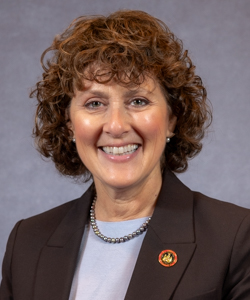
Sen. Shelly Hettleman
Sponsored bills
Maddy summaryMaryland's SB 346 establishes a refund program for beverage containers to boost recycling and reduce litter. It requires all redeemable containers sold in the state to display refund information, includes the refund value in both wholesale and retail prices, and mandates retailers to show this on customer receipts. Producers must register with the state, pay fees, and join a stewardship organization to manage the program, while counties can create redemption facilities to help meet recycling targets. The law aims to increase container reuse and recycling rates, reduce pollution from discarded containers, and fund public water refill stations through a new grant program. This directly affects beverage producers, retailers, consumers, and local governments managing redemption sites.
Maddy summarySB 426, the Procurement Reform Act of 2025, reorganizes Maryland's state procurement system by giving the Chief Procurement Officer more authority to delegate tasks and manage contracts. It modifies thresholds for public notices, reports, and small business preferences, and requires contractors over a certain value to submit workforce diversity plans. The bill establishes a new preference for businesses with "good labor practices," transfers the Employment Works Program to a new office, and clarifies rules for expedited contracts and apprenticeship requirements. These changes directly affect state agencies, contractors, and small businesses participating in Maryland procurement.
Maddy summarySB 490 eliminates citizenship requirements for members of certain Maryland state boards, committees, commissions, task forces, and workgroups. It replaces these requirements with a new mandate that members must "reflect the full diversity of the State to the extent practicable," affecting bodies across health, environment, labor, and public safety sectors. The bill achieves this by repealing and revising specific sections in Maryland’s code (including Business Occupations, Health, Environmental, and Public Safety laws) that previously required citizenship. Key provisions remove barriers for non-citizens to serve on these groups while requiring diversity considerations in appointments. This change applies to over 30 existing state entities as detailed in the bill’s code revisions.
Maddy summarySB 34 requires the Maryland Public Service Commission to consider conservation easements when reviewing applications for overhead transmission line projects. Specifically, it mandates that applicants must evaluate alternative routes to avoid properties with existing conservation easements or minimize impacts on those properties. The bill also requires applicants to provide detailed cost analyses and justification for rejected alternative routes. This directly affects utility companies seeking permits and landowners with conservation easements on proposed transmission line paths, amending existing review procedures under Maryland law.
Maddy summarySB 406 requires Maryland's Medicaid program and certain private health insurers (including nonprofit health plans and health maintenance organizations) to cover orthoses - custom-designed devices treating neuromuscular or musculoskeletal conditions - starting January 1, 2026. The law mandates annual coverage for the devices themselves, repairs, and replacements when medically necessary due to physiological changes or device damage (not misuse), with no higher copays than other medical benefits. It prohibits separate lifetime dollar limits for orthosis coverage and aligns medical necessity standards with Medicare guidelines, covering activities like daily living, job tasks, and physical therapy. This applies to all Medicaid enrollees and individuals covered under qualifying health insurance policies in Maryland.
Maddy summarySB 362 prohibits knowingly distributing a computer-generated image or audio recording that mimics a real person (a "forged digital likeness") as genuine, when the distributor knows or should know it's artificial. It defines such likenesses as those indistinguishable from reality, misrepresenting the person's appearance or speech, and likely to deceive reasonable viewers. The law excludes artistic works like drawings, cartoons, sculptures, and paintings from the prohibition. Violating the law is a misdemeanor punishable by up to three years in jail or a $1,000 fine. It also allows a defense if the distributor clearly warned viewers the likeness was fake.
Maddy summarySB 83 authorizes community-based organizations (like clinics, health centers, or local health departments) to establish supervised overdose and infectious disease prevention programs in Maryland, subject to approval by the Maryland Department of Health. These programs must operate in high-drug-use areas (with a maximum of six total, distributed across urban, suburban, and rural zones) and provide services including sterile supplies, overdose response (including naloxone), HIV/hepatitis testing, referrals to treatment, and harm reduction education. Programs may bill insurance for covered services and use mobile facilities, but cannot be located in residential zones. The bill directly affects program operators, people who use drugs, and health insurers, focusing on reducing overdose and disease transmission through accessible, non-punitive services.
Maddy summaryThis bill expands Maryland's legal protections to cover reproductive care, fertility preservation, and contraceptive services - including IVF and related medications - as "legally protected health care." It prevents healthcare providers from facing disciplinary actions, criminal charges, or civil lawsuits in Maryland courts for providing these services. The law also restricts out-of-state courts from compelling testimony, evidence, or enforcement related to these services unless the case meets specific criteria (e.g., brought by the patient or based on Maryland law). These changes apply to Maryland's courts, healthcare providers, and patients receiving covered services.
Maddy summarySB 395 requires Maryland's Department of Transportation to develop multimodal transportation programs (like improved transit, biking, and pedestrian options) alongside major highway expansion projects costing over $5 million. It mandates that the Department assess each project's impact on greenhouse gas emissions and vehicle miles traveled (VMT), and fund offsetting activities to ensure the net VMT increase from the project is zero or negative. The bill specifically directs funding toward overburdened and underserved communities affected by highway projects, prioritizing investments in transit, bike lanes, and land use changes in those areas. This applies to highway capacity expansions that add lanes or extend existing highways, aiming to align transportation planning with climate goals.