

Maddy summarySB 167 clarifies when lawsuits targeting public speech qualify as SLAPP suits (strategic lawsuits against public participation), which aim to silence criticism on public issues. It defines a SLAPP suit as one brought against someone who communicated about government actions or public concerns (e.g., in public forums, to officials, or in legislative proceedings) and is intended to deter such speech. The bill requires defendants to file a motion to dismiss SLAPP suits, shifts the burden to plaintiffs to prove "substantial justification," and mandates courts to rule quickly. If dismissed, defendants may recover attorney fees. This directly affects citizens, journalists, activists, and officials who engage with public issues, strengthening protections for free speech and petition rights under Maryland law.
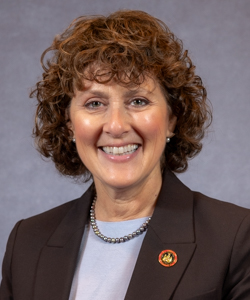
Sen. Shelly Hettleman
Sponsored bills
Maddy summaryThis bill prohibits Maryland state and local governments from seizing privately owned land protected by permanent agricultural or conservation easements through eminent domain. It directly affects landowners who have voluntarily placed their property under such easements to preserve farmland or natural areas. The key provision (Section 12-101(b)(2)) explicitly bans government takings of these easement-protected properties, while allowing exceptions for highway projects and Baltimore City procedures. The law takes effect October 1, 2025.
Maddy summaryThis Maryland law requires public school and college coaches to receive training on identifying signs of mental health issues in student-athletes. The State Department of Education and the Maryland Department of Health will create specific guidelines covering depression, trauma, violence, youth suicide, and substance abuse. All public schools and higher education institutions with athletic programs must provide this training to their coaches starting July 1, 2024.
Maddy summaryThis bill authorizes the Governor of Maryland to allocate state funding for the Professional and Volunteer Firefighter Innovative Cancer Screening Technologies Program. It mandates that the program receive at least $100,000 annually from fiscal years 2021 through 2024, with the amount increasing to at least $500,000 starting in fiscal year 2025 and continuing thereafter. The legislation also requires that all funds used for this program be subject to audits by the Office of Legislative Audits to ensure proper financial oversight.
Maddy summaryThis Maryland law prohibits healthcare providers from charging fees when attorneys request copies of patient medical records for specific legal purposes. The change directly affects patients who hire lawyers to help them file claims or appeal denials of Social Security disability income or benefits. Previously, only patients, their personal representatives, and representatives from nonprofit legal services organizations were exempt from these fees. Now, attorneys representing patients are added to the list of individuals who can obtain these records without paying a charge, provided the records are used for Social Security-related claims. The new rule takes effect on October 1, 2024.
Maddy summaryThis Maryland law establishes new rules for assisted living referrers, who are individuals or agencies that recommend people to assisted living facilities in exchange for compensation. The bill requires these referrers to register with the state, maintain liability insurance, and ensure their employees undergo criminal background checks. Additionally, referrers must provide clear written agreements and service descriptions to clients, facilitate tours of the facilities they recommend, and stop selling client data without explicit consent. The legislation also prohibits referrers from receiving referral fees more than two years after making a recommendation and mandates that they only refer clients to licensed programs. Finally, the state will maintain a public database of licensed assisted living programs to help referrers verify facility status.
Maddy summaryThis Maryland law allows researchers from colleges and universities to review confidential court records related to extreme risk protective orders for academic or policy studies. To access these records, the institution must sign an agreement with the state judiciary that ensures the data remains secure, is used only for the specific research project, and is never shared with unauthorized individuals. The legislation also permits researchers to publish statistical summaries of the data as long as no individual's identity is revealed. Violations of the confidentiality agreement could result in legal penalties or court injunctions to stop unauthorized disclosures.
Maddy summaryThis bill expands Maryland's existing Law Enforcement Cadet Apprenticeship Program into a broader Public Safety Apprenticeship Program that includes correctional facilities and other public safety agencies. It increases the maximum grant amounts available to agencies, raising the startup grant limit to $200,000 and the per-apprentice stabilization grant to $5,000, while also requiring agencies to bargain with unions regarding employment terms before receiving funds. Additionally, the legislation mandates the Maryland Police Training and Standards Commission to create mental health wellness policies for law enforcement and correctional facilities and establishes a new workgroup to study ways to increase employment in these sectors.
Maddy summaryThis Maryland law expands a state income tax break for law enforcement officers to include those who live in areas with higher crime rates than the state average. Under the new rules, eligible officers can subtract up to $5,000 of their income from their state tax calculation if they meet specific residency and employment criteria. The bill applies to various police forces, including county and municipal officers, state units, and members of the Maryland-National Capital Park Police and the Washington Suburban Sanitary Commission Police Force. To determine eligibility, the Maryland Police Training and Standards Commission must certify which local areas have crime rates exceeding the state average, with these certifications occurring every three years. The changes take effect for tax years starting after December 31, 2023.
Maddy summaryThis bill establishes the Center for Firearm Violence Prevention and Intervention within the Maryland Department of Health to reduce gun violence and misuse through a public health approach. The center will be led by an executive director who will partner with federal, state, and local agencies, as well as communities disproportionately affected by firearm violence, to develop and implement prevention strategies. Key actions include creating a state plan by May 2025, offering training and technical assistance to agencies and organizations, sharing data across jurisdictions, and promoting evidence-based initiatives. Funding for the center will be included in the state's annual budget starting in fiscal year 2026.