

Maddy summaryThis bill ensures that blind and visually impaired students in Maryland receive textbooks and learning materials in accessible formats like braille, large print, or audio. It requires school districts to coordinate with the state's Instructional Resources Center to provide these specialized materials by a specific date each school year. Publishers must supply electronic files for new textbooks so they can be converted into accessible formats, while the state will cover costs for materials that cannot be produced otherwise. The law also mandates that students with some remaining vision still have the right to learn braille if it is deemed appropriate for their education. Additionally, the bill establishes new certification standards for teachers specializing in working with blind and visually impaired students.
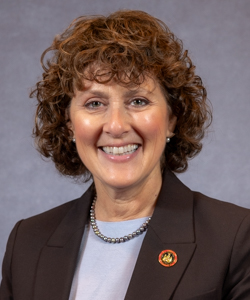
Sen. Shelly Hettleman
Sponsored bills
Maddy summaryThis Maryland law authorizes the state to provide up to $1 million annually in grants to nonprofit organizations that offer automotive repair training to incarcerated or formerly incarcerated individuals. To qualify for these funds, organizations must train at least 50 people each year and be able to issue nationally recognized automotive repair certificates to participants. The Governor's Office of Crime Prevention, Youth, and Victim Services will manage the distribution of these grants and require recipients to report how the money was used and the outcomes achieved. The program is set to run from fiscal year 2026 through 2028, with the goal of improving employment opportunities for people reentering society.
Maddy summaryThis Maryland law establishes a grant program to help reproductive health care clinics improve their physical security and safety operations. Administered by the Governor's Office of Crime Prevention, Youth, and Victim Services, the program provides funding for specific upgrades such as better lighting, fencing, access control systems, and alarm networks. To qualify, clinics must offer legally protected reproductive health services, and the program includes strict rules to keep applicant information confidential to protect the safety of the recipients. The legislation authorizes an initial budget of $500,000 for fiscal year 2026, with up to 5% of those funds reserved for administrative costs.
Maddy summaryThis bill creates a sales and use tax exemption for nonprofit organizations that maintain memorials on property owned by the State of Maryland. To qualify for this exemption, the organization must be exempt from federal taxation under Internal Revenue Code section 501(c)(3), and any money raised from the sale of items must be used specifically to maintain the memorial on state-owned land. The law takes effect on July 1, 2024, allowing these organizations to sell goods without paying sales tax as long as the proceeds support the upkeep of the memorial.
Maddy summaryThis Maryland bill expands the state's definition of "legally protected health care" to include specific gender-affirming treatments, such as hormone therapy and puberty blockers, when provided by licensed medical professionals. By updating several state laws, the measure ensures that these services receive the same legal protections as other protected health care, shielding providers from disciplinary actions and preventing the state from sharing resources with out-of-state investigations related to the treatment. Additionally, the bill restricts courts from issuing subpoenas or ex parte orders to investigate these medical matters unless the underlying conduct would also be considered a crime within Maryland. These changes primarily affect healthcare providers, patients seeking gender-affirming care, and legal entities involved in investigations or litigation concerning such treatments.
Maddy summaryThis Maryland bill authorizes insurance reimbursement for sexual assault forensic exams performed via peer-to-peer telehealth, where a forensic nurse assists a patient through video or interactive audio while a qualified health care provider conducts the physical exam. It also mandates the Maryland Sexual Assault Evidence Kit Policy and Funding Committee to study the feasibility of a pilot program for these remote examinations and create a plan to potentially expand the service statewide. The legislation defines specific terms for telehealth interactions, ensures that victims receive these services at no cost, and grants legal immunity to providers who perform these exams without obtaining parental consent for minors.
Maddy summaryThis Maryland bill requires that naloxone, a medication used to reverse opioid overdoses, be placed in the same location as automated external defibrillators within all public buildings. The State Emergency Medical Services Board, working with the Department of Health, will manage this initiative using existing funds from the Opioid Restitution Fund. To encourage participation, the law grants legal protection from lawsuits to building owners and individuals who provide or administer this naloxone in good faith. These changes aim to increase the availability of life-saving equipment and medication in public spaces to address both cardiac arrest and drug overdoses.
Maddy summaryThis bill establishes a certification requirement for domestic violence programs in Maryland, mandating that they be approved by the federally recognized State domestic violence coalition to operate as comprehensive programs. It creates a special, nonlapsing grant fund within the Governor's Office of Crime Prevention, Youth, and Victim Services to provide financial support to these certified public and private nonprofit organizations. The fund will be used to cover program operations and establish additional shelters, with interest earnings automatically added to the fund to ensure its growth. Additionally, the legislation sets standards for program supervision and evaluation while allowing the state to seek funding from federal, local, and private sources.
Maddy summaryThis bill establishes two new programs within the Maryland Technology Development Corporation to support technology-based start-up companies in the Baltimore area. The first program provides grants of up to $50,000 to startups founded by students or faculty at local universities, requiring that at least 20% of the funds be used to hire third-party consultants for planning and technical assistance. The second program, a pilot initiative, offers incentives to eligible universities to foster entrepreneurship, industry partnerships, and commercialization projects, particularly those involving artificial intelligence or machine learning in healthcare and biotechnology. Additionally, the legislation repeals a previous mandated appropriation for a telework assistance grant program and requires annual budget allocations for these new innovation initiatives.
Maddy summaryThis bill establishes the Office of the Correctional Ombudsman within the Office of the Attorney General to investigate complaints and administrative actions involving the Department of Public Safety and Correctional Services and the Department of Juvenile Services. The new unit will have the authority to conduct reviews, refer matters for criminal or disciplinary action, and subpoena testimony or evidence, while also protecting employees who provide information from reprisals. Funding for the office will come from a portion of savings generated by prison population reductions, as determined by the Justice Reinvestment Oversight Board. Additionally, the bill transfers the existing Juvenile Justice Monitoring Unit into this new ombudsman office and creates an advisory board to oversee its operations.