

Maddy summarySB 502 expands Maryland's existing property tax credit program to include judicial officers, their surviving spouses, and cohabitants - previously, the credit only covered law enforcement officers and rescue workers. The bill modifies the law to define "public safety officer" to include judicial officers and requires counties or municipalities to establish by law who qualifies as a judicial officer. It allows disabled judicial officers, their surviving spouses (if unmarried), and cohabitants to claim the credit against property taxes on their primary residence, with specific residency and disability criteria. The credit applies retroactively to qualifying individuals who met the requirements before the bill's enactment.
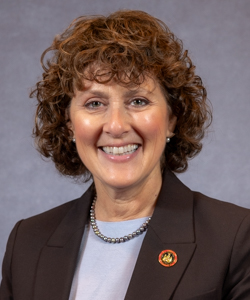
Sen. Shelly Hettleman
Sponsored bills
Maddy summarySB 516 exempts personal property used in qualifying large family child care homes from property tax under Maryland law (Section 7-227). It repeals outdated requirements for real property improvements to qualify for tax credits and increases the maximum annual property tax credit for eligible facilities from $3,000 to $10,000 (Section 9-213). Local governments (counties, Baltimore City, or municipalities) can now grant this credit against real property tax for portions of property used by registered large family child care homes, licensed child care centers, or day care centers for elderly/adults. The bill takes effect June 1, 2025, applying to taxable years beginning after June 30, 2025.
Maddy summarySB 181 (Correctional Services - Geriatric and Medical Parole) requires Maryland’s Parole Commission to consider an incarcerated person’s age when deciding parole eligibility, specifically including age in the assessment of "reasonable probability" of not reoffending. It also clarifies medical parole standards, defining "chronically debilitated" (e.g., severe dementia or permanent disability) and "terminal illness," and mandates that medical parole requests include a licensed medical professional’s evaluation. The bill requires the Commission to develop procedures for reviewing such requests and allows for a direct meeting between the incarcerated person and the Commission under certain medical circumstances. This directly affects older inmates (60+) or those with serious, non-improving medical conditions who are eligible for parole.
Maddy summarySB 598 requires county property assessors to use a specific method when valuing commercial real estate developed under federal low-income housing tax credit programs (Section 42 of the Internal Revenue Code). It mandates that assessors calculate the property’s value based on its actual or anticipated net operating income, adjusted upward by 1.5% to 2% to account for affordability restrictions, rather than counting tax credits as income. The bill directly affects developers and owners of such properties, as well as county assessment offices responsible for property tax calculations. It prohibits assessors from treating federal tax credits under Section 42 as income when determining property value. The law takes effect June 1, 2025, applying to taxable years beginning after June 30, 2025.
Maddy summarySB 431, the Registered Apprenticeship Investments for a Stronger Economy (RAISE) Act, creates new programs to expand apprenticeships in Maryland. It allows the State Board of Plumbing to waive journey plumber license exams for those completing approved apprenticeships and authorizes the Secretary of Labor to waive exams for other licenses after approved training. The bill establishes the Maryland Apprenticeship Incentive Pay Per Apprentice Program, which provides payments to employers for each apprentice they train, funded by a new nonlapsing special fund. These changes directly affect apprentices, employers offering training, and licensing boards by reducing barriers to entry and incentivizing employer participation in registered apprenticeship programs.
Maddy summarySB 673 establishes the Maryland STEM Program within the State Department of Education. It provides additional pay to public school teachers who teach STEM subjects (science, math, technology, or computer science) at nonpublic schools, while requiring nonpublic schools to apply for participation and report annual data. The program aims to address STEM workforce needs by incentivizing current teachers to gain qualifications, attracting new educators, and improving statewide STEM access. Local school systems can object to a teacher’s participation if conflicts arise with their public school duties or impact instruction quality, with objections requiring specific evidence and review. The bill directly affects public school teachers seeking supplemental income, nonpublic schools seeking to partner with them, and local school systems managing teacher assignments.
Maddy summarySB 1040 (FEDERAL Jobs Act of 2025) creates an Expedited Hiring Program within Maryland's Department of Budget and Management to recruit former federal employees for state government positions. It directly affects eligible applicants who previously worked for the federal government for at least one year and left after January 15, 2025, as well as state appointing authorities responsible for filling vacancies. Key provisions require appointing authorities to fill eligible vacancies within 40 days, modify job descriptions to appeal to former federal workers, and implement marketing, applicant rating, and referral processes. The program aims to leverage federal expertise for state roles while operating under the State Personnel Management System.
Maddy summarySB 683 (Protect Our Federal Workers Act) renames the "Federal Government Shutdown Employee Assistance Loan Fund" to the "Federal Government Employee Assistance Loan Fund" and expands its eligibility. The bill allows Maryland to use funds from the Catastrophic Event Account to assist federal workers affected by closures, relocations, or mass layoffs of federal offices (beyond just government shutdowns). It specifically adds these new circumstances to the Fund’s purpose, enabling loans to Maryland-resident federal employees who lost pay during shutdowns *or* were terminated due to federal facility changes beyond their control. The bill modifies existing Maryland law (Sections 7-324 and 7-327) to formalize these changes, ensuring the Fund remains continuously available for these purposes.
Maddy summarySB 433 establishes the Office of Disability Employment Advancement and Policy within Maryland’s Department of Disabilities and creates the "Maryland as a Model Employer Initiative" to improve hiring, retention, and advancement of people with disabilities in state government. The office will develop employment strategies, collect data from state agencies on disability workforce outcomes, and oversee the initiative, which requires agencies to set hiring/retention goals and implement best practices. State agencies must report annually on progress and barriers to employment for people with disabilities starting in 2026. The bill does not create new benefits or entitlements but mandates policy coordination and transparency for state government employment practices.
Maddy summarySB 944 (Maryland Housing Data Transparency Act) requires large Maryland jurisdictions (with 150,000+ residents) to submit annual reports on residential housing permits, and jurisdictions issuing 50+ annual residential permits to report monthly starting January 2027. These reports must include permit details like approval dates, housing type, unit counts, construction costs, and processing times. The Department of Planning must publish this data publicly by July 2027 on an interactive, searchable website, organized by housing type (e.g., apartments, single-family) and county. The bill directly affects local governments managing significant housing development activity, aiming to increase transparency in housing permit data.