

Maddy summaryThis bill creates the Maryland Collaborative to Advance Implementation of Coverage of Over-the-Counter Birth Control, requiring the Maryland Commission for Women to establish it. The Collaborative includes representatives from state agencies (like Health, Insurance Administration, and Budget), pharmacies, reproductive health organizations, consumer advocates, and health insurers. Its purpose is to study and recommend ways to improve access to over-the-counter birth control through pharmacy implementation, point-of-sale options, public health initiatives, and education. The bill directly affects Maryland residents who use over-the-counter birth control, aiming to strengthen existing coverage requirements established by the 2016 Contraceptive Equity Act.
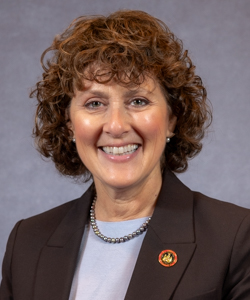
Sen. Shelly Hettleman
Sponsored bills
Maddy summarySB 1000 allows existing Class B sports wagering facility licensees (those licensed on or before September 30, 2023) to request relocation within their current county. Licensees must submit a written request to the State Lottery and Gaming Control Commission, which may approve the move only if the new location complies with existing location requirements under Maryland law. The bill does not permit relocations to new counties or change the fundamental licensing rules for new facilities. This policy change takes effect July 1, 2025.
Maddy summarySB 911 increases Maryland's property tax exemption for blind individuals and their surviving spouses from $15,000 to $40,000 on their primary residence. The bill defines a "blind individual" as someone with a permanent visual impairment meeting specific medical criteria and clarifies that the exemption applies to the assessed value of a dwelling house (including the lot and necessary structures). Surviving spouses who haven't remarried become eligible for the exemption after the blind individual's death. The bill also specifies that individuals cannot claim both this exemption and another specific property tax exemption, though they may use it alongside other available exemptions.
Maddy summarySB 880 requires Maryland's Governor to include a $5 million annual appropriation in the state budget for the Governor's Office for Children to provide grants covering the operating expenses of the Boys and Girls Clubs of Maryland. Starting in fiscal year 2027, this funding must be included each year in the budget process through a specific amendment to state law. The bill directly affects the Boys and Girls Clubs of Maryland by guaranteeing consistent state funding for their daily operations. This policy change mandates a fixed annual allocation, ensuring predictable financial support without altering the clubs' existing structure or services.
Maddy summarySB 846 requires cellular phone carriers in Maryland to include a specific option in service contracts. This option allows multiple account holders (customers of record) to alter, modify, or cancel the service contract without needing others' approval, but only if all account holders agreed in writing when the contract was first signed. The bill directly affects customers sharing a phone plan, such as families or roommates, by giving them more flexibility to manage their account terms. It becomes effective October 1, 2025, and amends existing law to mandate this provision.
Maddy summarySB 278 expands Maryland's definition of "uniformed services" to include members of the Public Health Service and the National Oceanic and Atmospheric Administration (NOAA), previously limited to only the armed forces. This change updates how "veteran" status is defined in state law, ensuring these service members qualify for state benefits. The bill requires Maryland's tax and pension programs to apply equally to all uniformed services, eliminating prior exclusions for non-military personnel. It directly affects service members in the Public Health Service and NOAA, granting them parity in state tax relief, pensions, and other benefits.
Maddy summarySB 603 authorizes an annual $350,000 appropriation starting in fiscal year 2027 for the University of Maryland, College Park’s TerpsEXCEED Program. This program provides educational and employment support specifically to students with intellectual disabilities. The funding covers direct services like academic advising, career development courses, internship coordination, and connections to disability support agencies. It aims to create sustainable support for the program’s operations and future expansion. The bill becomes effective July 1, 2025.
Maddy summarySenate Bill 432, known as the "Expungement Reform Act of 2025," updates Maryland's laws concerning the expungement of criminal records, directly affecting individuals seeking to clear certain past convictions. The bill modifies the waiting periods for filing expungement petitions after a sentence is completed and expands the list of misdemeanor convictions eligible for expungement. It also requires courts to consider if restitution has been paid or if the person lacks the ability to pay before granting expungement. Finally, the bill prohibits the Maryland Judiciary Case Search from displaying any reference to certain expunged records.
Maddy summarySB 305 requires virtual currency kiosk operators in Maryland to register with the Commissioner of Financial Regulation starting January 1, 2026. Operators must provide business details, kiosk location information (including fixed and temporary sites), and unique identifiers for each machine. The bill establishes annual renewal requirements and authorizes fees for registration and compliance. It directly affects businesses operating standalone kiosks that let consumers exchange cash or cards for virtual currency, excluding standard ATMs and certain reward programs. The regulation applies specifically to kiosk-based virtual currency services, not broader cryptocurrency exchanges.
Maddy summarySB 327, the Affordable Housing Payment In Lieu of Taxes Expansion Act, allows rental property owners in Maryland to pay a negotiated amount instead of county property taxes if they agree to maintain at least 50% of their rental units as affordable housing for 15 years. This applies to properties where "affordable" means units costing no more than 30% of a household’s income, defined as households earning 60% or less of the area median income (as updated by HUD). The bill modifies existing tax law to expand this payment-in-lieu-of-taxes option, replacing previous requirements with the new 50% affordability threshold and 15-year term. It directly affects rental property owners and county governments, creating a formal process for these agreements.