Issue · Healthcare

Healthcare

Every healthcare bill, vote, and legislator stance in Maryland, automatically classified by Maddy, our AI policy reader.

Total bills
376
2026 Regular Session
Top supporter
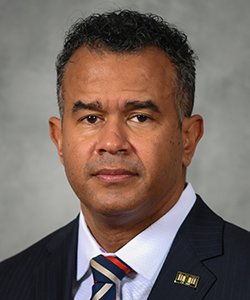
Alonzo Washington
100% support rate
Top opponent
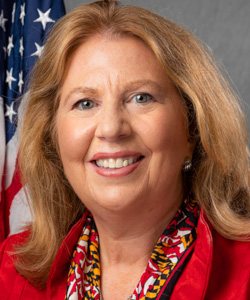
Jason Gallion
0% support rate
Ranked legislators
10
5 support · 5 oppose
Key legislators

Who's moving healthcare in Maryland

Legislators moving healthcare in Maryland
Legislator Party Stance Support rate Votes
Alonzo Washington
Alonzo Washington Senate · District 22
D
Strong +
100% 68
Brian Feldman
Brian Feldman Senate · District 15
D
Strong +
100% 70
C.T. Wilson
C.T. Wilson House · District 28
D
Strong +
100% 98
Kevin Harris
Kevin Harris Senate · District 27
D
Strong +
100% 70
Pam Beidle
Pam Beidle Senate · District 32
D
Strong +
100% 71
Jason Gallion
Jason Gallion Senate · District 35
R
Strong −
0% 71
Jack Bailey
Jack Bailey Senate · District 29
R
Strong −
0% 69
Johnny Salling
Johnny Salling Senate · District 6
R
Strong −
4% 71
J.B. Jennings
J.B. Jennings Senate · District 7
R
Strong −
4% 71
Mary Beth Carozza
Mary Beth Carozza Senate · District 38
R
Strong −
5% 70
Showing 211–220 of 376 bills

All healthcare bills

signed · Maryland · Senate Apr 28, 2026

SB 742: Maryland Medical Assistance Program and Developmental Disabilities Administration - Home- and Community-Based Services Eligibility Determinations (Maryland Protecting People With Disabilities Act)

SB 742, the "Maryland Protecting People With Disabilities Act," modifies Maryland’s Medicaid eligibility processes to better protect individuals with disabilities who receive home- and community-based services. It extends the appeal timeframe for those losing eligibility and requires services to continue uninterrupted during appeals, preventing administrative errors from causing abrupt service loss. The bill prohibits "procedural disenrollment" (terminating coverage due to renewal process issues) and mandates the Department of Health to reserve waiver slots for people who lost eligibility unfairly. These changes align with the Olmstead decision, ensuring individuals can remain in community settings without unnecessary bureaucratic barriers. The bill directly affects Maryland Medicaid recipients with disabilities who rely on home- and community-based services.
Sub-Topics Medicaid Tags People with Disabilities
in committee · Maryland · House of Delegates Mar 13, 2026

HB 1251: Health Facilities and Health Insurance - Palliative Care - Required Access and Coverage (Edna G. Neal Palliative Care Act)

HB 1251, the Edna G. Neal Palliative Care Act, requires Maryland hospitals, nursing homes, and hospice facilities to provide patients with access to palliative care programs and inform them about these services at key points like diagnosis and hospital admission, starting October 1, 2027. It also mandates that health insurers, nonprofit health plans, and health maintenance organizations cover specific palliative care services - including pain management, counseling, and family support - without copayments, coinsurance, or deductibles, and prohibits denial of coverage for patients receiving concurrent curative treatment. The bill affects all covered health facilities and insurers operating in Maryland, ensuring equitable access to palliative care for patients with serious illnesses like cancer or heart disease. Annual reports on palliative care access and quality will be required starting in 2028.
Sub-Topics Hospitals Insurance
in committee · Maryland · House of Delegates Mar 19, 2026

HB 1126: Health Insurance and Managed Care Organizations - Laboratory Services - Contract Providers

This Maryland bill (HB 1126) prevents health insurers and managed care plans from restricting patients' choice of laboratories. It requires insurers to allow patients to select any participating lab without limitations, prohibits denying labs participation if they agree to plan terms (like service standards and reimbursement rates), and bans extra fees for lab services that other patients don't pay. The law applies to all health benefit plans covering laboratory services in Maryland and takes effect October 1, 2026. It directly affects insurers, participating labs, and patients seeking lab services.
Sub-Topics Insurance
passed · Maryland · House of Delegates Mar 24, 2026

HB 860: Petitions for Emergency Evaluation (Arnaud and Magruder Memorial Act)

HB 860, the Arnaud and Magruder Memorial Act, sets a 5-day initial limit for emergency evaluation petitions after court approval, with extensions of up to 5 days each (totaling no more than 30 days) based on the individual's current behavior. The bill requires courts to include the petition's expiration date and clarifies that peace officers must transport individuals to emergency facilities when holding a valid petition (either court-endorsed within 5 days or signed by authorized professionals), allowing electronic petitions. This law directly affects courts reviewing petitions, peace officers executing them, emergency facilities receiving individuals, and people subject to emergency evaluations. It standardizes timelines and procedures to ensure timely care while preventing prolonged detention without court review.
Sub-Topics Mental Health
in committee · Maryland · Senate Feb 12, 2026

SB 795: Health Insurance - Vision Benefits - Regulation of Insurers and Vision Benefit Managers

SB 795 establishes new regulations for vision insurance benefits in Maryland. It requires insurers and vision benefit managers to publicly disclose specific information on their websites, including their legal details, regulatory oversight, and contact information. The bill sets standards for contracts between these companies and eye care providers (like optometrists and ophthalmologists), including rules for reimbursement rates, provider inclusion procedures, and prohibitions on certain restrictive contract terms. These changes directly affect vision benefit plan providers, eye care professionals, and enrollees who use vision insurance coverage. The law creates a new regulatory framework under Maryland’s Insurance Article to standardize vision benefit offerings and transparency.
Sub-Topics Insurance
in committee · Maryland · House of Delegates Mar 11, 2026

HB 1481: Tissue Banks and Hospitals - Autologous and Directed Blood Donations

HB 1481 prevents hospitals and tissue banks from denying physician-ordered autologous (patient's own blood) or directed (designated donor) blood donations solely due to internal policies, provided all safety and regulatory requirements are met. It requires healthcare facilities to allow these donations for planned medical procedures if the treating physician deems them medically appropriate. Facilities may only refuse such requests when medical, logistical, or regulatory constraints make compliance impossible. The bill also mandates that hospitals provide clear information about blood donation options to patients, consistent with informed consent standards.
died · Maryland · House of Delegates Mar 13, 2026

HB 1487: Public Health – Baltimore City Mobile Infant and Maternal Health Pilot Program

HB 1487 establishes the "MomMobile" pilot program within Maryland’s Department of Health to deliver mobile postpartum care in Baltimore City. It directly affects residents in underserved Baltimore neighborhoods by providing on-site checkups, mental health screenings, and culturally competent care from midwives and doulas via mobile health units. The bill requires the Secretary to collaborate with Baltimore City Health Department to determine operating neighborhoods, funding partnerships, staffing, and evaluation metrics. Annual reports on program implementation must be submitted to the Governor and legislative committees starting in 2027. The program aims to reduce transportation barriers, improve visit attendance, and identify metrics for maternal health outcomes.
signed · Maryland · Senate Apr 28, 2026

SB 555: Health - Dementia Services and Brain Health Program and Provider Resource Toolkit

SB 555 establishes the Dementia Services and Brain Health Program within the Maryland Department of Health to lead state public health efforts for brain health and dementia care. The bill shifts responsibilities from a "Director" position to this new Program, requiring it to staff the Virginia I. Jones Alzheimer’s Council, oversee implementation of the State Plan on dementia, and develop a clinical toolkit for healthcare providers. The toolkit will provide evidence-based guidance to help providers deliver person-centered dementia care across medical settings. This bill directly affects Maryland residents living with dementia or at risk, healthcare providers who will use the toolkit, and the Council’s operations.
Sub-Topics Public Health
in committee · Maryland · House of Delegates Feb 13, 2026

HB 1477: Public Health - Ibogaine Clinical Research Grant Program - Establishment (Veterans Mental Health Innovations Act)

HB 1477 establishes Maryland's Ibogaine Clinical Research Grant Program to fund clinical trials on ibogaine - a naturally occurring compound from the iboga plant - for treating opioid use disorder and other neurological conditions. The program, administered by the Maryland Department of Health in consultation with the Department of Veterans and Military Families, awards up to three annual grants to eligible research institutions in Maryland that meet specific criteria (including expertise in neurological disorders and substance use treatment) and require matching funds equal to the grant amount. Funding comes from $500,000 annually (fiscal years 2028-2030) in the Opioid Restitution Fund, with recipients required to conduct FDA-overseen trials and submit quarterly progress and financial reports. The bill aligns with the "Veterans Mental Health Innovations Act" title but does not restrict trials to veterans, focusing instead on broader neurological and opioid use disorder research.
signed · Maryland · Senate Apr 28, 2026

SB 466: Income Tax - Credit for Physician Preceptors in Areas With Health Care Workforce Shortages - Alterations

SB 466 modifies Maryland's income tax credit for physicians mentoring medical students in underserved areas. It removes a requirement that students must be enrolled in Maryland medical schools and reduces the minimum hours per clinical rotation from 100 to 90. The bill directly affects licensed physicians serving as preceptors in areas designated as having health care workforce shortages by the state. This change aims to expand eligibility for the $1,000-per-student rotation tax credit (capped at $10,000 annually per physician), potentially increasing mentor availability in shortage regions. The credit remains limited to $100,000 total annually for all physicians.
Sub-Topics Income Tax Tax Credits
Showing 211 to 220 of 376 bills
Previous 1 21 22 23 38 Next