Issue · Healthcare

Healthcare

Every healthcare bill, vote, and legislator stance in Maryland, automatically classified by Maddy, our AI policy reader.

Total bills
376
2026 Regular Session
Top supporter
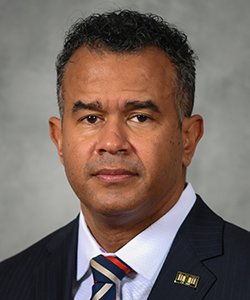
Alonzo Washington
100% support rate
Top opponent
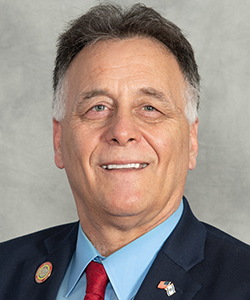
Jason Gallion
0% support rate
Ranked legislators
10
5 support · 5 oppose
Key legislators

Who's moving healthcare in Maryland

Legislators moving healthcare in Maryland
Legislator Party Stance Support rate Votes
Alonzo Washington
Alonzo Washington Senate · District 22
D
Strong +
100% 68
Brian Feldman
Brian Feldman Senate · District 15
D
Strong +
100% 70
C.T. Wilson
C.T. Wilson House · District 28
D
Strong +
100% 98
Kevin Harris
Kevin Harris Senate · District 27
D
Strong +
100% 70
Pam Beidle
Pam Beidle Senate · District 32
D
Strong +
100% 71
Jason Gallion
Jason Gallion Senate · District 35
R
Strong −
0% 71
Jack Bailey
Jack Bailey Senate · District 29
R
Strong −
0% 69
Johnny Salling
Johnny Salling Senate · District 6
R
Strong −
4% 71
J.B. Jennings
J.B. Jennings Senate · District 7
R
Strong −
4% 71
Mary Beth Carozza
Mary Beth Carozza Senate · District 38
R
Strong −
5% 70
Showing 201–210 of 376 bills

All healthcare bills

signed · Maryland · House of Delegates Apr 28, 2026

HB 1181: Family Law - Children in Out-of-Home Placement - Voluntary Placement Agreements

HB 1181 amends Maryland's Family Law to streamline voluntary placement agreements for children with developmental disabilities or mental illnesses in out-of-home care. The bill requires local departments to schedule an assessment meeting with families and providers within 5 business days of receiving a request, and issue a written eligibility decision within another 5 business days. It clarifies that local departments cannot seek legal custody solely to obtain treatment for these children, while allowing placements to exceed 180 days if a juvenile court finds continued placement is in the child's best interest. These changes aim to reduce current delays (often 60-90 days) that contribute to extended hospital stays and family distress.
in committee · Maryland · House of Delegates Feb 13, 2026

HB 1423: Maryland Department of Health - Workgroup on Home- and Community-Based Services

HB 1423 requires the Maryland Department of Health to create a workgroup focused on improving home- and community-based services for older adults and people with disabilities. The workgroup, including state agency representatives and community stakeholders, will review five specific programs (like the Community First Choice Program and Home and Community-Based Options Waiver) to assess eligibility, wait times, access barriers, and provider rates. It must make recommendations to improve these services and submit a final report to the Governor and relevant legislative committees by October 1, 2027. This bill directly affects the Department of Health’s oversight of these programs and aims to address systemic issues in service delivery.
Sub-Topics Long-Term Care
in committee · Maryland · House of Delegates Mar 13, 2026

HB 1461: Health Insurance - Coverage for Specialty Drugs - Rheumatologic Conditions

HB 1461 requires Maryland insurers, nonprofit health plans, and health maintenance organizations to cover specialty drugs for rheumatologic conditions (like rheumatoid arthritis) when administered or dispensed by in-network rheumatology providers meeting state regulations. It prohibits insurers from excluding coverage for these drugs based solely on the provider’s location (e.g., office-based vs. specialty pharmacy) and mandates fair reimbursement rates comparable to those paid to designated specialty pharmacies. The bill specifically applies to oral medications requiring complex dosing, auto-injected drugs, or those used with infusion therapies. It does not override medical necessity standards for coverage denial but aims to prevent treatment delays and ensure access to office-based care for patients with chronic rheumatologic conditions.
in committee · Maryland · Senate Feb 11, 2026

SB 862: Gaming - Problem Gambling - Prevalence Study and Fund Revenue

SB 862 requires the Maryland Department of Health to conduct a study measuring how common problem gambling is among mobile gambling users, with an initial report due by July 1, 2031, and follow-up studies every five years. The bill also changes how gambling revenue is distributed by directing 1% of proceeds from fantasy sports competitions and 1% from sports wagering to the Problem Gambling Fund. This fund will support treatment and prevention programs for individuals with gambling disorders. The bill amends existing law to implement these requirements for mobile gambling studies and dedicated funding.
in committee · Maryland · Senate Feb 9, 2026

SB 561: Maryland Medical Assistance Program - Community Violence Prevention Services - Reimbursement and Provision of Services

SB 561 updates Maryland's Medical Assistance Program to require reimbursement for community violence prevention services provided in-person, regardless of where the services occur. It explicitly allows telehealth delivery (including audio-only calls) without denying coverage, and prohibits requiring service providers to maintain hospital affiliations. The bill defines "community violence" as non-family interpersonal violence in public spaces and specifies that services must be evidence-based, trauma-informed, and non-psychotherapeutic. It directly affects certified violence prevention professionals, service providers, and program recipients exposed to or injured by community violence. The policy change ensures consistent coverage for these services whether delivered in-person or via telehealth.
Sub-Topics Hospitals Telehealth
in committee · Maryland · Senate Feb 4, 2026

SB 563: Health Facilities - Confidentiality of Medical Records - Crisis Pregnancy Clinics

SB 563 adds crisis pregnancy clinics to Maryland’s definition of "health care provider" under confidentiality laws. This means these clinics must now follow the same medical record privacy rules as hospitals, clinics, and other healthcare facilities. The bill specifically covers clinics providing pregnancy-related care, including mobile facilities, even if they’re not subject to federal HIPAA rules. It applies directly to crisis pregnancy clinics operating in Maryland, requiring them to protect patient records like other healthcare providers. The law takes effect October 1, 2026.
signed · Maryland · House of Delegates May 26, 2026

HB 1540: University of Maryland Capital Region Medical Center - Funding - Repeal of Termination Date

HB 1540 repeals the 2028 termination date for annual state funding required for the University of Maryland Capital Region Medical Center. The bill ensures the state will continue appropriating $10 million each fiscal year (previously set to end in 2028) to support the center's operations and transition. This directly affects the University of Maryland Medical System Corporation and Prince George's County, which must provide matching funds totaling $208 million for capital construction. The funding is specifically designated to maintain the medical center's financial viability, improve healthcare access, and prevent operating losses. The change removes the fixed end date, making the funding permanent unless future legislation alters it.
in committee · Maryland · House of Delegates Feb 19, 2026

HB 808: Maryland Medical Assistance Program - Step Therapy, Fail-First Protocols, and Prior Authorization - Prescription Drugs to Treat Serious Mental Illness

HB 808 prohibits Maryland's Medicaid program (Medical Assistance Program) from requiring prior authorization or step therapy/fail-first protocols for prescription drugs treating five specific serious mental health conditions: bipolar disorder, schizophrenia, major depression, PTSD, or medication-induced movement disorders linked to mental illness treatment. Starting July 1, 2026, the program must cover these medications without extra approval steps for adult enrollees diagnosed with these conditions. The law applies only to Medicaid-covered drugs for these diagnoses and expires on June 30, 2029. This directly affects Medicaid enrollees with these diagnoses by reducing administrative barriers to accessing prescribed mental health medications.
Sub-Topics Medicaid Mental Health
signed · Maryland · House of Delegates Apr 14, 2026

HB 1002: Nursing Facilities - Involuntary Discharge or Transfer

HB 1002 prohibits nursing facilities from involuntarily discharging or transferring residents to temporary housing (like hotels) without confirmation from the receiving facility that it can accept the resident. It requires facilities to provide residents with clear written notices at least 10 days before a discharge or transfer, including the reason, new location, and contact information for hearings. The bill also bans facilities from discharging Medicaid-eligible residents solely because they qualify for Medicaid benefits, and mandates that post-discharge plans include specific care details. These changes aim to protect residents' rights and ensure smoother transitions during involuntary moves.
in committee · Maryland · Senate Feb 12, 2026

SB 522: Workers' Compensation - Evaluation of Permanent Impairments - Licensed Social Worker-Clinical

This bill allows licensed clinical social workers to evaluate permanent impairments related to behavioral or mental disorders in workers' compensation claims, expanding beyond current requirements that limited this role to psychologists or physicians. To qualify, social workers must meet specific training standards in mental health conditions, hold rehabilitation counselor registration, have two years of relevant experience, and be authorized providers. It directly affects workers seeking compensation for mental health-related impairments and the social workers providing these evaluations. The law amends Maryland's workers' compensation code to include these requirements, effective October 1, 2026.
Showing 201 to 210 of 376 bills
Previous 1 20 21 22 38 Next