Issue · Healthcare

Healthcare

Every healthcare bill, vote, and legislator stance in Maryland, automatically classified by Maddy, our AI policy reader.

Total bills
376
2026 Regular Session
Top supporter
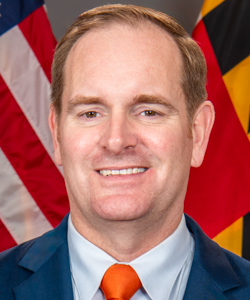
Alonzo Washington
100% support rate
Top opponent
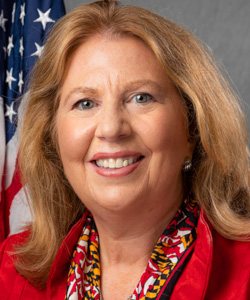
Jason Gallion
0% support rate
Ranked legislators
10
5 support · 5 oppose
Key legislators

Who's moving healthcare in Maryland

Legislators moving healthcare in Maryland
Legislator Party Stance Support rate Votes
Alonzo Washington
Alonzo Washington Senate · District 22
D
Strong +
100% 68
Brian Feldman
Brian Feldman Senate · District 15
D
Strong +
100% 70
C.T. Wilson
C.T. Wilson House · District 28
D
Strong +
100% 98
Kevin Harris
Kevin Harris Senate · District 27
D
Strong +
100% 70
Pam Beidle
Pam Beidle Senate · District 32
D
Strong +
100% 71
Jason Gallion
Jason Gallion Senate · District 35
R
Strong −
0% 71
Jack Bailey
Jack Bailey Senate · District 29
R
Strong −
0% 69
Johnny Salling
Johnny Salling Senate · District 6
R
Strong −
4% 71
J.B. Jennings
J.B. Jennings Senate · District 7
R
Strong −
4% 71
Mary Beth Carozza
Mary Beth Carozza Senate · District 38
R
Strong −
5% 70
Showing 91–100 of 376 bills

All healthcare bills

passed · Maryland · House of Delegates Apr 13, 2026

HB 1117: Virginia I. Jones Alzheimer's Disease and Related Dementias Council and the Advisory Stakeholder Group on Autism-Related Needs - Recommendations for Elopement Response Devices

HB 1117 requires Maryland's Medicaid program (Maryland Medical Assistance Program) and certain insurers to cover approved "elopement response devices" for specific individuals. These devices - such as door sensors, wearable location trackers, or alert systems - prevent people with cognitive, developmental, or neurological conditions from wandering unsafely (e.g., leaving a supervised area without the ability to return safely). Coverage is mandated when ordered by a qualified healthcare provider and documented in a qualifying plan (like an individualized education plan or dementia care plan) for eligible recipients: those under 21 with early screening eligibility, on home-based waiver programs, or diagnosed with Alzheimer’s/dementia. The bill defines these devices as medical equipment or assistive technology under state programs, ensuring coverage without regard to when the program was established.
Sub-Topics Medicaid
in committee · Maryland · House of Delegates Feb 11, 2026

HB 1114: HIV Prevention Drugs - Prescribing, Dispensing, and Insurance Coverage

HB 1114 allows pharmacists to prescribe and dispense HIV prevention drugs (PrEP) to patients under specific guidelines, expanding access beyond traditional doctor visits. It requires Maryland's Medicaid program (Medical Assistance Program) to cover FDA-approved HIV prevention drugs, including PrEP and PEP (post-exposure prophylaxis), starting January 1, 2027. The bill also prohibits insurers and managed care organizations from requiring prior authorization, step therapy, or cost-sharing for these medications. This directly affects pharmacists, Medicaid recipients, and health insurers by removing financial and administrative barriers to HIV prevention care. The policy aligns with CDC guidelines for PrEP and PEP use, ensuring coverage for medically appropriate HIV prevention drugs.
Sub-Topics Insurance Medicaid
in committee · Maryland · Senate Feb 10, 2026

SB 593: Education - Student Athletic Activities - Physical Examinations and Cardiovascular Prescreening

SB 593 requires all student athletes in Maryland public and nonpublic schools to undergo a heart health check (including family history and physical exam) as part of their pre-sports physical starting in the 2026-2027 school year. This applies to health care providers conducting these exams and mandates schools to report participation and referral rates to health departments. The bill also directs the State Department of Education and Maryland Department of Health to create guidelines for providers on conducting these checks and identifying early heart risks. Schools must report data on screenings and referrals annually, with the health department publishing annual outcome analyses on its website.
signed · Maryland · Senate May 26, 2026

SB 530: Aging-in-Place Programs - Grants - Multigenerational Third Places (Village Multigenerational Third Places Act)

SB 530 creates a new grant program for the Maryland Department of Aging to fund nonprofit organizations and area agencies on aging. It specifically provides grants to support social connection for seniors in aging-in-place programs through events at "multigenerational third places" - community spaces (not homes or workplaces) where people of different ages gather. The bill requires nonprofits to match grant funds and sets aside at least 20% of the annual $100,000 minimum appropriation for senior villages (member-driven community organizations supporting aging in place). The grants cover operational costs for these community spaces, including lease or rental expenses, to help seniors stay connected in their neighborhoods.
Sub-Topics Appropriations Tags Seniors
passed · Maryland · House of Delegates Mar 25, 2026

HB 883: Consumer Protection - Artificial Intelligence - Behavioral Health Care Prohibitions

HB 883 prohibits AI developers from making or causing AI to make claims that the AI is a behavioral health provider or can deliver behavioral health care services. It requires AI sold to Maryland consumers to include clear notices stating users are interacting with AI (not a human) and to detect suicidal thoughts or self-harm, automatically referring users to crisis services. Violations carry civil penalties up to $1 million per offense, with funds directed to Maryland’s Behavioral Health Workgroup Investment Fund. The law directly affects AI developers and sellers operating in Maryland, focusing on preventing misleading AI interactions in mental health contexts.
died · Maryland · House of Delegates Mar 3, 2026

HB 1157: Health Insurance - Plan Benefits and Coverage - Annual Reporting (Transparency, Reporting, Understanding, Timeliness, and Honesty (TRUTH) in Mental Health Coverage Act)

HB 1157 requires health insurance carriers in Maryland to annually report detailed data on mental health and substance use coverage to the Insurance Commissioner using a standardized template. This data includes access to services by facility type (e.g., outpatient, inpatient), provider type (e.g., psychiatrists, psychologists), and demographics (e.g., youth vs. adult, in-person vs. telehealth), along with network accuracy and availability. The Commissioner must make this data publicly accessible via a website with interactive dashboards. The law directly affects all health insurance companies offering plans in Maryland, aiming to improve transparency about coverage gaps in mental health care.
signed · Maryland · House of Delegates May 26, 2026

HB 1075: Higher Education - Maryland Graduate and Professional Scholarship Program - Eligible Institutions

HB 1075 expands eligibility for Maryland's Graduate and Professional Scholarship Program to include students at the University of Maryland Eastern Shore (UMES) enrolled in four specific degree programs: Master of Medical Science in Physician Assistant Studies, Doctor of Pharmacy, Doctor of Physical Therapy, and Doctor of Veterinary Medicine. This change directly affects UMES students in these fields who previously could not qualify for the scholarship. The bill amends the existing law by adding UMES to the list of eligible institutions under the program's criteria, which requires applicants to be Maryland residents attending approved institutions in designated health-related fields. The policy change takes effect July 1, 2026, allowing UMES students to access this financial aid for the first time.
signed · Maryland · Senate May 31, 2026

SB 898: Maryland Medical Assistance Program - Behavior Technicians - Reimbursement

SB 898 requires Maryland’s Medical Assistance Program to reimburse applied behavior analysis (ABA) services provided by registered behavior technicians (RBTs) to Medicaid recipients diagnosed with autism spectrum disorder. The bill prohibits the state health department from mandating a specific certification (e.g., from the Behavior Analyst Certification Board) as a condition for reimbursement, except for a 150-day transition period during which RBTs must obtain certification. This directly affects Medicaid beneficiaries with autism and RBTs who deliver ABA services under supervision of certified professionals, streamlining access to care without immediate certification barriers. The law takes effect October 1, 2026, and applies prospectively only.
Sub-Topics Medicaid Mental Health
signed · Maryland · House of Delegates May 26, 2026

HB 1249: Certified Recovery Residences - Refusing Services to Individuals Receiving Medication-Assisted Treatment - Prohibition

HB 1249 prohibits certified recovery residences in Maryland from refusing services to individuals receiving medication-assisted treatment (MAT) for opioid use disorder or requiring them to stop or change their MAT as a condition for housing. The bill amends certification standards for recovery residences (which provide non-clinical housing for people with substance use disorders) to ensure credentialing entities cannot allow such discrimination. It directly affects certified recovery residences and individuals using MAT for opioid addiction, requiring certification rules to explicitly ban these practices. The law takes effect October 1, 2026, and applies only to opioid use disorder treatment under MAT.
in committee · Maryland · Senate Mar 6, 2026

SB 969: Health Insurance - Lyme Disease and Related Tick-Borne Illnesses - Long-Term Antibiotic Treatment

SB 969 requires Maryland health insurers, nonprofit health service plans, and health maintenance organizations to cover the full duration of long-term antibiotic treatment (over 4 weeks) for Lyme disease and related tick-borne illnesses when ordered by a licensed physician for treatment purposes. It prohibits these entities from imposing limits on treatment length or denying coverage solely because the treatment is labeled "unproven," "experimental," or "investigational." The law applies to all health insurance policies issued, delivered, or renewed in Maryland on or after January 1, 2027, directly affecting patients diagnosed with these conditions and their insurers. This ensures consistent coverage for extended antibiotic therapy without arbitrary restrictions based on treatment classification.
Sub-Topics Insurance
Showing 91 to 100 of 376 bills
Previous 1 9 10 11 38 Next