Issue · Healthcare

Healthcare

Every healthcare bill, vote, and legislator stance in Maryland, automatically classified by Maddy, our AI policy reader.

Total bills
376
2026 Regular Session
Top supporter
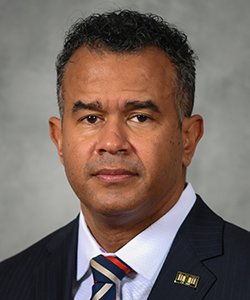
Alonzo Washington
100% support rate
Top opponent
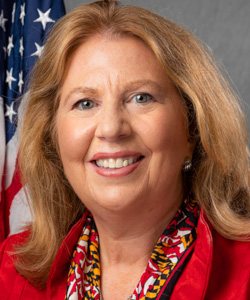
Jason Gallion
0% support rate
Ranked legislators
10
5 support · 5 oppose
Key legislators

Who's moving healthcare in Maryland

Legislators moving healthcare in Maryland
Legislator Party Stance Support rate Votes
Alonzo Washington
Alonzo Washington Senate · District 22
D
Strong +
100% 68
Brian Feldman
Brian Feldman Senate · District 15
D
Strong +
100% 70
C.T. Wilson
C.T. Wilson House · District 28
D
Strong +
100% 98
Kevin Harris
Kevin Harris Senate · District 27
D
Strong +
100% 70
Pam Beidle
Pam Beidle Senate · District 32
D
Strong +
100% 71
Jason Gallion
Jason Gallion Senate · District 35
R
Strong −
0% 71
Jack Bailey
Jack Bailey Senate · District 29
R
Strong −
0% 69
Johnny Salling
Johnny Salling Senate · District 6
R
Strong −
4% 71
J.B. Jennings
J.B. Jennings Senate · District 7
R
Strong −
4% 71
Mary Beth Carozza
Mary Beth Carozza Senate · District 38
R
Strong −
5% 70
Showing 101–110 of 376 bills

All healthcare bills

in committee · Maryland · House of Delegates Feb 16, 2026

HB 825: Brain Health - Guidelines, Grant Fund, and Commemorative Month (Tahjai's Law)

HB 825 (Tahjai's Law) requires Maryland's Governor to annually proclaim May as "Brain Health and Chronic Headache Awareness Month," aligning with national brain tumor awareness efforts. It establishes a permanent Maryland Brain Health Grant Fund to provide financial support to nonprofits, healthcare providers, and community programs for brain health awareness, screening, prevention, and services like treatment for brain tumors, chronic headaches, and traumatic brain injury. The Maryland Department of Health must develop guidelines for incorporating brain health evaluations into routine physical exams and recommend insurance coverage parity for necessary diagnostic tools. Additionally, the Department must submit annual reports on brain tumor prevalence, emergency visits related to brain conditions, access to diagnostic imaging, and barriers to care.
Sub-Topics Insurance
signed · Maryland · House of Delegates May 31, 2026

HB 1434: Maryland Department of Health - Caregiver Resource Webpage - Establishment

HB 1434 requires the Maryland Department of Health to create and maintain a centralized online resource hub for caregivers. The webpage must provide plain-language information and links to support caregivers of children with disabilities, adults with chronic illness or disabilities, and older adults (including those with dementia), covering topics like wellness, financial assistance programs, safety planning, and privacy considerations. The Department must coordinate with agencies like the Department of Education and Department of Aging, update the site annually, and ensure it’s prominently displayed on the Health Department’s website.
died · Maryland · House of Delegates Mar 13, 2026

HB 1464: Health Insurance - Third-Party Administrators - Verification of Eligibility

HB 1464 requires health insurance companies (referred to as "carriers" or "third-party administrators") to create a simple, timely process for healthcare providers to verify if a patient is eligible for covered services before treatment. If a provider uses this process and receives confirmation of eligibility, the insurer cannot later retroactively deny payment for that service, even if the patient was ultimately ineligible. The bill also sets strict time limits for retroactive denials (6 months for most cases, 18 months for coordination with other insurers) and mandates written explanations for denials. This directly affects healthcare providers (like clinics and hospitals) and insurers in Maryland by reducing billing disputes and payment delays.
Sub-Topics Insurance
died · Maryland · House of Delegates Mar 10, 2026

HB 1124: Commercial Law - Consumer Protections - Health Care Financing

HB 1124 establishes new rules for healthcare financing in Maryland, directly affecting healthcare providers (like clinics and doctors' offices) and patients. It requires providers to give clear written disclosures about payment plans before discussing them and prohibits providers from applying for financing on a patient's behalf or promoting payment options during certain treatments (like under anesthesia). The bill also mandates full refunds within 15 days if services aren't provided and bans billing third-party financiers more than 30 days before a procedure. Providers may only offer payment plans for out-of-pocket costs like copays when insurance covers the main service.
in committee · Maryland · Senate Feb 14, 2026

SB 973: Income Tax - Credit for Long-Term Care Premiums

SB 973 adjusts Maryland's income tax credit for long-term care insurance premiums. It reduces the maximum annual credit from $500 to $250 per person for Maryland residents aged 45 or older who pay premiums for qualifying long-term care insurance covering themselves or eligible family members. The bill restricts claims if the insured individual was covered before January 1, 2027, or if the credit was previously claimed for that person. These changes take effect for tax years beginning after December 31, 2026.
passed · Maryland · Senate Mar 17, 2026

SB 917: Health Occupations - Practice of Audiology - Definition

SB 917 clarifies the scope of practice for audiologists in Maryland by updating the legal definition of "practice audiology." It directly affects licensed audiologists by explicitly including the ordering and performing of in-office, non-radiographic scanning or imaging of the ear for auditory or vestibular conditions. The bill adds this specific imaging authority to existing duties like diagnosing ear conditions and fitting hearing aids, while clarifying that audiologists cannot perform surgeries, cochlear implant procedures, or prepare radiographic imaging. The change takes effect October 1, 2026, and aims to align legal definitions with current clinical practices.
in committee · Maryland · Senate Feb 13, 2026

SB 793: Income Tax - Credit for Paid Organ Donation Leave

SB 793 creates a Maryland state income tax credit for employers who provide paid leave for employees donating organs. Qualified employers (those with a written policy paying 100% of wages during organ donation leave) can claim a credit equal to 100% of wages paid during the first 12 weeks of leave. Unused credit can be carried forward for up to three years. This directly affects employers offering this specific benefit and eligible employees who donate organs with physician verification.
Sub-Topics Paid Leave
in committee · Maryland · House of Delegates Feb 13, 2026

HB 1013: Prince George’s County Special Education Service Delivery, Transparency, and Accountability Act

HB 1013 requires Prince George’s County Public Schools to fund full-time salaries and benefits (including health insurance) for all one-to-one student aides starting in the 2027-2028 school year. It mandates quarterly reports to the county board and state education department on key metrics like aide vacancy rates, IEP service delivery, and compensatory services completion. The bill also requires the county superintendent to provide annual professional development for special education staff and directs the state to hire a third-party auditor to review the county’s special education department for fiscal years 2021-2025. These provisions directly affect Prince George’s County’s special education program, its staff, and students with individualized education plans (IEPs).
in committee · Maryland · House of Delegates Mar 11, 2026

HB 1468: Hospitals - Patients in Active Labor - Safe Discharge Labor Plans

HB 1468 requires hospitals in Maryland to create a written "safe discharge labor plan" before discharging or transferring any patient in active labor (defined as a pregnant person showing labor signs per medical standards). The plan must include clinical justification for the discharge, travel safety assessment, a plain-language explanation of risks and warning signs, and proof the patient understands the plan. Hospitals must maintain these records for 21 years, provide annual staff training on maternal care and patient communication, and prominently post patient rights in labor departments. The bill also mandates annual reports to the health department tracking discharge practices and any adverse outcomes following discharge.
in committee · Maryland · House of Delegates Feb 16, 2026

HB 1409: Gaming - Problem Gambling - Prevalence Study and Fund Revenue

HB 1409 requires Maryland's Department of Health to conduct studies measuring problem and pathological gambling rates for both in-person and mobile gambling, with the mobile gambling study due by July 2031. The bill redirects 1% of proceeds from fantasy sports competitions and 1% of sports wagering revenue to the Problem Gambling Fund, altering prior distribution rules that directed most funds to education. These funds will support treatment and prevention services for problem gamblers, including inpatient care, outpatient services, and educational programs. The legislation amends Maryland law to mandate these studies and fund allocations, directly affecting the Department of Health and the Problem Gambling Fund.
Sub-Topics Hospitals
Showing 101 to 110 of 376 bills
Previous 1 10 11 12 38 Next