

Maddy summaryThe Improving Health Through Integrated Food and Nutrition Services at Federally Qualified Health Centers Act directs the Department of Health and Human Services to create a competitive grant program for federally qualified health centers. These grants would fund activities such as screening patients for food insecurity, operating on-site food pantries, hiring nutrition professionals, and partnering with local food banks. The bill also requires the administration to coordinate with federal agencies to streamline patient enrollment in existing assistance programs like SNAP and WIC, while exploring ways to make nutrition services reimbursable through Medicaid. Recipients must submit annual reports detailing their impact, and the legislation authorizes $100 million per year for fiscal years 2027 through 2031 to support these efforts.
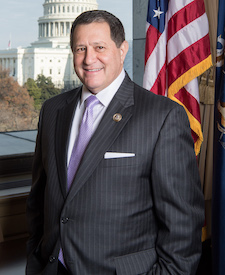
Rep. Joseph D. Morelle
Sponsored bills
Maddy summaryThe Summer Meals and Learning Act of 2026 creates a funding program to connect summer meal sites with early literacy activities. It authorizes $5 million annually from 2027 to 2031 for the Department of Education to grant funds to state library agencies, which will then distribute money to specific school districts. These districts must receive the funds only if they serve summer lunches and at least half of their kindergarten through third-grade students are reading below grade level or at risk of falling behind. The money is intended to support six-week summer programs that provide access to school libraries and literacy activities at these meal sites, with a focus on involving community partners.
Maddy summaryThe No Payoffs for Pardons Act requires individuals who receive executive clemency to file detailed financial reports if they provided gifts or benefits of $10,000 or more to the President or related entities in an attempt to secure that pardon. These disclosure reports must be submitted to the Attorney General and made publicly available online, while also updating federal bribery laws to explicitly include pardons as a form of "anything of value" that can be offered to officials. The bill imposes civil and criminal penalties for failing to file these reports or submitting false information, and it extends the statute of limitations for prosecuting bribery cases involving clemency to ten years. By mandating transparency around the exchange of favors for clemency, the legislation aims to prevent the misuse of presidential pardon power without restricting the President's constitutional authority to grant pardons.
Maddy summaryThis bill establishes federal protections and funding to expand access to in vitro fertilization and intrauterine insemination for individuals, military service members, and veterans. It requires most private health plans, Medicaid programs, and Medicare to cover these fertility treatments without imposing higher cost-sharing than other medical services. Additionally, the legislation mandates that the Department of Defense and the Department of Veterans Affairs provide specific fertility preservation and treatment benefits to uniformed service members and eligible veterans. The bill also includes preemption clauses that override state laws restricting these procedures and prohibits discrimination based on marital status, sex, or sexual orientation in the provision of care.
Maddy summaryThe AI Transparency in Elections Act of 2026 requires political advertisements containing content substantially generated by artificial intelligence to include clear and conspicuous disclaimers. These labels must appear on images, audio, and video ads that advocate for or against candidates, solicit contributions, or refer to candidates within 120 days of an election. The bill mandates that visual disclaimers be as large as the main text, while audio disclaimers must be spoken for at least four seconds at the beginning or end of the recording. Violations of these disclosure rules could result in civil money penalties of up to $50,000 per ad, and the Federal Election Commission is tasked with creating specific regulations to enforce the law.
Maddy summaryThis bill designates the United States Postal Service facility at 114 John Street in New York, New York, as the "Jack Greenberg Post Office." The legislation requires that all official government records, maps, and documents referring to this location use the new name. This change is intended to honor Jack Greenberg, a prominent civil rights attorney, by permanently associating his name with the building.
This bill designates the facility of the United States Postal Service located at 80 Atlantic Avenue in Oceanside, New York, as the "Detective Luis G. Alvarez Post Office".
Maddy summaryThe AADAPT Act reauthorizes and expands Project ECHO grants to improve Alzheimer’s and dementia care through technology-enabled training. It specifically funds grants for healthcare providers in rural, frontier, or medically underserved areas to enhance early diagnosis, quality care, and provider retention for dementia patients. The bill authorizes $1 million annually (2027-2032) for these dementia-focused training programs, requiring funds to supplement - not replace - existing resources. This directly supports primary care providers licensed to serve underserved communities, using collaborative online learning to address care gaps.
Maddy summaryHR 2913, the Ukraine Support Act, provides comprehensive U.S. support for Ukraine in response to Russia's invasion. The bill authorizes security assistance including lend-lease authority for military equipment, establishes a Ukraine Reconstruction Trust Fund for economic recovery, and imposes new sanctions targeting Russian financial institutions, oil companies, and government officials. It also includes provisions to counter Russian disinformation, support Radio Free Europe, and address the kidnapping of Ukrainian children. The legislation directly affects U.S. foreign policy, Ukraine's defense capabilities, and Russia's access to international financial systems. The act aims to strengthen Ukraine's sovereignty while holding Russia accountable for its actions.
Maddy summaryThe Patients First Act of 2026 modifies how Medicare reimburses physicians and primary care providers to improve access and stabilize payments. It establishes a new hybrid payment model for primary care services from 2027 to 2031, which pays a monthly fee per patient to eligible independent practices while covering specific services like care management and telehealth without cost-sharing for patients. The bill also updates the formula for calculating reimbursement rates to account for high inflation years and requires more frequent updates to the costs used in calculating payments. Additionally, the legislation reforms the performance-based payment system by adding care efficiency measures, creating a task force to recommend new quality metrics, and adjusting penalties for providers who fail to report on certain data.