

Maddy summaryThe Essential Caregivers Act of 2026 requires nursing homes, long-term care hospitals, rehabilitation facilities, and intermediate care facilities to allow two chosen family members or friends to visit residents during times when regular visitation is suspended. These essential caregivers must agree to follow the facility's existing safety and infection control rules, which are no more restrictive than those applied to staff. While facilities can limit access for the first seven days of a suspension or deny entry if a caregiver shows symptoms of a serious infectious disease, they cannot block visits for end-of-life care. Additionally, the bill mandates that complaints about denied access to essential caregivers be investigated and resolved within three days.
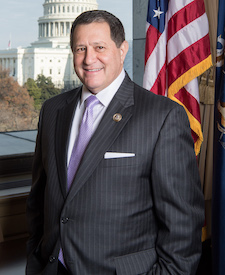
Rep. Joseph D. Morelle
Sponsored bills
Maddy summaryThis bill requires Medicare Advantage plans to implement electronic pre-approval systems for medical services by 2028 and meet transparency reporting standards starting in 2027. Plans must publicly report data on approval/denial rates, appeal outcomes, response times, and technology use for pre-approval requests, including details on how denials relate to clinical criteria. It establishes a 24-hour response timeframe for certain requests and mandates annual reviews of pre-approval requirements based on data and input from seniors and providers. The law directly affects Medicare Advantage plans, seniors enrolled in these plans, and healthcare providers who submit pre-approval requests. These changes aim to make the pre-approval process faster, more transparent, and more accountable for seniors seeking covered medical services.
Maddy summaryThe FEC Administrative Improvements Act updates federal election laws to modernize how political committees report and make payments. It requires that filings for electioneering communications be submitted electronically, streamlining the reporting process for these groups. Additionally, the bill permits political committees to make financial disbursements using methods other than traditional checks, such as electronic transfers. These provisions adjust administrative requirements under the Federal Election Campaign Act without changing spending limits or campaign rules.
Maddy summaryThis resolution expresses support for designating July 10th as Journeyman Lineworkers Recognition Day to honor the workers who maintain the nation's electrical grid. The bill specifically recognizes the dangerous conditions these employees face, such as working at heights near live power lines and responding to disasters like hurricanes and wildfires. It also commemorates Henry Miller, the first president of the International Brotherhood of Electrical Workers, who died on July 10, 1896, while performing his duties. Ultimately, the measure encourages the public to observe this day with reflection on the contributions of lineworkers.
Maddy summaryThe Jewish American Security Act aims to combat antisemitism by strengthening protections for Jewish students, securing Jewish communities, and increasing transparency regarding online hate speech. For educational institutions receiving federal funds, the bill mandates the creation of specific coordinators to handle discrimination complaints, requires annual training on handling antisemitism, and establishes a new federal clearinghouse to share best practices for campus safety. To support physical security, the legislation expands grant funding for nonprofit organizations and directs the Attorney General to provide resources for law enforcement agencies protecting houses of worship. Additionally, the act requires major online platforms with over 50 million monthly users to submit detailed reports to the Federal Trade Commission on how they detect, remove, and moderate antisemitic content.
Maddy summaryThis bill establishes a Strategic Defense Innovation Working Group to facilitate cooperation between the United States and Ukraine on developing and producing unmanned military systems. The group, led by senior U.S. defense officials and including Ukrainian representatives, will identify effective drone technologies used by Ukraine and explore ways to co-develop, co-produce, and acquire them in the United States. Key provisions include creating frameworks for sharing military data and intellectual property, assessing supply chains to avoid reliance on adversarial nations, and reporting regularly to Congress on progress and legal barriers. The initiative aims to accelerate the deployment of proven Ukrainian drone capabilities while ensuring secure and compliant integration into U.S. defense efforts.
Maddy summaryThis bill creates a federal grant program to help states and tribal governments improve their licensing systems for firearms dealers. To qualify for funding, a state must have laws requiring dealers to hold licenses valid for no more than three years, complete an application process, and allow for inspections with penalties for noncompliance. The Attorney General will award up to $2.5 million per year on a competitive basis to eligible applicants who submit detailed plans for developing or improving their programs. Recipients must provide annual reports on inspection numbers, violations, and license status, while the Attorney General must report grant details and denial reasons to Congress.
Maddy summaryThis bill redesignates the existing National Parks and Public Land Legacy Restoration Fund as the America's Legacy Restoration Fund to address deferred maintenance on federal lands. It directs revenue from recreation fees and a portion of energy development income into the fund, which must be used primarily for repairing critical infrastructure like roads, trails, and buildings managed by agencies such as the National Park Service and the Forest Service. The legislation establishes strict rules requiring that most funds go toward non-transportation projects, mandates transparency through public dashboards tracking project status, and sets aside a small percentage for matching private donations. Additionally, the bill increases entrance fees for foreign visitors to ensure they contribute to the fund, while prohibiting the use of these specific funds for land acquisition or employee bonuses.
Maddy summaryThe Latonya Reeves Freedom Act of 2026 strengthens the Americans with Disabilities Act to ensure individuals with long-term service and support needs have a federally protected right to live in their communities rather than institutions. It requires states and insurance providers to offer community-based services that allow people to maintain independence, control their own care, and access affordable, integrated housing. The bill mandates that public entities and insurers create enforceable transition plans to move people out of institutions, conduct self-evaluations to identify barriers, and establish clear grievance procedures for resolving complaints. Enforcement is handled by the Department of Justice, which can investigate violations, while individuals may also file civil lawsuits to seek damages or court orders preventing institutionalization.
Maddy summaryThis resolution expresses support for designating June 21, 2026, as National ASK Day to promote the safe storage of firearms in homes. The bill encourages parents to ask visitors if there are guns in their house and, if so, whether those guns are locked and unloaded. It also urges medical and public health professionals to discuss gun safety and secure storage with their patients and parents. This symbolic measure aims to raise awareness about preventing accidental shootings and suicides among children by ensuring guns are stored safely.