

Maddy summaryHR 3795 requires the U.S. Department of Health and Human Services (specifically the Assistant Secretary for Preparedness and Response) to create and regularly update a national plan for rapid diagnostic testing during public health emergencies like pandemics. The plan must cover developing, authorizing, scaling, and distributing testing tools and lab capacity, with specific focus on new threats like emerging diseases or bioterrorism. It mandates public-private coordination between government agencies and private labs, manufacturers, and distributors to ensure efficient response. The plan must be made public and include a congressional report evaluating its effectiveness during emergencies. This bill directly affects federal health agencies and private-sector testing providers by establishing a structured framework for emergency testing preparedness.
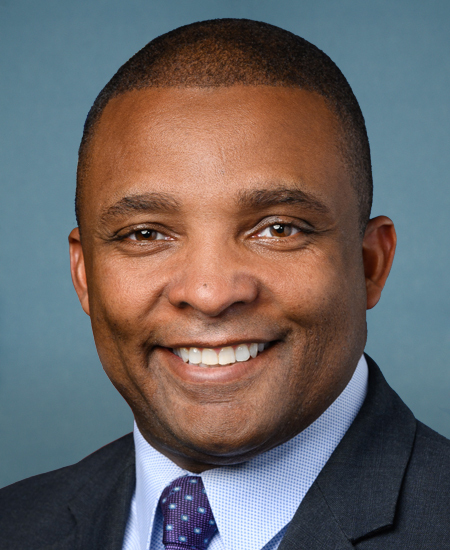
Rep. Donald G. Davis
Sponsored bills
Maddy summaryHR 3817, the Mental Health Workforce and Language Access Act of 2023, creates a federal grant program to help community health centers hire bilingual mental health staff who can communicate directly with patients who have limited English proficiency. The bill allocates up to $10 million annually (2024-2029) to fund these grants, prioritizing health centers where at least 10% of patients primarily speak a language other than English. Health centers receiving grants must use funds to recruit qualified staff - such as licensed counselors or supervised trainees - who speak both English and another language fluently, and to report on program effectiveness to Congress. This directly affects patients with limited English proficiency seeking behavioral health services at participating community health centers.
Wild Horse and Burro Protection Act of 2023 This bill prohibits the Bureau of Land Management (BLM) from using or contracting for the use of helicopters or fixed-wing aircraft for gathering horses and burros under the Wild Free-roaming Horses and Burros Act. Further, BLM may not make contracts to use helicopters for transporting captured animals under such act.
Maddy summaryThe American Family Act establishes a monthly child tax credit of $250 per month for each child under age 6 and $300 per month for each child aged 6-18, with income limits of $150,000 for joint filers and $112,500 for other filers. The credit is refundable, meaning it can be paid even if the taxpayer owes no income tax, and will be adjusted annually for inflation. The bill includes detailed rules for determining eligibility, including requirements that the child resides with the taxpayer for more than half the month and provisions to prevent fraud through recapture of improperly received payments. The credit will be paid monthly in advance rather than as a single annual payment, with specific mechanisms for calculating and distributing the payments.
Maddy summaryHR 3855 establishes the National Digital Reserve Corps within the General Services Administration to recruit digital and cybersecurity professionals for temporary assignments to federal agencies. It requires participants to commit to a 3-year service term (minimum 30 days annually) with annual compensation capped at $10,000, while agencies receive support for needs like cybersecurity, data management, and digital project development. The program authorizes $30 million for implementation, mandates GSA to manage recruitment and assignments, and requires annual congressional reports tracking reservist numbers, agency requests, and assignment outcomes. Covered agencies include major departments like the U.S. Postal Service and the Executive Office of the President.
Maddy summaryHR 3827, the Protect Our Workers Act of 2023, requires the Army Corps of Engineers to provide uniform guidance to its districts on enforcing prevailing wage requirements for construction contractors and subcontractors. The bill mandates that districts investigate worker or third-party complaints about unpaid wages within 30 days and make certified payroll reports publicly accessible (not exempt from disclosure). It directly affects federal construction workers and contractors on Army Corps projects by addressing issues like misclassifying skilled workers as unskilled to avoid higher wage rates. The law aims to improve consistent enforcement of the Davis-Bacon Act, which ensures workers on federal projects receive locally prevailing wages.
Maddy summaryThis bill amends the Workforce Innovation and Opportunity Act to require state and local workforce development programs to create partnerships between schools (including career technical schools and colleges) and employers. These partnerships must address regional workforce skill gaps and employer hiring needs, based on the latest regional analysis. The requirement applies specifically to programs serving youth and adults in high-demand occupations. It modifies existing sections of the WIOA to mandate this partnership approach as a new program requirement.
This bill establishes a student loan deferment and forgiveness program for physicians who provide mental and behavioral health services (including substance abuse prevention and treatment services) to racial and ethnic minority groups and low-income individuals. To carry out the program, the Department of Health and Human Services must pay the outstanding principal and interest (up to a maximum limit) on specified federal student loans for eligible physicians who work in qualifying employment. While participating in the program, physicians do not need to pay the principal of their loans but must pay any interest that accrues. To be eligible, physicians must complete a mental or behavioral health professions degree or certificate at a minority-serving institution of higher education. Physicians must also provide mental and behavioral health services for five consecutive years while working either (1) as solo practitioners where at least 30% of patients receive Medicaid and at least 50% of patients are members of racial and ethnic minority groups; or (2) at institutions that accept Medicaid and where at least 50% of patients served by the institution are members of racial and ethnic minority groups.
Maddy summaryThis bill prohibits the Department of Veterans Affairs from changing its anesthesia care policies to allow nurse anesthetists (CRNAs) to provide anesthesia independently without a physician anesthesiologist. It specifically blocks implementation of a 2016 proposed rule that would have expanded CRNAs' authority in VA facilities. The law maintains current requirements that physician anesthesiologists must oversee or provide anesthesia care for veterans during surgical procedures. Emergency orders for veteran safety during surgery remain permitted under the bill's exception clause.
Maddy summaryThis resolution recognizes the need for improved access to rural and agricultural media programming, such as agricultural weather reports, market news, and western lifestyle content, which directly affects farmers, ranchers, and rural communities. It highlights that media consolidation has reduced availability of this programming, which informs the public about food supply chains, agricultural research, and rural life. The resolution urges media companies to prioritize delivering such content but does not create new laws, funding, or mandates. As a non-binding recognition, it has no direct policy impact on legislative or regulatory changes.