

Maddy summaryThe HEAL Act (HR 603) requires the U.S. Holocaust Memorial Museum Director to study how public elementary and secondary schools teach about the Holocaust and related antisemitism. The study will examine curriculum requirements, teaching methods (like project-based learning), instructional materials, and assessment approaches across states and school districts. It specifically analyzes whether Holocaust education is mandatory, optional, or integrated across subjects, and how schools address antisemitism and genocide prevention. The resulting report, due within 180 days of the study or three years after enactment, will inform Congress but does not change current school policies. This is a data-gathering measure, not a policy mandate.
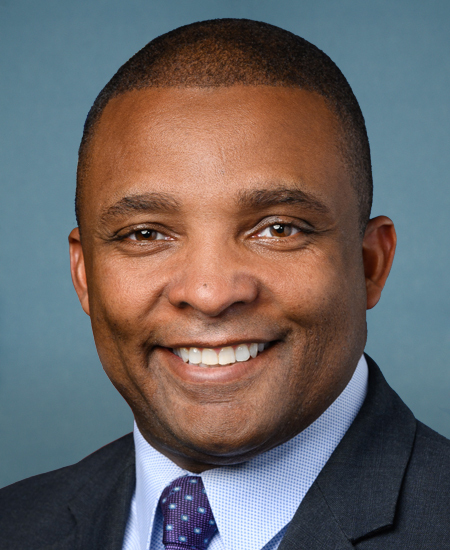
Rep. Donald G. Davis
Sponsored bills
Maddy summaryThis bill requires manufacturers of internet-connected toys (targeted at children) to clearly label packaging and include simple explanations in privacy terms about how personal data is collected, stored, and shared. Specifically, labels must state if the toy connects to the internet and collects children's information (like voice recordings or location), and privacy terms must detail what data is gathered, how it's used, and whether parents can disable data collection. It directly affects toy companies selling such products in the U.S. and is enforced by the FTC under existing laws for deceptive practices. The goal is to give parents clear, upfront information about data handling without restricting toy functionality.
Maddy summaryHR 451, the Protecting Families from Fertility Fraud Act of 2023, creates a federal crime for knowingly misrepresenting the source or nature of DNA used in fertility treatments like IVF or sperm insemination. It directly affects fertility clinics, patients, and individuals who commit such fraud by making it punishable by fines or up to 10 years in prison. The law applies when the fraud involves interstate commerce (e.g., payments, communications, or materials crossing state lines) or occurs within U.S. territories. It also extends the statute of limitations for prosecution to 10 years after DNA identifies the perpetrator. This bill targets specific deceptive practices in assisted reproductive technology, not broader fertility care.
Investing in Rural Manufacturing Act This bill authorizes the Small Business Administration to make loans for certain costs to businesses that manufacture goods essential to critical infrastructure sectors in rural areas. Businesses that meet at least 75% of their job creation goals under such loans may receive partial loan forgiveness.
Maddy summaryHR 345, the TRUST in Congress Act, requires Members of Congress, their spouses, and dependent children to place certain investments into a "blind trust" within 90 days of taking office or after the bill's enactment. It directly affects current and future lawmakers and their immediate family members by mandating that covered investments - such as stocks, commodities, or derivatives (excluding Treasury bonds and some mutual funds) - be placed in a trust they cannot manage. Members must certify the trust setup to House or Senate officials within 15 days, and trusts cannot be dissolved until 180 days after leaving office. The law excludes investments providing primary income (e.g., from a spouse's job) but requires transparency through public website disclosures of certifications.
Maddy summaryHR 308, the Rosa Parks Day Act, would designate Rosa Parks Day as a legal public holiday for federal employees and government operations. The bill amends Title 5 of the U.S. Code to add "Rosa Parks Day" to the list of federal holidays, placing it after Thanksgiving Day. This change would require federal offices to close on this designated day, affecting federal employees and standard government operations. The bill does not create new programs or alter existing laws beyond the holiday designation.
American Workforce Empowerment Act This bill allows tax-preferred college savings plans (529 plans) to fund certain postsecondary certificate programs and apprenticeship programs.
Cover Outstanding Vulnerable Expansion-eligible Residents Now Act or the COVER Now Act This bill establishes a demonstration program to allow local governments to provide health benefits to the Medicaid expansion population in states that have not expanded Medicaid. Under the program, local governments may provide coverage for individuals who are newly eligible for Medicaid under the Patient Protection and Affordable Care Act (i.e., the Medicaid expansion population) for a maximum of 10 years, or until their respective states expand Medicaid. The bill provides a 100% federal matching rate for the first three years of program participation. The bill prohibits states from taking certain actions against participating localities, such as withholding funding, increasing taxes, or restricting provider participation. States that violate these requirements are subject to certain funding penalties.