

Maddy summaryHR 727 establishes a 12-member National Council on African American History and Culture within the National Endowment for the Humanities (NEH). The Council, appointed by the President with Senate consent, advises the NEH on preserving and celebrating African-American history and culture. Its key duties include evaluating NEH programs, gathering information on cultural trends, developing national policy recommendations, and submitting annual reports to the NEH Chair. The Council terminates 10 years after the bill's enactment, with members serving five-year terms (initially staggered) and receiving partial compensation for their service.
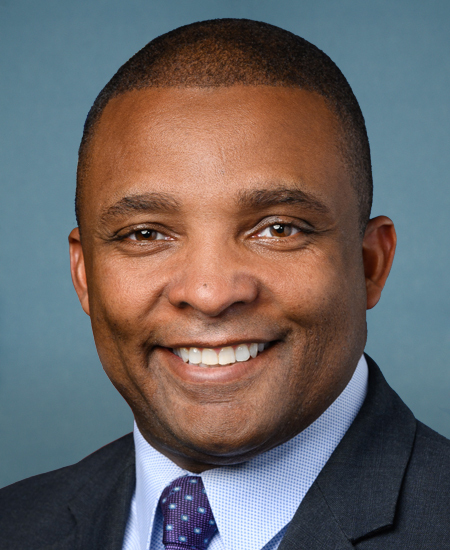
Rep. Donald G. Davis
Sponsored bills
Maddy summaryThis bill helps new car dealers affected by pandemic-era supply chain disruptions by changing tax rules for inventory sales. It allows dealers using LIFO accounting to treat certain sales of unsold vehicles (liquidations) between March 2020 and December 2021 as "qualified" for tax purposes. Dealers can defer recognizing income from these sales and have until 2026 to replace the sold vehicles before potential tax adjustments apply. The provision specifically targets dealers who couldn't replenish inventory during the supply chain crisis.
Maddy summaryThis bill amends the Elementary and Secondary Education Act to require that Black history be included in all federally supported American history and civics education programs. It directly affects K-12 public schools receiving federal education funding by mandating that curriculum frameworks, teacher training, and national assessments explicitly incorporate Black history as part of American history. The key mechanism is adding "which shall include Black history" to existing provisions across multiple sections of the law, including classroom instruction, teacher academies, and national assessments. This change ensures Black history is integrated into established educational standards rather than creating new programs.
Maddy summaryHR 694, the Job Protection Act, expands access to family and medical leave under the FMLA by reducing eligibility requirements. It lowers the required employment period from 12 months to 90 days for most workers and removes the 50-employee threshold, requiring all employers (including small businesses with one or more employees) to provide leave. Federal, presidential, and congressional employees also see their eligibility thresholds reduced to 90 days. The bill directly affects millions of private-sector workers and small businesses nationwide by making existing leave protections more widely available. It makes no changes to leave duration or pay, only to who qualifies and which employers must comply.
Veterans Census-Enabled National Treatment Equitable Resource Supplement for Mental Health Act of 2023 or the Vet CENTERS for Mental Health Act of 2023 This bill requires the Department of Veterans Affairs (VA) to ensure that there is a minimum number of Vet Centers located in each state. Vet Centers are community-based counseling centers that provide social and psychological services to eligible veterans, service members, and their families. The minimum number of Vet Centers required in each state is generally based on the state's geographic size or the number of veterans located in the state. The VA must establish additional Vet Centers as necessary to meet the minimum required number for each state. The VA may establish the additional Vet Centers at facilities made available by a state, local government, or recognized Indian tribe. If a state needs more than one additional Vet Center to meet its minimum requirement, the VA must establish at least one additional Vet Center and may establish Vet Center outstations to cover the difference.
Maddy summaryHR 709, the Muhammad Ali Congressional Gold Medal Act, authorizes Congress to award Muhammad Ali a gold medal in recognition of his life and achievements. The bill directs the Secretary of the Treasury to strike a gold medal for presentation by congressional leaders, which will then be given to Ali's widow, Lonnie Ali. Duplicate bronze medals may be sold to cover production costs, with proceeds deposited into the U.S. Mint fund. This is a commemorative measure, not a policy change affecting laws or programs.
Disaster Reforestation Act This bill sets forth a special rule for the tax deduction for casualty losses of uncut timber (including pre-merchantable timber). It provides that in losses of any uncut timber from fire, storm, insects, invasive species, drought, or other casualty, or from theft, the basis for determining the amount of the deduction for such loss shall not be less than the excess of the value of such timber determined immediately before such loss was sustained, over the salvage value of such timber. To be eligible for the casualty loss deduction, the uncut timber subject to the loss must be reforested not later than the close of the five-year period beginning on the date of the loss.
Maddy summaryHR 648, the Agriculture Export Promotion Act of 2023, increases federal funding for key USDA export promotion programs to boost U.S. agricultural sales abroad. It raises annual funding for the Market Access Program from $200 million to $400 million and for the Foreign Market Development Cooperator Program from $34.5 million to $69 million, effective 2024-2029. These changes directly benefit U.S. farmers and agricultural businesses exporting commodities like soybeans, beef, and dairy by expanding their access to international markets. The bill aims to counter competitive disadvantages as foreign competitors grow their export programs faster than U.S. funding has kept pace. This represents a significant funding adjustment to address years of stagnant investment in these programs.
Maddy summaryThis bill amends the U.S. Code to expand appeal rights for certain postal employees. It allows non-unionized postal workers in supervisory, professional, technical, clerical, administrative, or managerial roles (covered under the Executive and Administrative Schedule) to directly appeal personnel decisions to the Merit Systems Protection Board (MSPB). Previously, these employees may have lacked this specific appeal path. The change clarifies their eligibility under Section 1005(a)(4)(A)(ii)(I) of Title 39, U.S. Code, ensuring they can seek MSPB review for employment-related disputes.
Maddy summaryThis bill requires the U.S. Postal Service to provide written proposals to supervisors' organizations 60 days before pay/benefit decisions expire or after new collective bargaining agreements are reached. It directly affects postal supervisors and managers covered by collective bargaining agreements regarding their pay policies, schedules, and fringe benefits. The key mechanism establishes clear timelines for negotiations and mandates that any dispute resolution panel must issue a binding final decision within 15 days of receiving input from both parties. This aims to streamline the process for resolving pay and benefits disputes between the Postal Service and supervisory staff organizations.