

Maddy summaryThis House resolution symbolically recognizes May as Jewish American Heritage Month, celebrating Jewish Americans' historical contributions to U.S. society and culture. It references rising antisemitism in 2022 (including ADL data showing a 36% increase in incidents) and includes a non-binding call for leaders to combat antisemitism. As a purely symbolic resolution, it does not create new policies or legal requirements.
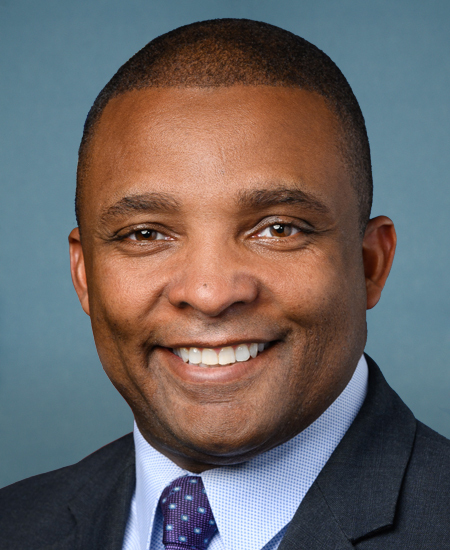
Rep. Donald G. Davis
Sponsored bills
Maddy summaryHR 3792 extends U.S. security funding for Israel through 2028 (Section 3) and expands energy cooperation to include advanced nuclear technologies and carbon capture (Section 5). It requires annual reports on regional security partnerships involving Israel (Section 6) and ensures countries in the Abraham Accords can access U.S. development programs (Section 8). The bill also mandates reports on diplomatic efforts against ICC investigations targeting the U.S. and Israel (Section 10) and encourages people-to-people programs to strengthen the Abraham Accords (Sections 7, 9). These provisions directly affect Israel’s diplomatic engagement, security partnerships, and economic cooperation in the Middle East.
Maddy summaryThis bill removes a barrier for college students seeking food assistance by amending the SNAP program rules. It directly affects students enrolled at least half-time in recognized colleges or training programs, who were previously automatically ineligible unless they met separate requirements. The key change eliminates the prior restriction (in section 6(e)) that barred most higher education students from SNAP, allowing them to qualify under the new provision in section 3(m)(5)(F). The changes take effect January 2, 2024.
Maddy summaryHR 3036, the Increased TSP Access Act of 2023, amends conservation program rules to expand access to third-party providers (TSPs) who offer technical assistance to farmers on conservation practices. It creates new pathways for non-Federal entities like agricultural cooperatives or professional associations to certify TSPs, streamlines certification processes (requiring Secretary review within 10 business days), and sets payment rates for TSPs equivalent to government-provided technical assistance. The bill mandates public reporting on certification numbers, payment details, and a target utilization rate for TSPs to improve conservation program delivery. It directly affects farmers participating in USDA conservation programs by increasing options for technical support and requiring transparency in how TSPs are certified and compensated.
Maddy summaryHRES 455 is a symbolic House resolution expressing support for Black service members who died protecting the U.S. during military conflicts while facing racism in the Armed Forces and systemic inequities. It acknowledges their historical contributions and struggles, citing examples from the Revolutionary War through the Global War on Terror. The resolution has no legislative effect - it solely affirms recognition on Memorial Day without proposing policy changes or requiring action. As a non-binding resolution, it directly affects public acknowledgment of this group but does not alter military policies or address systemic issues.
Maddy summaryThe Cady Housh and Gemesha Thomas Student Suicide Prevention Act of 2023 requires states to establish a policy mandating annual suicide prevention training for school staff and high school students (grades 9-12). The training must be evidence-based, cover recognizing suicide warning signs, appropriate responses, and referrals to mental health services, while including cultural competency. It allocates $48 million in federal funds, with at least 15% dedicated to supporting this training program, and requires states to collaborate with mental health experts. The bill directly affects school staff and high school students in states that adopt the policy and receive federal funding.
Maddy summaryHR 3186, the Supporting Veteran Families in Need Act, permanently authorizes funding for supportive services for very low-income veteran families living in permanent housing. It amends Section 2044(e) of the U.S. Code to establish ongoing annual funding authority starting in fiscal year 2025, replacing previous temporary or annual appropriations. This change ensures consistent financial assistance for essential services like childcare, transportation, and counseling that help these families maintain stable housing. The bill directly affects eligible veteran families meeting specific income and housing criteria, providing them with reliable support through a permanent funding mechanism.
Maddy summaryThe Essential Workers for Economic Advancement Act creates a new H-2C visa program for non-agricultural workers in jobs that remain unfilled after employers recruit U.S. workers. Employers must advertise positions for 30 days, pay prevailing wages, and register positions with the government before hiring H-2C workers, with a numerical cap of 65,000 positions in the first year. The bill includes worker protections against wage theft, prohibits treating workers as independent contractors, and requires employers to pay fees directly rather than deducting them from wages.
Maddy summaryThis bill makes it a federal crime to knowingly distribute non-consensual intimate images of adults (without consent, not in public, and not a matter of public concern) or images of minors in nude states (with intent to abuse/humiliate). It defines prohibited content, imposes penalties including up to 5 years in prison, and requires forfeiture of assets used in violations. Exceptions cover law enforcement, legal reporting, and service providers who don’t actively promote such content. The law directly affects victims of non-consensual image sharing and individuals distributing prohibited content.
Fighting Fertility Fraud Act of 2023 This bill establishes federal criminal offenses for a person, health professional, or health facility that provides materially false or misleading information related to assisted reproduction. The bill subjects a violator to criminal penalties—a fine, a prison term of up to 10 years, or both. It also authorizes civil remedies, including damages and injunctive relief.