

Maddy summaryThis bill amends the 2016 Combat-Injured Veterans Tax Fairness Act to clarify which federal departments handle tax refunds for Coast Guard veterans with combat injuries. It specifically adds the Secretary of Homeland Security (for Coast Guard members when not part of the Navy) and the Secretary of Transportation (for Coast Guard members under Transportation) to the list of officials responsible for processing these refunds. The bill requires these departments to identify and refund improperly withheld taxes within one year of enactment and to prevent future errors starting immediately. It directly affects Coast Guard veterans who received combat-related injuries during service periods when the Coast Guard operated under different departments.
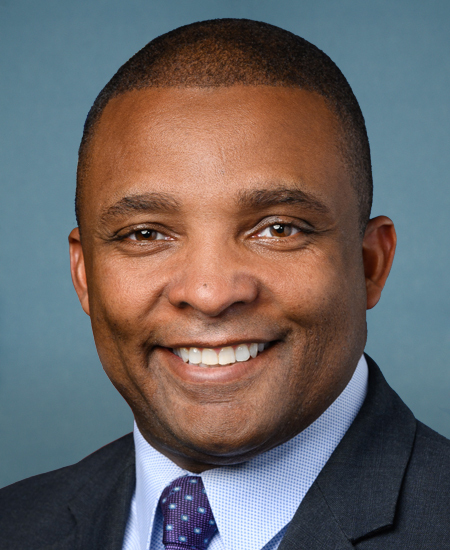
Rep. Donald G. Davis
Sponsored bills
Veterans Jobs Opportunity Act This bill allows a new business-related tax credit for the start-up expenses of a veteran-owned small business in an underserved community. The allowable amount of such credit is 15% of start-up expenditures that do not exceed $50,000. To be eligible for the credit, the small business must (1) be owned and controlled by one or more veterans or their spouses, and (2) have its principal place of business in an underserved community. An underserved community is any area located within (1) a HUBZone (as defined by the Small Business Act), (2) an empowerment zone or an enterprise community, (3) an area of low income or moderate income (as recognized by the Federal Financial Institutions Examination Council), or (4) a county with persistent poverty (as classified by the Economic Research Service of the Department of Agriculture).
Maddy summaryHRES 439 is a non-binding resolution expressing the House of Representatives' support for keeping the U.S. Postal Service (USPS) as an independent federal agency, not subject to privatization. It highlights USPS's constitutional role, self-sustaining nature (relying on service revenue, not taxpayer funds), and its importance to rural communities, e-commerce, and over 600,000 employees. The resolution urges Congress to take action to preserve USPS's independence, emphasizing that privatization could raise prices, reduce services, and harm the nation's mail infrastructure. As a procedural resolution, it does not change law but formally states the House's position.
Historic Preservation Fund Reauthorization Act This bill extends through FY2033 and increases funding for the National Park Service's Historic Preservation Fund. The funding is provided from revenues from Outer Continental Shelf oil and gas leases, and awards from the fund are made to states and other entities, including tribes and nonprofits.
Maddy summaryHR 3165, the Military Housing Transparency and Accountability Act, requires the military to create a new database tracking complaints about housing units occupied by service members and their families who do not own their housing. It mandates an annual report to Congress summarizing all complaints, categorized into specific types like mold or lead hazards (physiological), security issues (psychological), safety risks, and maintenance problems (timeliness and quality). This directly affects military members and their dependents living in government-provided housing. The bill aims to improve transparency by making complaint data publicly available and requiring the military to report on actions taken to resolve issues.
Maddy summaryThis resolution expresses the U.S. House of Representatives' support for designating May as "National Bladder Cancer Awareness Month." It does not create new laws or funding but calls on the public, advocacy groups, researchers, and those affected by bladder cancer to promote awareness and support during May. The resolution cites that bladder cancer affects over 800,000 families in the U.S., is among the top diagnosed cancers, and early detection improves survival rates. Its goal is to encourage community activities that raise public knowledge about the disease and support for patients and research.
Maddy summaryThis bill requires that AM radio receivers be included as standard equipment in all new motor vehicles (such as cars and trucks) sold in the United States, with a rule to be issued by the Department of Transportation within one year. The rule must ensure AM radio is easily accessible on the dashboard and allows manufacturers to use digital AM radio technology instead of traditional AM. During the one-year period between the bill's enactment and the rule's effective date, manufacturers must clearly label vehicles without AM radio. The bill also directs a study to evaluate whether an alternative system could deliver emergency alerts as reliably as AM radio across the country, especially during crises.
Maddy summaryHR 3312, the Moms Matter Act, establishes a $25 million annual grant program (2024-2027) for community organizations, health providers, and local governments to address maternal mental health and substance use disorders. It prioritizes funding for initiatives in areas with high maternal mortality rates, health disparities, or health professional shortage areas, focusing on evidence-based services like integrated mental health care in prenatal settings, postpartum support, stigma reduction, and provider training. The bill also creates a $15 million annual workforce program (2024-2028) to diversify maternal mental health providers through scholarships, training in bias/racism, and recruitment in underserved communities. These grants directly affect pregnant and postpartum individuals in high-risk demographic groups and aim to improve access to specialized care through concrete program requirements.
Maddy summary# Comprehensive Summary: Maternal Health and Vaccination Legislation This proposed legislation establishes a comprehensive framework to improve maternal health outcomes across multiple dimensions, with a strong focus on equity and addressing systemic disparities. The bill is organized into 13 titles covering various aspects of maternal health care. ## Key Focus Areas 1. **Maternal Health Equity**: The legislation emphasizes reducing racial and ethnic disparities in maternal health outcomes, with specific provisions targeting communities of color and underserved populations. 2. **Incarcerated Mothers**: Includes provisions to end shackling of pregnant individuals in correctional facilities and establishes programs for maternal health care in prisons and jails. 3. **Technology and Telehealth**: Creates grant programs for telehealth models, technology-enabled collaborative learning, and digital tools to improve access to maternal care. 4. **Climate Change Impact**: Addresses how climate change affects maternal and infant health, with a focus on vulnerable populations. 5. **Public Health Emergencies**: Establishes protocols for maternal care during public health crises like pandemics. 6. **Vaccinations**: Expands maternal vaccination awareness and equity campaigns. ## Major Provisions **Maternal Vaccination Campaign (Title XIII)**: - Expands awareness campaigns to specifically target pregnant and postpartum individuals - Allocates $17 million annually (2024-2028) for vaccination outreach - Includes specific efforts to increase vaccination rates among racial/ethnic minority groups **Technology and Telehealth (Titles IX)**: - $6 million annually for technology-enabled collaborative learning models - $6 million annually for digital tools to promote equity in maternal health - Creates a demonstration project for alternative payment models in maternal care **Climate Change and Maternal Health (Title XII)**: - $100 million for a grant program to protect vulnerable mothers and babies from climate change risks - $5 million for education and training at health profession schools - Establishes a National Institutes of Health Consortium on Birth and Climate Change Research **Incarcerated Mothers (Title VIII)**: - Requires 25% grant reduction for states that don't restrict restraints on pregnant incarcerated individuals - Establishes model programs in Bureau of Prisons facilities for pregnant and postpartum incarcerated individuals - $10 million annually for State and local prison and jail programs **Public Health Emergency Response (Title XI)**: - $100 million for data collection on maternal health during public health emergencies - $30 million for expanding maternal mortality reviews - $45 million for Pregnancy Risk Assessment Monitoring System (PRAMS) - $15 million for research on public health emergencies' impact on maternal health ## Cross-Cutting Themes - **Equity Focus**: Nearly every provision includes specific measures to address racial and ethnic disparities - **Data Collection**: Strong emphasis on collecting and analyzing demographic data - **Community Involvement**: Requires input from community-based organizations and affected populations - **Interagency Coordination**: Mandates collaboration between multiple federal agencies - **Long-Term Investment**: All funding is allocated for 5-year periods (2024-2028) The legislation represents a comprehensive, multi-faceted approach to improving maternal health outcomes in the United States, with particular attention to vulnerable populations and systemic barriers that contribute to poor maternal health outcomes.
This resolution acknowledges the 14th anniversary of the end of the war in Sri Lanka and urges the United States to work with the United Nations to establish an international mechanism for accountability for the grave crimes committed during the war. The resolution also encourages the promotion of universally accepted democratic principles on the island of Sri Lanka, including by using the referendum process to ensure that all ethnicities are equitably represented.