

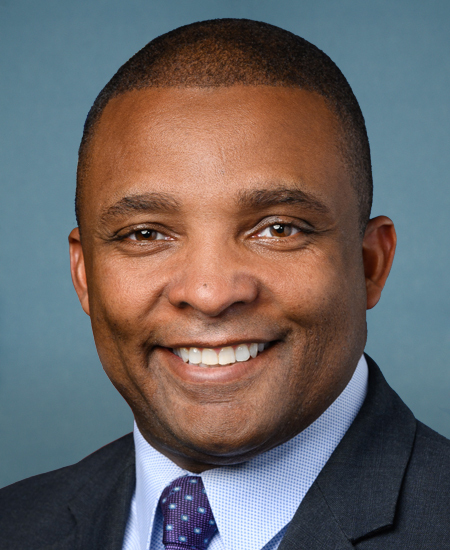
Maddy summaryHR 5383, the GIVE MILK Act, amends the Child Nutrition Act to allow WIC participants with young children to choose their preferred milk type (whole, low-fat, or nonfat) instead of receiving a default option. This change directly affects WIC participants caring for children aged 12 months to 4 years, aligning with dietary guidelines for that age group. The key provision requires the Secretary of Agriculture to issue the milk type elected by the participant or their guardian, updating WIC program regulations under Section 17(f) of the Child Nutrition Act. The bill focuses on enabling participant choice based on established nutritional recommendations for childhood development.
Rep. Donald G. Davis
Sponsored bills
Maddy summaryHR 5341, the Family Farmer and Rancher Tax Fairness Act of 2023, ensures that certain pandemic relief payments made to farmers and ranchers under the American Rescue Plan Act of 2021 and related legislation are not counted as taxable income. Specifically, it excludes payments described in sections 1006(e) of the ARP Act and 22006 of Public Law 117-169 from gross income for recipients. This means eligible farmers and ranchers receiving these payments will not owe income tax on them, and it prevents related tax adjustments that would otherwise reduce deductions or basis. The bill directly affects agricultural businesses that received these specific federal payments during the pandemic.
Maddy summaryHR 5318, the "Remembering Our Local Heroes Act," creates a federal grant program to fund construction, restoration, or maintenance of memorials honoring specific community contributors. The program provides up to $100,000 per project to local governments or nonprofits for memorials commemorating veterans (since 1917), fallen military personnel, law enforcement officers, or firefighters. Applicants must provide at least 50% non-Federal matching funds (including in-kind contributions) and demonstrate community support, with priority given to projects memorializing individuals with exemplary service or acts of bravery. The program is funded at $2 million annually from 2024 through 2028, excluding interior structures or memorials not meeting the defined criteria.
Cybersecurity in Agriculture Act of 2023 This bill directs the National Institute of Food and Agriculture (NIFA) to establish an agriculture cybersecurity program. Under the program, NIFA must provide grants to or enter into cooperative agreements with eligible entities to establish a network of five Regional Agriculture Cybersecurity Centers to carry out research, development, and education on agriculture cybersecurity related to seed agriculture, horticulture, animal agriculture, and the agriculture supply chain. An eligible entity is a college or university that has programs in food and agriculture sciences and cybersecurity that coordinate regional industry partners, cooperatives, government authorities, and other stakeholders to (1) strengthen security, privacy, and resiliency; (2) bolster the independent networks; and (3) develop a skilled workforce. The program must also establish a national network of such regional centers and designate one college or university to coordinate the national network's activities.
Maddy summaryThis bill requires the Bureau of Prisons to develop and implement a strategy for scanning all incoming mail at federal prisons to stop fentanyl and other synthetic drugs from entering facilities. It directs the Bureau to evaluate existing scanning technology within 180 days and submit a detailed plan to Congress within 90 days, including how to provide digital copies of mail to inmates within 24 hours and physical copies within 30 days (if safe). The strategy must achieve 100% mail scanning capacity at all federal prisons, prioritize high-security facilities, and include a budget proposal for fiscal years 2024-2026. This directly affects federal prisons, inmates, and Bureau employees by changing mail processing procedures to enhance safety and reduce staffing burdens from manual mail checks.
Maddy summaryHR 5295, the Expanding the VOTE Act, modifies Section 203 of the Voting Rights Act to expand language access for voters. It requires states and localities to provide voting materials (including ballots and instructions) in the language of covered language minority groups, with new provisions for American Indian and Alaska Native languages requiring tribal government consultation for unwritten languages. The bill creates $15 million in grants to help jurisdictions provide voting materials in languages that don’t currently trigger Section 203 coverage, while mandating continued provision for those groups in future elections. It also directs a study to evaluate lowering population thresholds for language protections and expanding the definition of covered languages.
Maddy summaryHR 4944, the Military Families and Surviving Spouses Benefits Enhancement Act, expands benefits for military families by removing barriers for remarried surviving spouses of service members who died on active duty. It allows these spouses to access federal job preferences, VA non-monetary benefits (like healthcare and education), and commissary/exchange privileges without being disqualified due to remarriage. The bill also creates a 180-day student loan deferment for spouses of active-duty service members who lose jobs due to permanent military relocations, with interest not accruing on certain federal loans during this period. Documentation of military orders and job loss is required for the student loan provision, and all changes apply to specific federal benefit programs.
Investing in Rural America Act This bill allows Farm Credit System (FCS) institutions to provide financing and technical assistance for essential community facility projects as part of the Department of Agriculture's Community Facilities Direct Loan & Grant Program. (This program provides funding to develop essential community facilities in rural areas.) The FCS financing and technical assistance may be provided in order to make capital available to develop, build, maintain, improve, or provide other support for essential community facilities in rural communities (e.g., certain facilities that provide healthcare, community support, public safety, educational, or utility services). Under the bill, the financing provided by an FCS institution may not exceed 15% of the institution’s total assets unless the FCS institution offers at least one non-FCS lending institution an interest in the financing under reasonable terms and conditions acceptable to the borrower. The FCS institution must also report the offer to the Farm Credit Administration (FCA). The FCA must submit an annual report to Congress on the activities undertaken by FCS institutions under this bill, including through the partnerships between FCS institutions and other lending institutions. The FCA must post the report on the agency's website.
Maddy summaryHR 4745, the Delivering for Rural Seniors Act of 2023, creates a pilot program to expand home delivery of food packages under the Commodity Supplemental Food Program (CSFP) for low-income seniors in rural areas. The bill authorizes $10 million annually (2024-2026) for competitive grants to state agencies, which must prioritize rural service providers to cover costs like transportation, staffing, and outreach for home delivery. It requires grantees to report on delivery metrics, costs, and effectiveness annually. The program directly affects rural CSFP participants facing transportation barriers to accessing food assistance.
Rural Hospital Technical Assistance Program Act This bill provides statutory authority for the Rural Hospital Technical Assistance Program within the Department of Agriculture (USDA). Under the bill, USDA must establish and maintain (directly or by grant, contract, or cooperative agreement) a program to help eligible hospital facilities in rural areas with a population of 50,000 inhabitants or less. The program must provide tailored technical assistance and training to hospital facilities to identify development needs for maintaining essential health care services and support action plans for financial, operational, and quality improvement projects to meet these needs. Development needs include (1) constructing, expanding, and modernizing health care facilities; (2) increasing telehealth capabilities; and (3) acquiring or upgrading health care information systems (e.g., electronic health records). The program must also provide technical assistance and training to help hospital facilities to better manage their financial and business strategies and identify, and apply for assistance from, USDA loan and grant programs. In selecting eligible hospital facilities to participate in the program, USDA must give priority to borrowers and grantees of certain USDA rural assistance programs. USDA must also submit an annual report to Congress on the progress and results of the program.