

Maddy summaryThe Health Equity Innovation Act of 2023 creates a new federal grant program to address health disparities. It provides $50 million to $70 million annually (2024-2028) for grants to faith- and community-based organizations in medically underserved areas. These grants fund culturally appropriate care, health screenings, preventive services, and programs like community health workers to improve access and address social barriers. The bill prioritizes organizations that operated health initiatives during the pandemic. It directly affects communities disproportionately impacted by chronic health disparities and supports local health workforce expansion.
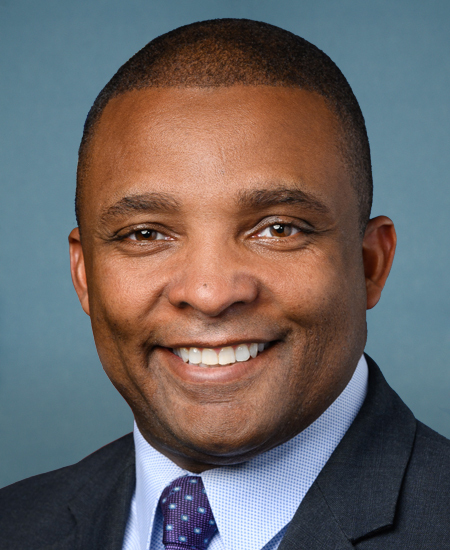
Rep. Donald G. Davis
Sponsored bills
Maddy summaryHR 5455, the Collision Avoidance Systems Act of 2023, allows automakers to install pulsating light systems as rear-end collision avoidance technology on new vehicles. The bill requires the Secretary of Transportation to issue new regulations within 180 days updating Federal Safety Standard 108 to include performance-based rules for these systems. Specifically, it defines a "pulsating light system" as a high-mounted brake light that flashes rapidly (up to 4 times for no more than 1.2 seconds) before switching to steady light, with a 5-second lockout period after braking stops. This directly affects vehicle manufacturers who must comply with the updated safety standards for brake lights.
Maddy summaryThe Humane Cosmetics Act of 2023 bans cosmetic animal testing in the United States, prohibiting companies from conducting or contracting such testing after its enactment (effective 1 year later). It also bans selling or transporting cosmetics developed using animal testing conducted after that date within U.S. interstate commerce. The law directly affects cosmetic manufacturers, retailers, and suppliers operating in the U.S. market, requiring them to use non-animal testing methods for safety evaluations. Exceptions exist for foreign regulatory requirements or when no alternative testing methods are available for specific ingredients.
Maddy summaryThis bill creates federal grants to help hospitals with emergency departments improve follow-up care for patients experiencing acute mental health crises. It directly affects emergency departments licensed to treat mental health emergencies and the patients treated there, aiming to reduce gaps in transitioning to ongoing care. Grants can fund coordination with community providers, expand psychiatric bed availability, implement telehealth support in EDs, and establish follow-up systems like phone check-ins. The bill authorizes $15 million annually (2024-2028) for these programs, requiring hospitals to demonstrate needs and coordinate with local health systems before receiving funds.
Maddy summaryHR 5433, the Child Care Stabilization Act, provides $16 billion annually from 2024 to 2028 to stabilize the child care sector through grants administered by the Health and Human Services Secretary. It directly affects licensed child care providers by offering stable funding to cover operating costs, while supporting higher wages for early educators without raising family fees. Key provisions include expanding access to high-quality, affordable care - especially for infants/toddlers, rural communities, and children with disabilities - and addressing shortages in underserved areas. The funding builds on existing American Rescue Plan resources, aiming to strengthen the child care workforce and increase available options for working families.
This bill extends the eligibility or applicability of various Department of Veterans Affairs (VA) programs and benefits. First, the bill extends from three to five years the authority for additional licensed health care professionals (i.e., physician assistants, nurse practitioners, audiologists, and psychologists) to perform medical disability examinations as part of the existing VA pilot program related to the use of contract physicians for disability examinations. Currently, when an individual transfers fewer than 12 credits from a program of education that is closed or disapproved, the individual is deemed to have not received those credits, and no charge from the individual's entitlement to education assistance may be made for that period of enrollment. Under the bill, this period of relief for those affected by a closure or disapproval is extended by two years to apply to programs that close or discontinue before September 30, 2025. The bill extends through FY2028 the authorization for VA emergency preparedness for public health emergencies. The bill also extends the applicability of certain loan fee rates through November 15, 2031, under the VA's home loan program.
Maddy summaryHR 3152, the "Fight CRIME Act," aims to maintain international restrictions on Iran's missile-related activities by requiring diplomatic efforts to extend these restrictions before they expire in October 2023. The bill mandates annual reports detailing U.S. diplomatic strategies, potential impacts of expiration, and measures to deter missile technology transfers to Iran. It establishes sanctions against foreign individuals or entities that knowingly support Iran's missile or drone programs, including asset freezes and visa restrictions. These sanctions apply regardless of whether UN restrictions remain in effect after their expiration, directly affecting foreign entities involved in these activities.
Maddy summaryHCONRES 18 sets strict 30-day deadlines for the Joint Committee on the Library to review and act on North Carolina's submission for a statue of Reverend Billy Graham in the National Statuary Hall. It requires the Committee to approve or deny the clay model design within 30 days of receiving detailed submissions (including photos, dimensions, and engineering data), then approve the final statue within another 30 days of receiving final documentation. If approved, the Committee must also select a Capitol location within 30 days. This procedural bill directly affects North Carolina (as the submitting state) and the Joint Committee, streamlining an existing approval process without altering substantive policy.
Maddy summaryHR 5413, the Prevent Youth Suicide Act, requires all schools serving grades 6-12 that receive federal education funds to implement specific suicide prevention and support protocols within 210 days of enactment. The bill mandates evidence-based staff training every two years to identify student suicide risks, establish referral systems to mental health resources, reduce stigma through awareness campaigns, and adopt trauma-informed care practices. Schools must also create postvention plans for after a suicide occurs, including grief counseling support and collaboration with mental health professionals. These requirements apply directly to school districts and institutions receiving federal education funding under applicable programs. The Secretary of Education will provide technical assistance and monitor compliance with these rules.
Maddy summaryHR 5419, the Direct Seller and Real Estate Agent Harmonization Act, amends the Fair Labor Standards Act to exclude direct sellers (like door-to-door sales representatives) and qualified real estate agents from the federal definition of "employee." This change means these workers would no longer be automatically covered by federal minimum wage and overtime protections under the Fair Labor Standards Act. The bill directly affects individuals working in these specific roles by altering their legal classification under labor law. The key provision is a new definition inserted into existing law, aligning labor classification with existing tax code definitions for these professions.