

Maddy summaryThis resolution honors the Greensboro Four (Joseph McNeil, Jibreel Khazan, Franklin McCain, and David Richmond) for their 1960 sit-in at a Greensboro, North Carolina Woolworth's store, which sparked the civil rights movement. It formally recognizes their role in challenging racial segregation and inspiring nationwide protests during Black History Month. The resolution encourages schools to include the Greensboro Four's story in their educational curriculum to highlight their contributions to civil rights. As a commemorative resolution, it has no binding effect but aims to promote historical awareness.
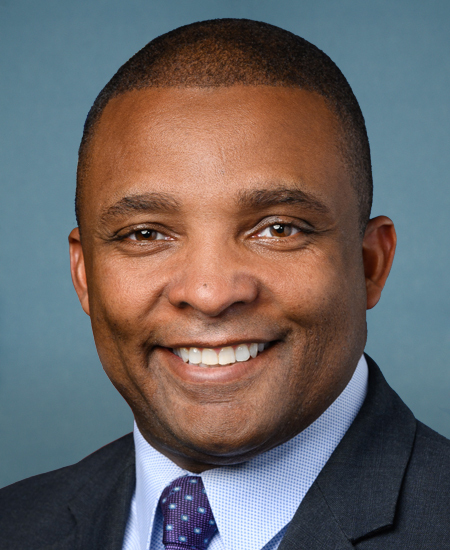
Rep. Donald G. Davis
Sponsored bills
Maddy summaryHRES 1040 is a ceremonial House resolution recognizing February as Black History Month. It formally acknowledges the achievements of Black Americans throughout U.S. history and encourages continued celebration of this observance. The resolution highlights the cultural and artistic contributions of Black Americans, including historical figures and movements like the Harlem Renaissance and hip-hop. As a non-binding resolution, it does not create new programs or affect any specific group, but serves to affirm the importance of commemorating Black history.
Maddy summaryThis bill requires the Department of Defense to create a data-sharing agreement with the Department of Education within one year of enactment. It directly helps current and former active-duty military service members and civilian employees who qualify for Public Service Loan Forgiveness (PSLF) under the Higher Education Act. The agreement will automatically certify their employment periods starting October 1, 2007, to meet PSLF eligibility requirements. This change simplifies the process for military personnel to access loan forgiveness benefits they've earned through their service. The bill focuses on removing administrative barriers in the existing loan forgiveness program.
Maddy summaryHR 7361, the Flowers for Fallen Heroes Act of 2024, requires the American Battle Monuments Commission to establish a low-cost program allowing the public to order flowers for military gravesites at Commission-managed cemeteries. The bill mandates the Commission to partner with third-party florists (without excess fees) and create a user-friendly website and phone system for ordering by one year after enactment. It also authorizes credit card and electronic payment processing for these orders, with customers responsible for any third-party processing fees, and requires annual reports to Congress detailing program implementation, including order data and florist engagement. This bill directly affects the public seeking to honor fallen service members and the Commission’s operations at 25 overseas military cemeteries.
Maddy summaryThis bill reauthorizes and enhances anti-trafficking programs through several key provisions. It establishes "Frederick Douglass Human Trafficking Prevention Education Grants" for schools to implement evidence-based, culturally responsive training for K-12 students, teachers, and school personnel on recognizing and preventing child trafficking. It also creates a Human Trafficking Survivors Employment and Education Program to help trafficking victims gain job skills, education, and life skills for self-sufficiency. The bill extends funding for these programs through 2028 with increased authorization levels and modifies international trafficking reporting standards.
Maddy summaryHR 7434, the BEST for Vets Act of 2024, requires that only licensed health care professionals conduct medical disability examinations for veterans' benefits under certain VA pilot programs. The bill amends existing law to prohibit non-licensed personnel from performing these evaluations, ensuring only qualified professionals (as defined in the law) handle disability assessments. It also mandates annual reports to Congress detailing the pilot program's implementation and the VA's compliance actions. This directly affects veterans receiving disability benefits and VA contractors administering medical exams. The law aims to standardize exam quality and transparency in the disability evaluation process.
Maddy summaryThis bill requires the Secretary of Homeland Security, working with the Education Secretary and other agencies, to create a federal strategy for securing K-12 schools against terrorism threats within 180 days of enactment. The strategy must detail existing federal programs and funding for school security, identify specific vulnerabilities in school safety, outline actions to address those gaps, and recommend any needed new authorities. It applies directly to federal agencies coordinating school security efforts but does not mandate specific security measures for schools themselves. The strategy must be updated every seven years, with the requirement ending seven years after the bill's enactment.
Maddy summaryThe PURR Act of 2024 establishes a uniform federal regulatory framework for pet food in the U.S., replacing inconsistent state-level rules and separating pet food regulation from livestock feed. It preempts state laws on pet food labeling and marketing, creates a standardized process for reviewing new pet food ingredients (requiring FDA action within 90 days), and allows certain marketing claims like "natural" or "hairball control" without premarket approval if truthful and substantiated. The bill defines key terms (e.g., "companion animal" as dogs/cats), sets ingredient listing rules, and mandates FDA guidance on topics like nutritional adequacy and calorie claims. This directly affects pet food manufacturers, the FDA’s Center for Veterinary Medicine, and pet owners by creating clearer safety standards and labeling consistency nationwide.
Maddy summaryHR 7384, the Creating Hope Reauthorization Act of 2024, extends the deadline for issuing priority review vouchers to pharmaceutical companies developing treatments for rare pediatric diseases. The bill amends the Federal Food, Drug, and Cosmetic Act to push the program’s expiration from 2024 to 2028 and adjusts another related deadline to 2030. This directly affects drug manufacturers seeking faster FDA review for new treatments targeting rare childhood illnesses. The extension ensures continued incentives for developing these critical therapies without altering the core voucher mechanism.
Maddy summaryThis bill establishes an Interagency Task Force on Black Women and Girls, requiring the Attorney General and Health Secretary to create a group within 180 days of enactment. The Task Force will examine systemic issues affecting Black women and girls - including school discipline, economic opportunities, healthcare access, justice system involvement, and housing - and make policy recommendations across these areas. It mandates the U.S. Commission on Civil Rights to annually study specific disparities like maternal mortality rates, the school-to-prison pipeline, and housing barriers, then report findings to Congress. The bill directly targets policies impacting Black women and girls as defined in the legislation, with recommendations due within two years.