

Maddy summaryHR 1449, the CLEAN Act, amends the Geothermal Steam Act of 1970 to streamline geothermal energy development. It requires annual leasing of federal lands for geothermal projects (previously every two years), mandates replacement sales if a lease sale is canceled, and requires the Secretary of the Interior to offer all eligible parcels for development in a given state. The bill also sets strict 30-day deadlines for the Department of the Interior to notify applicants about complete permit applications and issue final decisions on drilling permits. These changes directly affect geothermal energy developers and the Department of the Interior, aiming to accelerate project approvals on federal lands.
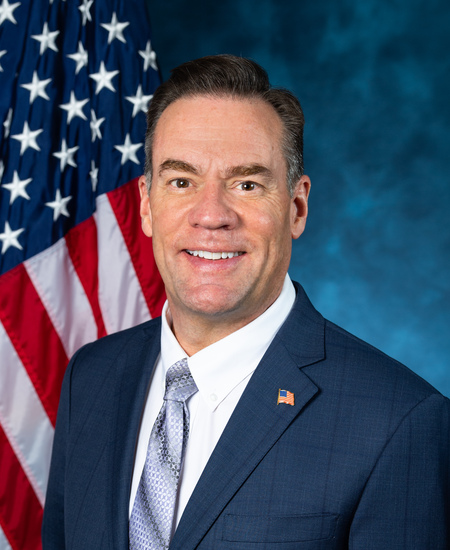
Rep. Russ Fulcher
Sponsored bills
Maddy summaryThe Oregon Owyhee Wilderness and Community Protection Act designates approximately 926,588 acres of Federal land in Malheur County, Oregon as wilderness areas, including 15 specific wilderness designations managed under the Wilderness Act. It establishes a Malheur County Grazing Management Program that provides operational flexibility for grazing permittees, allowing adjustments to grazing schedules and water infrastructure placement with 2-day written notice to the Bureau while maintaining existing grazing rights. The bill creates the Malheur C.E.O. Group, consisting of 8 members representing grazing permittees, businesses, conservation organizations, and tribes, to propose and manage projects related to ecological restoration, range improvements, and invasive species control. The legislation also includes provisions for land conveyances to the Burns Paiute Tribe and ensures continued livestock grazing on Federal lands with specific protections for grazing rights and management activities related to fire suppression and invasive species control.
Maddy summary# Summary of Proposed Higher Education Act Amendments This document outlines significant proposed amendments to the Higher Education Act of 1965, primarily as part of the "College Cost Reduction Act." The key elements include: ## Accreditation Reform - Major overhaul of accreditation standards, requiring accrediting agencies to demonstrate independence from trade associations - New requirements for accrediting agencies to assess student achievement outcomes, including median value-added earnings relative to median total price charged - Introduction of an "Alternative Quality Assurance Experimental Site Initiative" to test non-accredited institutions - Protections for religious institutions, including a new process for appealing accreditation decisions related to religious mission - Removal of "litmus tests" that would require institutions to support specific political viewpoints ## Student Success Initiatives - Establishment of "Postsecondary Student Success Grants" to increase participation, retention, and completion rates for high-need students - Focus on evidence-based practices, with tiered requirements (tier 1, 2, and 3 reforms) - Mandatory inclusion of high-need student populations (low-income, first-generation, military-connected, etc.) - Requirements for institutions to report on completion rates, retention rates, and student demographics ## Regulatory Changes - Repeal of numerous existing regulations including: * Closed school discharges * Borrower defense to repayment * Pre-dispute arbitration * False certification requirements * Ability-to-benefit rules * Financial responsibility regulations - New restrictions on incentive compensation for recruiters - Changes to third-party servicer definitions and regulations ## Transfer and Credit Policies - New requirement that institutions cannot deny transfer credit based solely on the source of accreditation - Requirements for transparent transfer policies - Changes to reverse transfer policies ## Other Key Provisions - Modifications to the National Advisory Committee on Institutional Quality and Integrity (NACIQI) - New definitions for "total price" and "value-added earnings" - Changes to the process for institutions to change accrediting agencies - New requirements for institutions to report on student outcomes The overall focus of these proposed amendments is to reduce regulatory burden on institutions, promote transparency, improve student outcomes (particularly for high-need students), modernize accreditation processes, and protect religious institutions' rights in accreditation decisions.
Maddy summaryThis bill defines "urban canal of concern" as canals posing significant risk - either affecting over 100 people or $5 million in property damage if they fail, or designated as urban by Bureau of Reclamation offices. It requires the Bureau of Reclamation to fund 35% of extraordinary maintenance costs for these high-risk canals, with the remaining costs to be repaid by the local operating entity. The bill applies directly to local canal operators and the Bureau of Reclamation, focusing on safety upgrades for aging infrastructure in urban areas. It does not create new programs but modifies existing funding mechanisms under the 2009 Omnibus Public Land Management Act.
Maddy summaryThis bill clarifies rules for using existing water infrastructure to recharge aquifers. It allows states, tribes, local governments, or public entities to use current water rights, permits, or easements for aquifer recharge without needing new federal approvals, provided they give the Bureau of Land Management 30 days' notice detailing the location, scope, and agreements involved. The bill also exempts such use from additional rent payments to the Bureau and waives requirements under the Federal Water Pollution Control Act, Endangered Species Act, and Wild and Scenic Rivers Act for these specific recharge activities. It directly affects entities managing water infrastructure in states or tribal lands seeking to enhance groundwater supplies.
Maddy summaryHRES 1566 is a symbolic House resolution honoring all U.S. veterans on Veterans Day 2024. It recognizes the service and sacrifice of the estimated 15.8 million veterans living in the U.S. as of 2023, including those who served in conflicts from World War II to post-9/11. The resolution calls on the American public to observe Veterans Day to acknowledge veterans' role in preserving national freedom. As a non-binding resolution, it has no direct policy impact but formally expresses congressional recognition of veterans' contributions.
Maddy summaryHR 4141 exempts certain communications projects (like wireless facility installations, small cell towers, and disaster recovery work) from federal environmental reviews under the National Environmental Policy Act (NEPA) and historical preservation reviews under the National Historic Preservation Act (NHPA). It specifically applies to projects involving personal wireless services, facilities in public rights-of-way, or those replacing damaged infrastructure after disasters. The bill also creates a presumption that tribal governments have waived consultation rights if they don’t respond to FCC Form 620/621 requests within 45 days, streamlining approvals for telecom companies. This primarily affects wireless providers seeking faster permits for infrastructure deployment.
Maddy summaryHR 9898 requires the Department of Energy to lead a federal task force that will analyze U.S. critical materials processing capacity and report to Congress within one year. The report must identify supply chain gaps, assess regulatory barriers (like Clean Air Act compliance), and evaluate opportunities for foreign investment from allied nations. It also mandates a GAO review of how current policies and permitting processes hinder domestic investment in processing critical minerals used in clean energy and technology. The bill directly affects federal agencies, domestic processing industries, and potential foreign investors seeking to build U.S. facilities.
Maddy summaryHRES 1509 is a symbolic resolution designating the week beginning November 11, 2024, as "National Pregnancy Center Week." It recognizes community-supported pregnancy centers across the U.S. for providing services like pregnancy testing, counseling, ultrasounds, parenting education, and material support to individuals facing pregnancy decisions. The resolution highlights that these centers, which serve approximately 2 million people annually through volunteer and staff efforts, operate as local, nonprofit organizations. It does not create new laws or funding but formally acknowledges their role in offering support to women and men.
Maddy summaryHJRES 136 is a resolution seeking to block an Environmental Protection Agency (EPA) rule that would have set new emissions standards for light and medium-duty vehicles sold in 2027 and later model years. The EPA rule, published in April 2024, aimed to require vehicle manufacturers to meet stricter pollution limits for these vehicles. If passed, this resolution would cancel the rule, preventing the EPA from enforcing the new standards. It uses a congressional process that allows Congress to reject agency rules with a simple majority vote.