

Maddy summaryHR 497, the Freedom for Health Care Workers Act, eliminates a federal requirement for healthcare workers in Medicare and Medicaid programs to be vaccinated against COVID-19. The bill directly affects healthcare providers who treat patients under these federally funded programs by preventing the enforcement of the November 2021 HHS rule mandating staff vaccinations. Its key provision prohibits the Department of Health and Human Services from implementing, enforcing, or creating a similar rule regarding vaccination for these workers. This bill changes the policy by removing a specific vaccine mandate for providers in Medicare and Medicaid programs.
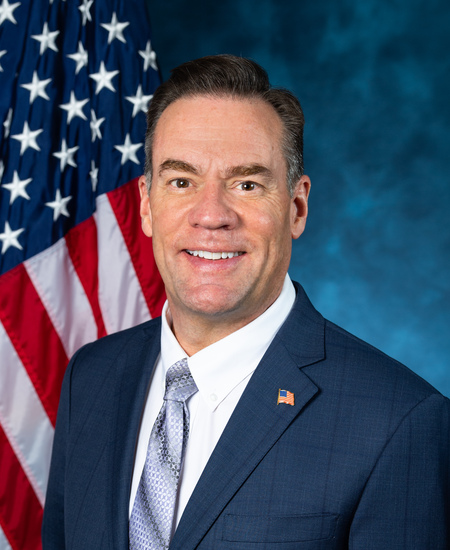
Rep. Russ Fulcher
Sponsored bills
Maddy summaryThis bill bans federal funding for abortions in most cases, prohibiting the use of taxpayer money for abortion services or health insurance plans covering abortion. Exceptions allow funding for abortions resulting from rape, incest, or when a pregnancy endangers a woman's life. It requires health insurance plans sold through the Affordable Care Act (ACA) marketplaces to clearly disclose any separate costs for abortion coverage and prohibits ACA subsidies from being used for plans that cover abortion (except in the specified exceptions). The law directly affects federal programs like Medicaid, ACA marketplace plans, and insurers offering health coverage to individuals using federal subsidies.
Maddy summaryHR 152, titled the "Hearing Protection Act," actually addresses firearm silencers (suppressors), not hearing protection. The bill removes federal registration requirements for silencers by directing the Attorney General to destroy all existing silencer records within 365 days. It also preempts state laws that tax, register, or impose recordkeeping requirements on silencers, making such state rules unenforceable. Additionally, the bill updates tax codes to include silencers as taxable items and clarifies their definition in firearm laws.
Maddy summaryHJRES 181 is a congressional resolution seeking to block a Department of Labor rule that defined "Employer-Association Health Plans." The bill would prevent this specific rule - published in the Federal Register on April 30, 2024 - from taking effect. It directly affects employers and health plan administrators who use these association-based health coverage models. If passed, the rule would have no legal force, reversing the Labor Department's regulatory definition.
Maddy summaryThe ESA Amendments Act of 2024 makes significant changes to the Endangered Species Act of 1973, primarily focusing on improving conservation efficiency and increasing incentives for private landowners. It establishes a national listing work plan with five priority classifications (Priority 1-5) for species to streamline conservation efforts and sets deadlines for acting on listing petitions. The bill creates "Candidate Conservation Agreements with Assurances" that provide private landowners with legal assurances they won't face additional restrictions if species they're conserving gets listed under the Act. It also requires the government to publish the basis for listing decisions online, mandates transparency in using state and local information, and allows states to develop recovery strategies that could be adopted as regulations. These changes aim to improve conservation outcomes while reducing regulatory burdens on private landowners and increasing government transparency.
Maddy summaryHR 1586, the Forest Protection and Wildland Firefighter Safety Act of 2023, exempts certain fire suppression activities from requiring permits under the Clean Water Act. It directly affects federal agencies like the Forest Service, National Park Service, and Bureau of Land Management, as well as state, local, and tribal governments conducting wildfire response. The bill's key provision removes the need for a Section 402 permit under the Clean Water Act when these covered entities discharge fire retardants, chemicals, or water for fire control or prevention. This change streamlines firefighting operations by eliminating a specific permitting step during active wildfire events.
Maddy summaryThe Good Samaritan Remediation of Abandoned Hardrock Mines Act of 2024 establishes a limited pilot program allowing non-responsible parties (called "Good Samaritans") to remediate pollution at abandoned hardrock mine sites. The bill creates a permit process requiring applicants to demonstrate they're not liable for the pollution, can safely complete the remediation, and will protect the environment. The Environmental Protection Agency would issue up to 15 permits for these projects, providing liability protection for permitted activities while requiring public notice and environmental review. The pilot program would expire after 7 years, with the EPA required to report on its effectiveness to Congress.
Maddy summaryHR 7671, the Disaster Management Costs Modernization Act, allows local governments and organizations receiving federal disaster funds to redirect unused management costs toward disaster preparedness and mitigation. It defines "excess funds" as the difference between authorized management costs and actual spending, making these funds available for activities like building disaster recovery capacity or managing ongoing disaster operations. These redirected funds must be used within five years of availability and cannot create new spending, as the bill specifies "no additional funds" are authorized. The act also requires a GAO study to assess historical management costs for future funding decisions.
Maddy summaryHR 6482 streamlines geothermal exploration on federal lands by defining specific "geothermal exploration projects" (e.g., small-scale drilling under 5 acres, completed in 120 days) and exempting them from major federal environmental reviews under NEPA. It requires leaseholders to notify the federal government 30 days before starting such projects. The bill also directs the Secretary to designate "geothermal leasing priority areas" on federal lands meeting economic and transmission criteria, with reviews every 5 years. These priority areas will use existing environmental impact statements for faster lease sales, avoiding redundant reviews. The law directly affects geothermal leaseholders and federal land managers like the Bureau of Land Management.
Maddy summaryThe Working Dog Commemorative Coin Act (HR 807) directs the U.S. Treasury to mint three types of commemorative coins honoring working dogs' service: $5 gold coins, $1 silver coins, and half-dollar coins with specific weight and composition requirements. Each coin will carry a surcharge ($35 for $5 coins, $10 for $1 coins, $5 for half-dollars) that will be paid directly to America's VetDogs to support their programs providing service dogs for veterans, the disabled, and others. The coins will be issued in 2027 with designs reflecting working dogs' roles in military, detection, therapy, and assistance work. The legislation specifies that all surcharge revenue must fund America's VetDogs' operations without creating new government programs. This is a commemorative measure focused on honoring working dogs' contributions through coin sales, with all surcharge funds going to a specific nonprofit organization.