

Maddy summaryHR 8231, the James Earl Jones Congressional Gold Medal Act, authorizes a Congressional Gold Medal to be awarded to actor James Earl Jones in recognition of his distinguished career in theater and film, and his role in advancing inclusion and equal opportunities for people of all backgrounds in the entertainment industry. The Treasury will strike the medal with an image and inscription of Jones, and may produce and sell bronze duplicates to cover costs, with proceeds deposited into the U.S. Mint's public enterprise fund. This bill serves as a ceremonial honor with no new legal requirements or policy changes.
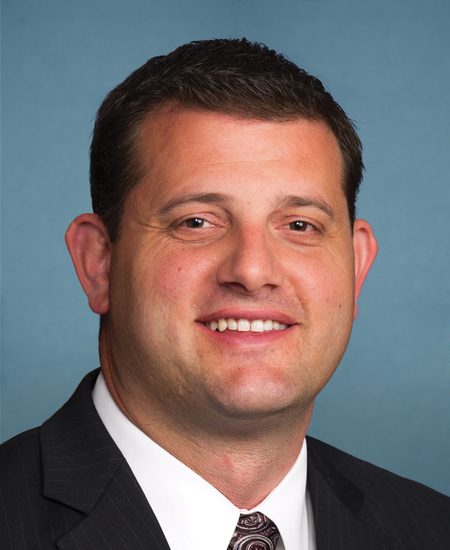
Rep. David G. Valadao
Sponsored bills
Maddy summaryThis bill directs the Department of Education to use the International Holocaust Remembrance Alliance (IHRA) definition of antisemitism when enforcing Title VI of the Civil Rights Act in federal education programs. It clarifies that discrimination against Jewish individuals based on actual or perceived shared ancestry or ethnic characteristics may violate Title VI protections, requiring agencies to consider antisemitism intent during investigations. The law affects schools and universities receiving federal funds by guiding how they handle discrimination complaints related to antisemitism. It does not create new legal standards or expand the Department of Education's authority, as explicitly stated in the bill.
Maddy summaryHR 8141, the Azerbaijan Sanctions Review Act of 2024, requires the President to review whether 44 specific Azerbaijani officials meet criteria for U.S. sanctions under the Global Magnitsky Act and related laws. The bill targets military commanders, judges, prosecutors, and security officials linked to alleged human rights violations, including torture of prisoners of war and suppression of political dissent. Within 180 days of enactment, the President must submit a detailed determination to Congress on whether sanctions should be imposed on these individuals. The review is based on findings of Azerbaijan’s alleged war crimes, arbitrary detentions, and failures to uphold international legal obligations. This bill focuses on procedural review, not immediate sanctions.
Maddy summaryThe SERVICE Act of 2024 establishes a 5-year pilot program to create specialized veterans response teams within law enforcement agencies. These teams, funded through federal grants, directly assist veterans in crisis by connecting law enforcement with VA resources, providing mental health training for officers, and organizing 24/7 volunteer response teams. Key provisions include identifying veteran officers to wear service pins, coordinating with VA and community agencies, and developing crisis response plans. The program requires participating agencies to track outcomes and report grant data to Congress annually.
Maddy summaryThis bill requires sellers of high-risk pathogens (like those that cause severe disease) to maintain detailed electronic logbooks tracking each sale. Sellers must record the agent name, quantity, purchaser details (with verified ID), intended use, and sale date, keeping records for five years. It also mandates regular federal reviews of high-containment laboratories to assess safety, oversight gaps, and national biosecurity needs, with reports to Congress. The law directly affects research labs, biotech companies, and other entities selling such pathogens, aiming to enhance public health protection through better documentation and facility oversight.
Maddy summaryThe EARN IT Act of 2023 clarifies that Section 230 of the Communications Act does not shield online service providers from liability for child sexual abuse material, while specifically protecting providers who use encryption technologies from liability for using those technologies. The bill amends over 50 federal statutes to replace "child pornography" with "child sexual abuse material" to ensure consistent terminology across legal contexts. It updates the CyberTipline (operated by the National Center for Missing & Exploited Children) to improve reporting of child sexual abuse material, extending the preservation period for reports from 90 days to one year. The law affects internet service providers, law enforcement, and child protection programs by clarifying legal responsibilities around child sexual abuse material.
Maddy summaryHR 8126 amends the Financial Literacy and Education Improvement Act to require secondary schools (middle and high schools) to adopt specific financial literacy best practices, expanding coverage beyond just colleges. The bill mandates that schools teach budgeting, credit fundamentals (including credit scores), investment basics, scam avoidance, and postsecondary financing options. These requirements directly affect secondary school curricula and students, ensuring they learn practical financial skills before college. The changes take effect January 1, 2024, updating existing guidelines for institutions of higher education to now include secondary schools.
Maddy summaryHR 8061, the Crime Victims Fund Stabilization Act of 2024, ensures stable funding for the Crime Victims Fund by directing certain False Claims Act collections into it from 2024 through 2029. Specifically, it adds a provision requiring that amounts collected under the False Claims Act (excluding whistleblower rewards and government reimbursement for damages) be deposited into the fund during this period. This directly affects crime victims who rely on the fund for services like counseling and emergency aid, as it prevents potential shortfalls in funding. The bill makes a concrete policy change by redirecting specific federal civil penalties into the fund, rather than altering the fund's existing purposes or eligibility rules.
Maddy summaryHRES 1154 is a symbolic resolution supporting "Financial Literacy Month" to raise public awareness about the importance of personal financial education. It calls on the Federal Government, states, schools, businesses, and communities to observe the month with programs highlighting how financial literacy helps individuals manage money, credit, and debt. The resolution references statistics on financial challenges (like 37% of adults struggling with emergency expenses) but does not create new laws or funding. As a non-binding resolution, it has no direct effect on policy or affected individuals.
Maddy summaryThis bill establishes a federal grant program to expand digital skills training for workers in in-demand industries. It directly affects states, workforce systems, and individuals with barriers to employment - particularly those with low digital literacy (high school diploma or less, low earnings, or limited English proficiency). States receive funding based on population metrics to support digital skills training through subgrants to local providers, prioritizing workers with employment barriers. The program requires detailed reporting on outcomes, including disaggregated data by demographics, and mandates public sharing of results. It aims to build "digitally resilient" systems and individuals by aligning training with industry needs and existing state digital equity plans.