

Maddy summaryHR 8041, the Driving Forward Act, extends a temporary exemption from pre-trip safety checks for school bus drivers operating within states until November 2027. This directly affects school bus drivers and state transportation agencies responsible for implementing the exemption. The bill requires the Transportation Secretary to seek public input on making the exemption permanent after 120 days and allows states to use existing highway funds to cover associated costs. It makes no changes to driver qualification standards but delays a requirement that would have otherwise taken effect.
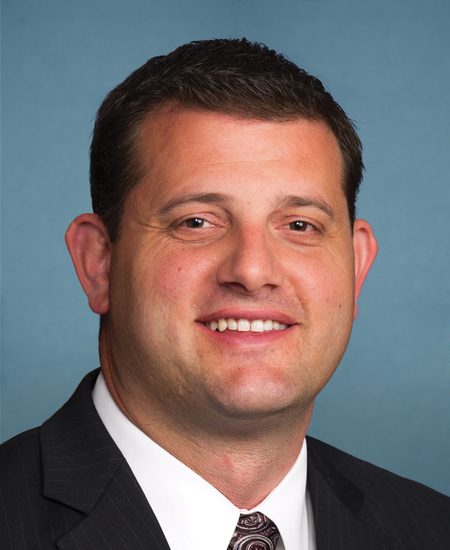
Rep. David G. Valadao
Sponsored bills
Maddy summaryHR 5530, the VA Emergency Transportation Access Act, prevents the Department of Veterans Affairs (VA) from lowering payment rates for specialized transportation used by veterans and eligible individuals (like ambulances or wheelchair vans) without strict requirements. It mandates that any rate change that could reduce access to care must first undergo a detailed review analyzing economic impacts on the VA and transportation industry, and ensure the new rate covers actual costs. The VA must also develop a formal process for rate changes and consult with industry experts, veterans' groups, and healthcare agencies before implementing such changes. This bill directly affects veterans relying on specialized transportation for medical care, particularly those in rural or underserved communities, by safeguarding their access to necessary emergency transport services.
Maddy summaryHRES 1148 is a resolution passed by the U.S. House of Representatives that condemns the Iranian government for supporting terrorism, regional proxy conflicts, and internal suppression of dissent - including its crackdown on protests following Mahsa Amini's death in 2022. It specifically calls for maintaining sanctions against Iran, supporting the Iranian Resistance's Ten-Point Plan (which advocates for a democratic, secular, nonnuclear Iran), and protecting Iranian political refugees in Albania. The resolution also affirms the Iranian people's right to self-determination under international law and urges the U.S. to recognize their struggle for freedom. As a non-binding resolution, it does not create new laws but formally expresses congressional stance.
Maddy summaryThe ROWATA Act requires federal agencies to notify applicants within 60 days whether a right-of-way application for federal lands is complete or needs additional information. This directly affects companies or individuals seeking to build infrastructure (like pipelines or roads) on public lands or National Forest System lands. The key provision mandates that the Secretary of the Interior (for public lands) or Secretary of Agriculture (for National Forests) must provide this notification within 60 days of receiving an application. The bill focuses on streamlining the application process with a clear timeline, without changing land use policies.
Maddy summaryHR 7921, the Countering Antisemitism Act, establishes a National Coordinator to Counter Antisemitism within the Executive Office of the President and creates an Interagency Task Force to coordinate federal efforts against antisemitism across multiple agencies. The bill requires federal agencies to report on implementing the U.S. National Strategy to Counter Antisemitism, mandates annual threat assessments of antisemitic violent extremism from the FBI, DHS, and National Counterterrorism Center, and addresses antisemitic discrimination in higher education through a designated Office for Civil Rights Designee. It also includes provisions for a study on Holocaust education by the U.S. Holocaust Memorial Museum, a study on online antisemitism with recommendations for Congress, and amendments to the Nonprofit Security Grant Program to require public reporting on grant applications and awards.
Maddy summaryThis bill establishes a federal grant program under the Safe Drinking Water Act to help water systems remove harmful nitrate and arsenic contaminants from drinking water. It provides $15 million annually for grants to eligible entities like community water systems, schools, nonprofits, and municipalities, prioritizing disadvantaged communities that haven't met safety standards or serve vulnerable populations like children. Grants cover treatment technology installation with first priority for low-income homeowners and landlords. The program requires grantees to identify contamination sources and reduction methods, limits administrative costs to 4% of funds, and mandates an equity review to ensure underserved populations benefit.
Maddy summaryHR 7849, the Disaster Resiliency and Coverage Act of 2024, establishes a federal grant program to help homeowners in high-risk disaster areas make their homes more resilient. The program provides up to $10,000 per household (adjusted annually for inflation) for specific qualifying mitigation activities, such as reinforcing roofs, installing flood barriers, or creating fire-resistant landscaping. Homeowners must have an adjusted gross income under $250,000 ($500,000 for joint filers) and the work must meet FEMA-established standards. States and tribal governments administer the program, with funds intended to incentivize insurance companies to offer or increase coverage in vulnerable areas.
Maddy summaryHR 7770, the Rosie the Riveter Commemorative Coin Act, authorizes the U.S. Mint to produce and sell three commemorative coins honoring women who worked on the U.S. home front during World War II. It specifies $5 gold coins (max 50,000), $1 silver coins (max 400,000), and half-dollar coins (max 750,000), all to be issued between January 1, 2025, and December 31, 2025. Each coin sale includes a surcharge ($35 for gold, $10 for silver, $5 for half-dollar), with all surcharge funds directed to the Rosie the Riveter Trust for maintaining the Rosie the Riveter WWII Home Front National Historical Park and educational programs. The coins will feature designs reflecting the legacy of diverse women workers and must meet specific weight, diameter, and composition standards.
Maddy summaryThe Protecting American Energy Production Act (HR 1121) states that Congress believes states should have primary authority to regulate hydraulic fracturing for oil and gas production on state and private lands. It prohibits the President from declaring a moratorium on hydraulic fracturing without specific authorization from Congress. This bill directly affects federal and state governments by limiting the executive branch’s power to halt hydraulic fracturing operations and reinforcing state regulatory control. The key provision ensures any federal restriction on hydraulic fracturing would require a new law passed by Congress, not a presidential order.
Maddy summaryThis bill amends the Clean Air Act to change how national air quality standards are implemented and reviewed. It extends the timeline for reviewing air quality standards from 5 to 10 years, requires consideration of economic impacts and feasibility when setting standards, and mandates that the EPA issue implementing regulations and guidance at the same time as new standards. It also gives states more time (up to 3 years) to correct deficiencies before federal plans are imposed, and adds wildfire mitigation measures as factors that can be considered in air quality designations. The bill directly affects states, local governments, and businesses that must comply with air quality regulations, particularly those in ozone and particulate matter nonattainment areas. These changes aim to create a more balanced implementation process that considers both environmental protection and practical economic considerations.