

Maddy summaryThe BUILD Act creates a federal grant program to fund economic development projects led by universities located in economically distressed communities. It targets institutions in areas where median household income is at least 25% below state or national averages, as defined by specific income thresholds. Universities receive planning grants (up to $100,000 annually for 2 years) to develop projects, followed by implementation grants (minimum $25 million, maximum $50 million over 5 years) for approved initiatives like renovating community-accessible buildings, establishing small business support programs, building broadband infrastructure, or creating health clinics. These projects must directly benefit the surrounding distressed community and are restricted to eligible institutions meeting the bill's criteria.
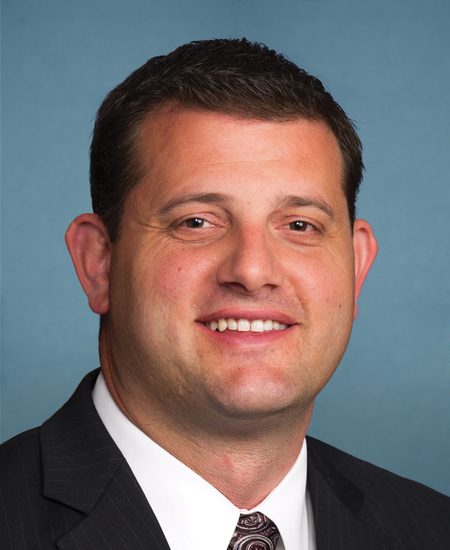
Rep. David G. Valadao
Sponsored bills
Maddy summaryHR 8383, the Rural Obstetrics Readiness Act, creates a federal program to improve emergency obstetric care in rural areas lacking dedicated obstetric units. It authorizes $5 million (2025-2027) for training programs that teach non-obstetric rural healthcare providers to handle emergencies like severe bleeding, high blood pressure, or mental health crises during pregnancy or postpartum. The bill also allocates $15 million (2025-2028) for grants to rural hospitals and consortia to purchase equipment, hire staff, integrate training, and develop transfer protocols for obstetric emergencies. Additionally, it funds a $5 million teleconsultation pilot (2025-2028) to connect rural facilities with maternal health specialists via telehealth for urgent consultations. The program directly supports rural health facilities in designated maternity care shortage areas, aiming to expand access to emergency obstetric care.
Maddy summaryThe Small Business Language Accessibility Act requires the Small Business Administration (SBA) to update its regulations so that small business development centers (SBDCs) must assess whether language translation services are needed for their clients. This directly affects SBDCs - which provide free business support to small businesses - and the small business owners who use these services, particularly those with limited English proficiency. Within 180 days of the law taking effect, the SBA must revise a specific regulation (13 CFR §130.330(a)) to mandate this assessment as part of each SBDC’s needs evaluation process. The law aims to improve access to SBA resources by ensuring language barriers are identified before services are delivered.
Maddy summaryThis bill strengthens oversight of administrative spending actions by requiring the Director to submit detailed waiver explanations and budgetary impact estimates to congressional Budget Committees for any executive branch action exempting spending from budget neutrality rules. It modifies the threshold for such exemptions to apply only to actions increasing direct spending by $1 billion over 10 years or $100 million in any single year. The bill also clarifies that the purpose of the administrative PAYGO rules is to maintain budget neutrality for discretionary spending decisions. These changes apply directly to federal agencies making administrative spending decisions that exceed the new thresholds. The bill repeals a sunset provision and adds new reporting requirements for budget submissions.
Maddy summaryHRES 1226 is a non-binding resolution honoring 282 law enforcement officers killed in the line of duty during 2023, listed by name in the resolution. It formally acknowledges their sacrifice, expresses unwavering support for current officers, and recognizes the need for adequate resources to protect them. The resolution does not create new laws or policies but serves as a ceremonial tribute to memorialize fallen officers and support their families, aligning with existing National Police Week observances established since 1962.
Maddy summaryHRES 1203 is a symbolic resolution designating July 17, 2024, as "Glioblastoma Awareness Day." It expresses congressional support for raising public awareness about glioblastoma, a highly aggressive brain cancer with a 6.9% 5-year survival rate and limited treatment options. The resolution encourages greater public understanding of the disease's challenges, honors those affected by it, and urges continued research and collaboration. This is a non-binding awareness measure with no new funding or policy changes.
Maddy summaryThis bill authorizes the placement of a memorial honoring women who contributed to World War II efforts on the National Mall or adjacent federal land in Washington, D.C. It specifically removes a location restriction (under 40 U.S.C. § 8908) to allow the memorial - previously authorized by the 2023 Consolidated Appropriations Act - to be situated within Area I of the National Mall or the National Mall Reserve. The memorial would commemorate over 18 million women who worked as pilots, engineers, mechanics, and codebreakers during the war. The bill directly affects the Women Who Worked on the Home Front Foundation, which is tasked with establishing the memorial.
Maddy summaryThe Tribal Tax and Investment Reform Act of 2024 creates tax parity for Indian tribal governments by extending various tax benefits currently available to states. The bill treats tribal governments similarly to states for excise taxes, bond issuance, pension plans, charitable organizations, child support enforcement, and adoption credits. It also establishes new tax credits for investments in tribal areas and clarifies exclusions for certain tribal programs like health service loan repayments and scholarships. This legislation directly affects Indian tribal governments, their citizens, and tribal organizations by addressing historical tax disadvantages and improving access to capital for economic development.
Maddy summaryHJRES 98 is a congressional resolution seeking to block a National Labor Relations Board (NLRB) rule that defined how businesses are considered "joint employers" for labor law purposes. The bill targets the NLRB's October 2023 rule (88 Fed. Reg. 73946), which would have changed how companies like franchisors or staffing agencies are held responsible for workers' rights. If passed, this resolution would cancel the rule, directly affecting businesses managing multiple employer relationships and labor organizations enforcing workplace standards. The measure uses a standard process under federal law to disapprove an agency rule, not creating new policy but reversing an existing regulation.
Maddy summaryThis bill names a specific United States Postal Service facility at 24355 Creekside Road in Santa Clarita, California, as the "William L. Reynolds Post Office Building." It directly affects the physical location of this post office by changing its official designation. The key provision is a simple name change, with all existing references to the building in federal documents automatically updated to reflect the new name. This is a ceremonial designation with no policy or funding changes.