

Maddy summaryThis bill modifies tax rules to provide financial incentives for small oil and gas producers operating in marginal or low-production areas. It changes how the percentage depletion tax deduction is calculated, allowing a higher deduction rate based on oil prices and adjusting that rate annually using an inflation measure called the Producer Price Index. The legislation also removes certain income limits that restrict how much of this tax benefit producers can claim and doubles the minimum oil production threshold from 1,000 to 2,000 barrels to qualify for the deduction. These tax changes would take effect for taxable years beginning after December 31, 2026, primarily affecting independent oil and gas companies and rural communities dependent on these industries.
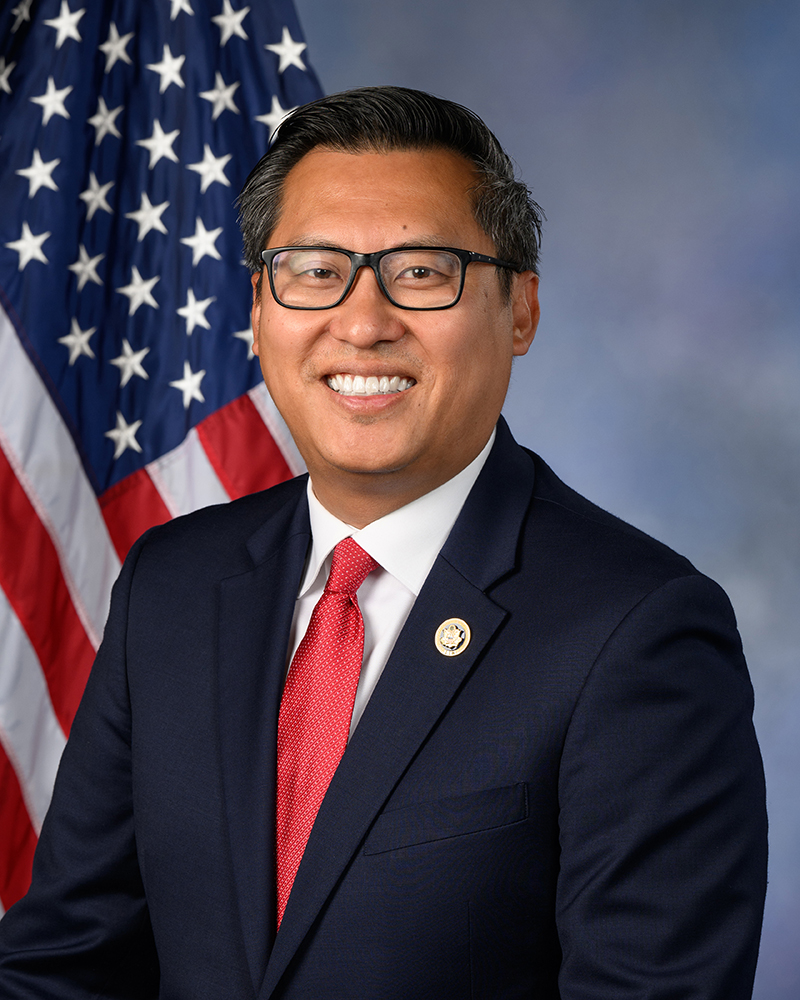
Rep. Vince Fong
Sponsored bills
Maddy summaryHR 5688, the Non-Domiciled CDL Integrity Act, changes rules for issuing commercial driver's licenses (CDLs) to people who don't live in the state where the license is issued. It allows states to issue CDLs to foreign nationals with lawful U.S. immigration status and work-related visas (valid for up to one year or until their stay ends), requiring states to verify status before issuing and keep records for two years. For residents of U.S. territories like Puerto Rico, it requires proof of U.S. citizenship or permanent residency before issuing CDLs, with similar verification and record-keeping rules. The bill directly affects commercial drivers from foreign countries and U.S. territories seeking CDLs in states where they are not residents.
Maddy summaryThis bill requires federal agencies to clarify how they recognize special districts (like water, fire, or school districts operating separately from cities or counties) as eligible for federal grants. It mandates the OMB Director to issue guidance within 180 days, directing agencies to adopt this standard within one year for all federal financial assistance programs. The bill ensures special districts - defined as state-created entities with budgetary autonomy for specific services - can consistently access existing federal funding they currently face barriers to. A report on agency implementation must be submitted to Congress two years after enactment.
Enhanced Iran Sanctions Act of 2025 This bill imposes sanctions on certain foreign persons (individuals and entities) that are involved in Iran's petroleum sector as well as certain associated persons. The bill also requires or authorizes actions to facilitate the enforcement of sanctions on Iran. Specifically, the bill requires the President to impose visa- and property-blocking sanctions on any foreign person that, after the bill's enactment, knowingly engages in any transaction related to the processing, export, or sale of oil, condensates, gas, liquefied natural gas, or other petrochemical products in whole or in part from Iran. The President must also impose sanctions on certain foreign persons associated with a sanctioned individual or entity. For example, the President must sanction the subsidiaries and corporate officers of a sanctioned business. The bill provides certain exceptions to these sanctions, including specifying that sanctions do not apply to the importation of goods or to conducting or facilitating transactions for humanitarian assistance. The Department of State must establish an interagency working group that shall seek to establish a multilateral contact group to coordinate international efforts to enforce sanctions on Iran. The bill expands the State Department rewards program to authorize a reward payment to any individual who furnishes information leading to the identification of a person (1) subject to sanctions under this bill, or (2) that has attempted or is attempting to evade sanctions under this bill.
Maddy summaryThis bill would allow individuals who receive wildfire relief payments to exclude those amounts from their taxable income. It directly affects people who suffer financial losses from federally declared forest or range fires after December 31, 2014. The key provision states that relief payments for expenses like additional living costs, lost wages, personal injury, or emotional distress are not taxable, but only to the extent those losses are not already covered by insurance or other compensation. The tax exclusion applies to payments received after December 31, 2025, and ends for payments received after December 31, 2032.
Maddy summaryThis bill, titled the Stop Unemployment Fraud Act, requires states to verify the identity of unemployment compensation claimants using government-issued IDs and supporting documents like utility bills or lease agreements. It mandates that states use data-matching systems to cross-check claimant information against employment records, new hire directories, and databases of incarcerated or deceased individuals to detect and prevent fraud. The legislation also prohibits relying solely on a claimant's self-attestation to prove eligibility and strengthens work search requirements by mandating that claimants maintain and submit weekly records of job search activities. Additionally, the bill allows states to use up to 5% of recovered overpayments or collected contributions to fund fraud prevention efforts, technology modernization, and proper employment classification programs.
Maddy summaryThis bill would restrict the issuance of commercial driver's licenses to only U.S. citizens, lawful permanent residents, and holders of specific work visas. It requires states to verify the citizenship or visa status of current CDL holders within 180 days of enactment and revoke licenses from those who do not meet these requirements. States that fail to comply with these verification and revocation deadlines would face federal funding penalties. Additionally, the bill mandates that all CDL testing and licensing processes be conducted in English.
Maddy summaryThis bill, the Tribal Tax and Investment Reform Act of 2026, treats federally recognized Indian tribes and Alaska Native entities as states for specific tax purposes, allowing them to issue tax-exempt bonds and maintain employee pension plans under the same rules as state governments. It creates a new $175 million annual tax credit allocation for investments in tribal areas, expands existing employment tax credits, and clarifies how tribal general welfare benefits and trust funds are treated for federal assistance programs. The legislation also establishes uniform fiduciary standards for tribal pension plans, provides technical assistance for tribal area investments, and ensures tribal areas qualify for certain affordable housing tax incentives.
Advanced Capabilities for Emergency Response Operations Act or the ACERO Act This bill provides statutory authority for the Advanced Capabilities for Emergency Response Operations (ACERO) project. The ACERO project conducts research and development activities regarding aerial response to wildfires using uncrewed aircraft systems (UAS) and other advanced aviation technologies. It is administered by the National Aeronautics and Space Administration (NASA). The bill directs the ACERO project to address airspace management and deconfliction during wildfire response efforts, including through real-time information sharing among response teams and the development of a platform to provide situational awareness of aerial assets. The bill also directs the ACERO project to establish a multiagency concept of operations to facilitate the coordination of aerial wildfire response among federal, state, and local government agencies. NASA must consult with other federal agencies and departments to avoid duplication of these efforts. NASA generally may not procure UAS manufactured or assembled by specified foreign entities, including entities domiciled in or controlled by China, for use by the ACERO project.
Maddy summaryHRES 1073 is a non-binding resolution designating February 21-28, 2026, as "National FFA Week" to recognize the National Future Farmers of America (FFA) Organization’s role in developing agricultural education leaders and to celebrate the 50th anniversary of Alaska’s State FFA Association. It does not create new laws or affect any specific groups or policies; instead, it formally expresses the House’s support for this commemorative week. The resolution highlights FFA’s mission to prepare students for leadership and careers in agriculture, food, and natural resources. As a symbolic gesture, it has no direct legislative or financial impact on constituents.