

Maddy summaryThe SELF DRIVE Act of 2026 establishes federal safety standards for vehicles with automated driving systems (ADS), requiring manufacturers to develop detailed "safety cases" demonstrating their systems won't present unreasonable risks to road users. It creates a National Automated Vehicle Safety Data Repository to collect crash data from ADS-equipped vehicles, including information about vulnerable road users (pedestrians, bicyclists, etc.) and crash circumstances. The bill preempts state laws that conflict with these federal standards while allowing states to enforce identical requirements, and defines key terms related to automation levels (Level 3-5) and operational design domains. Manufacturers must demonstrate ADS capabilities for handling various driving scenarios, including detecting vulnerable road users and achieving minimal risk conditions during emergencies. The bill also establishes requirements for cybersecurity protections and reporting of crash data to the National Highway Traffic Safety Administration.
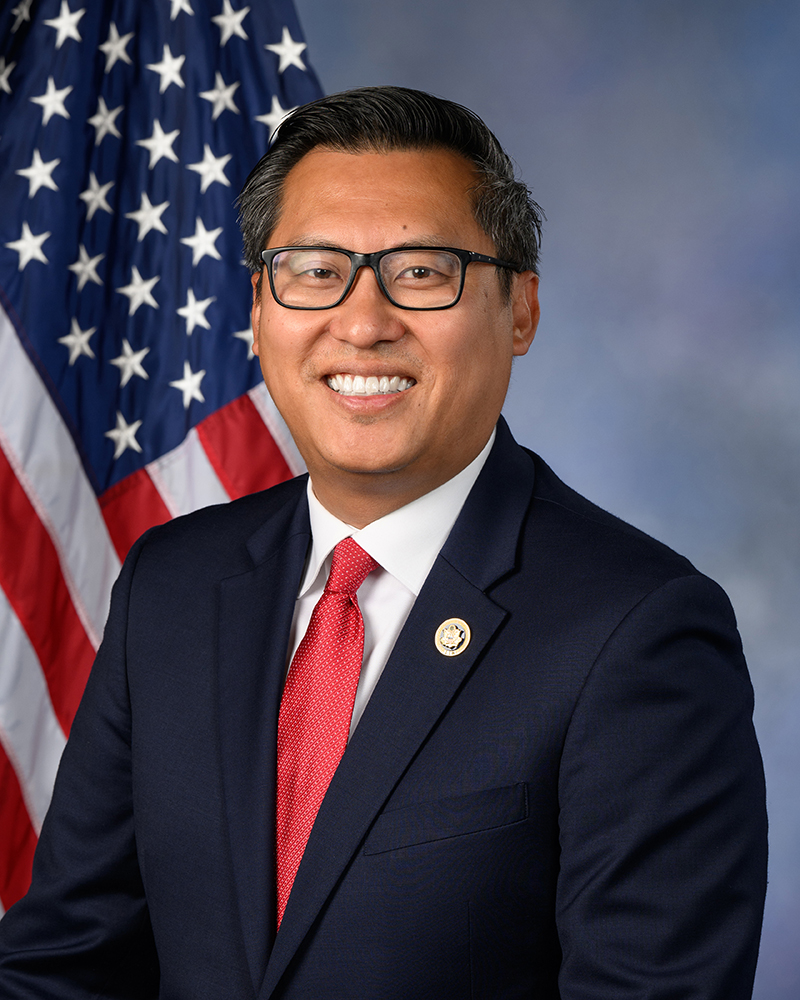
Rep. Vince Fong
Sponsored bills
Maddy summaryHR 7413, the HIRE DEA Act, allows the Drug Enforcement Administration (DEA) to directly hire staff for specific roles without following standard federal civil service hiring rules during fiscal years 2027 through 2034. It targets positions critical to combating drug trafficking, including criminal investigators, intelligence analysts, forensic specialists, and community outreach coordinators, as determined by the Attorney General. The bill bypasses most standard hiring procedures under Title 5 of the U.S. Code, except for two specific sections, to speed up recruitment. This change directly affects DEA hiring processes and personnel for roles focused on addressing current and emerging drug trafficking threats.
Maddy summaryThis bill modifies federal budget rules for unspent agency funds. It requires federal agencies to allocate 49% of unused funds to the next fiscal year, 49% toward paying the national debt, and 2% for retention bonuses (capped at 10% of an employee's base pay). Agencies must also limit future budget requests to the previous year's amount adjusted for inflation. The bill directly affects all executive branch agencies (excluding the Red Cross), altering how they manage leftover budget authority. It does not create new savings programs for individuals but changes government fiscal management procedures.
Maddy summaryThis bill prevents state or local governments from banning or restricting energy connections (like installation, modification, or access) based on the type or source of energy, such as electricity, natural gas, or renewable fuels. It directly affects consumers choosing energy providers and energy companies seeking to offer services. The key provision prohibits local laws, regulations, or policies that limit energy services sold in interstate commerce, covering all energy types listed in the bill’s definitions. It does not create new programs but limits regulatory authority at the state or local level. The law aims to ensure open access to diverse energy sources without source-based restrictions.
Maddy summaryThe Make Elections Great Again Act (HR 7300) would require voters to present photo identification to cast ballots in person or by mail for federal elections, with limited exceptions for religious objections or military voters. It would establish new requirements for proving U.S. citizenship during voter registration, including documentary proof of citizenship and proof of state residency. The bill would change mail-in ballot procedures by requiring voters to request mail-in ballots (rather than universal mail-in voting), implementing barcode tracking for mail-in ballots, and setting strict deadlines for ballot receipt. These provisions would apply to all states for federal elections held in 2027 or later, affecting how voters register, vote in person, and submit mail-in ballots for federal office elections.
Maddy summaryThe VSAFE Act of 2025 establishes a Veterans Scam and Fraud Evasion Officer within the Department of Veterans Affairs to prevent and address fraud targeting veterans. This officer will develop communication plans, training, and reporting systems for veterans, families, caregivers, and survivors to identify and avoid scams, while coordinating with agencies like the IRS, DOJ, and Social Security Administration. The bill also modifies a home loan fee deadline in the VA loan program, changing a date from June 9, 2034, to June 23, 2034. It does not create new full-time positions or alter existing Inspector General authority.
Maddy summaryThis bill creates a tax credit for businesses selling products made with U.S.-grown cotton. The credit equals 24% of the cotton's market value if processed only in the U.S. or in countries with U.S. trade deals, or 18% for other processing locations. To qualify, cotton must be digitally traced from U.S. farms to finished products and certified by the USDA as meeting origin requirements. It directly affects clothing and textile manufacturers selling qualifying products in the U.S. market.
This bill designates a portion of Interstate Route 680 in Omaha, Nebraska, as the Hal Daub Freeway. Harold John Daub Jr. served in the House of Representatives from 1981-1989 and as the mayor of Omaha, Nebraska, from 1995-2001.
Maddy summaryThis symbolic House resolution expresses U.S. congressional support for Iranian protesters demanding democracy and human rights. It condemns the Iranian regime's violent suppression of protests, including killings, mass arrests, and internet restrictions, while urging the regime to release political prisoners and restore communication access. The resolution reaffirms the Iranian people's right to self-determination through free elections and echoes a 2023 resolution (HCR 7) that similarly praised protesters. As a non-binding expression of support, it does not impose new policies or alter U.S. government actions.
Maddy summaryHR 909, the Crime Victims Fund Stabilization Act of 2025, modifies how funds from the False Claims Act are deposited into the Crime Victims Fund. It specifies that from 2025 through 2029, certain False Claims Act proceeds (specifically those for qui tam plaintiff payments and government damage reimbursements) cannot be deposited into the fund. This change directly affects the composition of the Crime Victims Fund by excluding these specific revenue streams during the specified period. The bill does not create new benefits or alter victim services; it only adjusts fund allocation rules for existing False Claims Act revenues.