

Maddy summaryThis bill renames a U.S. Postal Service facility at 300 Long Beach Boulevard in Long Beach, California, as the "Alan S. Lowenthal Post Office Building." It directly affects the postal facility and all federal documents, maps, or records referencing it. The key provision updates every official reference to the building to use the new name, ensuring consistency in government records. The bill does not change postal services, funding, or policy - only the building's official designation.
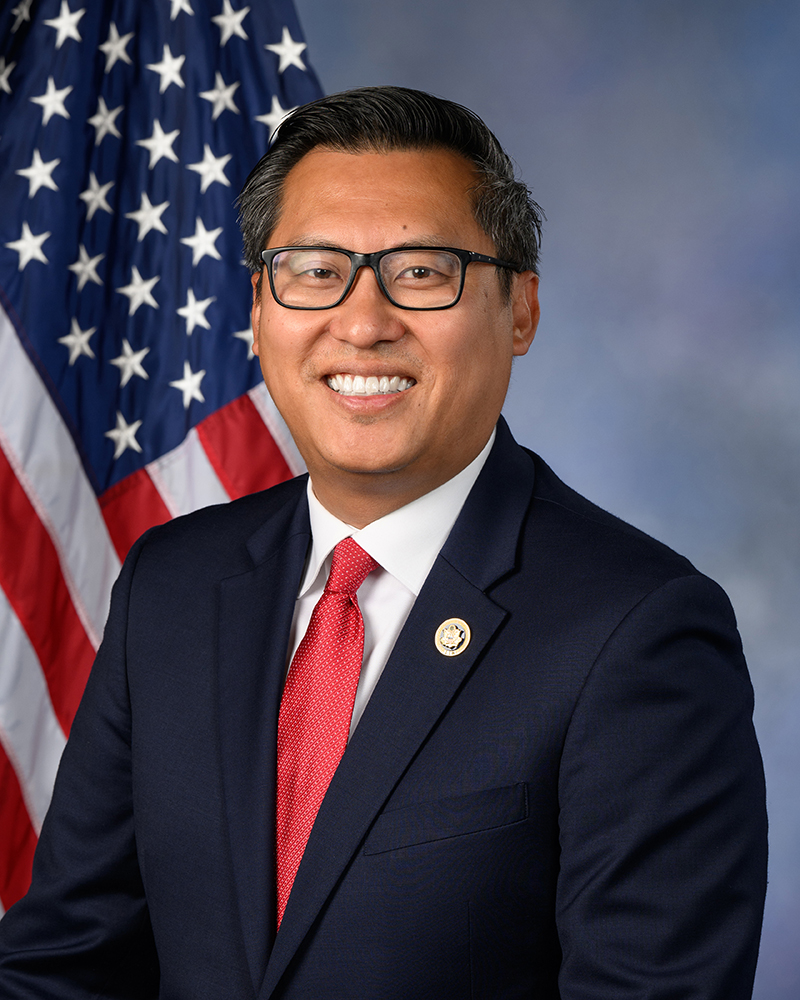
Rep. Vince Fong
Sponsored bills
Maddy summaryThis bill designates the U.S. Postal Service facility at 7911 Imperial Highway in Downey, California, as the "Lucille Roybal-Allard Post Office Building." It updates all official references in federal laws, documents, and records to use this new name for the specific post office location. The change affects the facility's official identification but does not alter its operations or services.
Maddy summaryThe HELPER Act of 2023 creates a new FHA mortgage insurance program specifically for first responders and K-12 teachers. It allows eligible first-time homebuyers in these professions to secure mortgages with 100% financing (no down payment required) for purchasing or repairing a primary residence. To qualify, applicants must be employed as law enforcement, firefighters, paramedics, or K-12 teachers, have completed housing counseling, and meet specific employment history requirements (e.g., 4 years in the role or disability-related release). The program authorizes $660,000 for fiscal year 2024 and $160,000 annually through 2030, with authority expiring after 5 years.
Maddy summaryHR 2665 delays Medicaid payment reductions for safety net hospitals by two years, changing the effective date from 2024 to 2026 under Section 1923(f)(7)(A) of the Social Security Act. This bill directly affects hospitals that serve high numbers of low-income and uninsured patients, providing them with additional time before facing reduced federal Medicaid payments. The key mechanism is a technical amendment to existing law, postponing an already scheduled payment adjustment without altering funding levels or eligibility. As a procedural bill, it does not create new programs or change hospital requirements.
Maddy summaryHR 1839, the Combating Illicit Xylazine Act, makes the illicit use and distribution of xylazine a federal crime by adding it to the Controlled Substances Act. The bill broadly defines xylazine to cover numerous chemical variants and prohibits human use or non-licit distribution, while preserving legitimate veterinary and pharmaceutical uses. It requires tracking xylazine in drug supply chains and mandates two reports to Congress within 1 and 4 years on its prevalence, sources, and whether it should be rescheduled. The bill directly affects individuals distributing or using xylazine illicitly, including as an additive to drugs like fentanyl, and aims to address its public health risks. Congress declared illicit xylazine an "emerging drug threat" under existing law.
Maddy summaryHR 1831 would award Billie Jean King a Congressional Gold Medal to honor her lifelong advocacy for equal rights in sports and society. The bill directs the Secretary of the Treasury to strike the medal and have it presented by congressional leaders, recognizing her pivotal role in advancing women's equality through tennis (including founding the Women’s Tennis Association and securing equal prize money) and her broader impact on society through initiatives like Title IX advocacy.
Maddy summaryHR 1088, the Shirley Chisholm Congressional Gold Medal Act, authorizes a posthumous Congressional Gold Medal to honor Congresswoman Shirley Chisholm, the first African-American woman elected to Congress (1968) and the first Black candidate for a major party's presidential nomination (1972). The bill directs the Treasury Secretary to design and strike a gold medal featuring Chisholm's image, which will be presented by Congress and then permanently displayed at the Smithsonian Institution. Duplicate bronze medals may be sold to the public to cover production costs, with proceeds deposited into the U.S. Mint fund. This bill commemorates Chisholm's legacy and achievements without creating new laws or affecting any current policies.
Maddy summaryThis bill would prohibit the FDA from approving new abortion medications or investigational uses of existing ones. It would restrict currently approved abortion drugs to in-person administration only in clinics, hospitals, or medical offices by certified providers who can handle complications like ectopic pregnancy or severe bleeding. The law requires detailed adverse event reporting (excluding patient identifiers) to the FDA by both manufacturers and prescribers, and mandates provider certification covering pregnancy assessment, surgical intervention capabilities, and patient safety documentation. These provisions apply directly to healthcare providers, patients seeking medication abortions, and manufacturers of abortion drugs.
Maddy summaryThe Educational Choice for Children Act creates tax credits for individuals and corporations that contribute to scholarship granting organizations providing education scholarships. Individuals can claim a credit up to $5,000 or 10% of their income, while corporations can claim up to 5% of taxable income. The scholarships are available to students from households with income up to 300% of the area median income, and can be used for private school tuition, tutoring, and other educational expenses at elementary and secondary schools. The bill includes strict requirements for scholarship organizations to verify income, conduct audits, and prevent misuse of funds, while also prohibiting government control over these organizations and protecting private and religious schools from discrimination in the program. It establishes a $10 billion annual cap on the total tax credits available.
Maddy summaryHJRES 8 proposes a constitutional amendment to permanently set the Supreme Court's size at nine justices. The bill would require any future changes to the Court's composition to follow this specific number, locking in the current structure. It does not alter the existing Court size (which has been nine since 1869) but aims to prevent future adjustments through legislative action. The amendment must be ratified by three-fourths of state legislatures within seven years to take effect. This is a procedural proposal focused on constitutional structure, not a direct policy affecting citizens or programs.