

Hemp Planting Predictability Act This bill extends by two years the implementation of changes to the regulation of hemp products, which reimpose certain federal controls over some hemp products. Specifically, Congress enacted the FY2026 agriculture appropriations act (P.L. 119-37) on November 12, 2025. Effective November 12, 2026, the act modifies the statutory definition of hemp products that are considered to be lawful. This bill extends the effective date to November 12, 2028. As background, the 2018 farm bill excluded hemp from the Controlled Substances Act definition of marijuana and defined hemp . As a result, hemp and hemp-derived products at or below the 0.3% delta-9 tetrahydrocannabinol (THC, the psychoactive component of marijuana) concentration threshold were no longer regulated as Schedule I controlled substances and registration with the Drug Enforcement Administration was no longer required to cultivate or handle hemp and hemp-derived products. However, hemp remained subject to Department of Agriculture and Food and Drug Administration regulation. The 2025 changes to the definition of hemp, include changing the limit to a total THC concentration of not more than 0.3% on a dry weight basis rather than only delta-9 THC, explicitly including industrial hemp, excluding seeds from a cannabis plant that exceed a certain THC concentration, and excluding various types of hemp-derived cannabinoid products. Cannabinoids refer to unique chemical compounds that are found in hemp and marijuana (e.g., THC) and are known to exhibit a range of psychological and physiological effects.
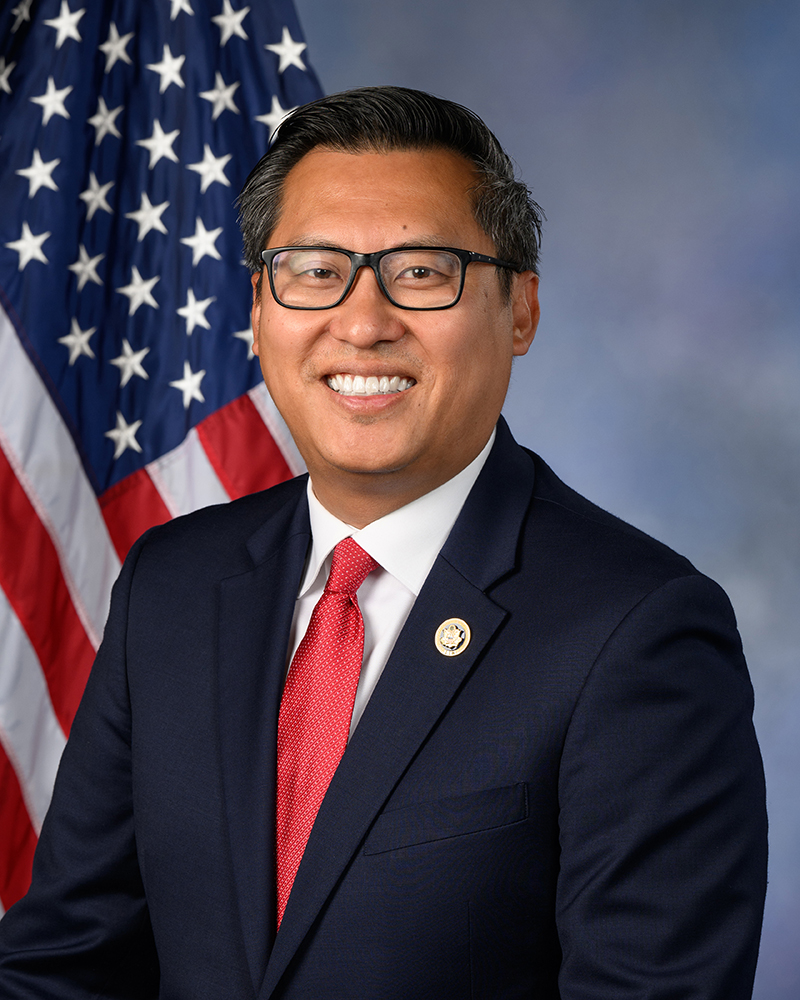
Rep. Vince Fong
Sponsored bills
Maddy summaryThe CAL Repayment Act requires states to immediately use any federal funds received for unemployment insurance to repay outstanding advances before spending them on other purposes. This rule applies to all states and mandates that they make these repayments within five business days of the funds becoming available. If a state fails to follow this order and uses the money elsewhere first, it must return the full amount to the federal government within five days of being notified. The law takes effect for any unemployment insurance funds awarded after the bill is enacted.
Maddy summaryThe Supporting Newborn Parents Act of 2026 creates a new tax credit of $2,000 for each child born to a taxpayer during the tax year. To receive this credit, parents must have earned income, with the maximum amount limited to 20% of their earnings, and the benefit phases out as family income rises. The bill allows parents to request an advance payment of the credit shortly after a child's birth by providing their information when applying for a Social Security number. Additionally, the legislation requires the Treasury to establish an online portal to help parents understand how to make elections regarding advance payments and estimated income figures.
Maddy summaryThis bill would amend federal law to strengthen penalties for organized retail crime by expanding definitions of theft to include digital goods, gift cards, and setting a $5,000 aggregate value threshold for charges over a 12-month period. It would establish a new "Organized Retail and Supply Chain Crime Coordination Center" under Homeland Security to coordinate Federal, State, local, and Tribal law enforcement efforts against cross-jurisdictional theft groups. The Center would share information with retailers, transportation companies, and law enforcement agencies, track crime trends, and produce annual reports on organized retail crime. This legislation directly affects retailers, supply chain businesses, and law enforcement agencies, while targeting organized crime groups responsible for a 93% increase in larceny incidents and rising safety concerns for retail employees. The bill aims to address significant financial losses and supply chain disruptions noted in the National Retail Federation's 2023 data.
Maddy summaryHR 2488 designates the U.S. Postal Service facility at 3817 Marysville Boulevard in Sacramento, California, as the "Grantland Johnson Post Office." This bill updates all federal references in laws, maps, and documents to use the new name for that specific location. It directly affects the postal service facility and any federal records mentioning it. The bill is purely procedural, with no policy changes or financial impacts beyond the name designation.
Maddy summaryThis resolution formally condemns the attempted assassination of President Donald J. Trump on April 25, 2026, as well as previous attempts in 2024, and recognizes the critical role of the Department of Homeland Security. The bill expresses gratitude to law enforcement officers who responded to the attack and affirms the Secret Service's responsibility for protecting the President. Additionally, it calls on Americans to unite against political violence and condemns those who incite attacks against public officials.
Clergy Act This bill establishes a two-year window for certain members of the clergy and Christian Science practitioners to revoke their exemption from Social Security and Medicare taxes on ministerial earnings. Under current law, such individuals who object to participation in public insurance programs on religious or conscientious grounds may apply to the Internal Revenue Service (IRS) for an irrevocable exemption and will not receive Social Security or Medicare benefits in retirement unless they have qualifying credits from other employment. The IRS must develop a plan to inform members of the clergy and Christian Science practitioners of their eligibility to revoke prior exemptions, pursuant to the bill's changes.
Maddy summaryThis bill, titled the Trump Accounts for All Generations Act, makes a specific program related to "Trump accounts" permanent and adjusts its contribution limits. It directly affects individuals who contribute to these accounts by altering their long-term availability and value. The legislation permanently extends the "Trump accounts" contribution program by removing its scheduled expiration date of January 1, 2029. Furthermore, it introduces an annual inflation adjustment for the program's $1,000 contribution amount, beginning in taxable years after 2028. The bill also removes the word "pilot" from the program's title and related sections of the tax code, formally establishing it as an ongoing program.
Maddy summaryThe ALERT Act (HR 7613) requires the Federal Aviation Administration to improve aviation safety through several key measures. It mandates the evaluation and potential implementation of enhanced collision avoidance systems (ACAS-Xa) for commercial aircraft and ACAS-Xr for rotorcraft, with specific deadlines for rulemaking and installation. The bill establishes committees to develop recommendations for safety technology requirements, requires safety risk assessments for air traffic controllers, and addresses operational procedures at high-traffic airports like Ronald Reagan Washington National. These provisions affect air carriers, air traffic controllers, rotorcraft operators, and Department of Defense aircraft operations. The act aims to enhance situational awareness and reduce midair collision risks through technology upgrades and improved safety protocols.
Maddy summaryThis bill, known as the OUTPACE in Space Act, aims to expand and regulate commercial space and hypersonic operations in the United States while addressing national security concerns. It requires the Federal Aviation Administration to brief Congress on plans to increase airspace access for commercial space and hypersonic industries, update regulations to support overland launch and reentry operations, and hire specialized aerospace engineers more quickly. The legislation also restricts federal research and development initiatives related to commercial space from collaborating with foreign entities or countries designated as security risks. Additionally, the bill mandates reports on resource needs and projected increases in launch and reentry cadence to improve the national airspace system's capacity.