

Maddy summary# Summary of Proposed Legislation This document outlines a comprehensive U.S. legislative proposal with several key components: 1. **Research Restrictions**: - Requires certification from Federal research grant recipients that they are not Chinese citizens or participants in Chinese talent programs - Prohibits employment of Chinese nationals in federally funded research - Requires institutions receiving Federal assistance to agree not to knowingly employ individuals participating in Chinese talent programs 2. **Foreign Gifts and Contracts Disclosure**: - Mandates disclosure of foreign gifts/contracts over $50,000 to universities - Requires public reporting of restricted/conditional gifts/contracts - Creates a searchable public database of foreign gifts to universities - Requires institutions to maintain policies regarding foreign gifts to faculty and staff 3. **Investment Restrictions**: - Restricts tax-exempt organizations from holding investments in "disqualified Chinese companies" (defined as corporations incorporated in China or with significant Chinese government ownership) - Requires annual reporting on such investments - Allows limited waivers with public disclosure 4. **Taiwan Policy**: - Prohibits U.S. government from recognizing PRC claims to sovereignty over Taiwan without Taiwan's consent - Requires U.S. government to treat Taiwan's democratically elected government as the legitimate representative of the people of Taiwan - Requires a strategy to protect U.S. businesses from Chinese coercion efforts 5. **Additional Provisions**: - Requires participants in Chinese talent programs to register as agents of the Chinese government - Amends economic espionage laws to include education and research - Mandates disclosure of certain funds received by visa holders The legislation represents a significant effort to limit Chinese influence in U.S. academic institutions, research, and business sectors while establishing a more robust policy framework regarding Taiwan.
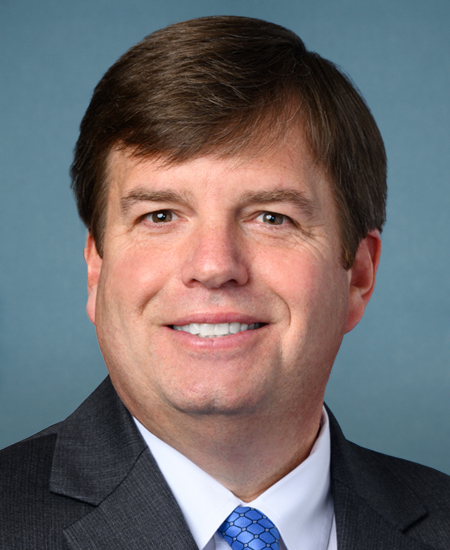
Rep. Dale W. Strong
Sponsored bills
Maddy summaryThe Maximum Pressure Act (HR 6114) is a legislative proposal that would maintain and expand U.S. sanctions against Iran. The bill would codify existing sanctions, require Iran to meet 12 specific conditions before sanctions could be lifted (including ending support for terrorism, releasing hostages, and ending nuclear enrichment), and expand sanctions on Iran's Revolutionary Guard Corps and missile programs. It also establishes new reporting requirements for the U.S. government to monitor Iran's activities and the impact of sanctions. The legislation would require congressional review before any sanctions could be lifted or modified, preventing the executive branch from unilaterally easing restrictions.
Maddy summaryHR 5713, the Homeland Security Fentanyl Enforcement Act, authorizes Homeland Security Investigations (HSI) agents and designated state/local officers to enforce drug laws related to fentanyl trafficking under the Controlled Substances Act for five years. It requires the Government Accountability Office (GAO) to review and report on coordination between the Drug Enforcement Administration (DEA) and HSI in drug investigations within 18 months, including whether investigations followed established coordination policies. The bill mandates the Homeland Security Secretary and Attorney General to address any coordination failures found in the GAO report, prioritizing existing interagency task forces. This bill focuses on improving interagency coordination to combat fentanyl smuggling by transnational criminal organizations, without altering DEA's core authorities or creating new drug penalties.
Maddy summaryThe Leveling the Playing Field 2.0 Act (HR 3882) updates U.S. trade law to better address international trade practices that disadvantage American businesses. It establishes special rules for handling multiple investigations of the same merchandise (called "successive investigations"), requiring the Commerce Department to consider previous injury determinations when making new findings. The bill also creates mechanisms to address market distortions from foreign government subsidies, including currency undervaluation, and strengthens procedures to prevent duty evasion through certification requirements for importers. These changes primarily affect foreign exporters of goods subject to U.S. antidumping and countervailing duty investigations, as well as U.S. importers of those goods.
Maddy summaryThe Border Reinforcement Act of 2023 requires the immediate resumption of border wall construction along the US-Mexico border using previously allocated funds, with annual goals to complete 200 miles of wall until operational control is achieved. It mandates a comprehensive 5-year technology investment plan for border security systems, including surveillance and detection technology, and sets staffing requirements for U.S. Border Patrol, including a target of 22,000 full-time equivalent agents by 2025. The bill also requires U.S. Customs and Border Protection to publish monthly operational statistics on border encounters, drug seizures, and other border security metrics. Additionally, it includes provisions for DNA collection at land borders, eradication of certain vegetation impeding border security, and a report on Mexican cartels as potential foreign terrorist organizations.
Maddy summaryHR 2667, the "Fighting Trade Cheats Act of 2023," increases penalties for importers who commit customs fraud or gross negligence. It triples civil penalties for fraudulent violations (to three times the domestic value) and raises gross negligence penalties to ten times, while adding five-year import bans for fraud and two-year bans for gross negligence. The bill also allows U.S. businesses, unions, or trade groups harmed by such violations to sue violators in federal court for triple damages, attorney fees, and injunctions against further imports. Additionally, it excludes violators and their affiliated companies from the Importer of Record program, with special rules to block shell companies evading customs laws. This directly affects importers who violate customs laws and U.S. businesses competing with those imports.
Maddy summaryHR 1610 would modernize Medicare coverage for chiropractic care by removing the current restriction that limited beneficiaries to one chiropractic service per visit. It expands coverage to include all services provided by licensed chiropractors within their state-authorized scope, aligning Medicare with VA, military, and private insurance practices. The bill requires chiropractors to complete a Secretary-approved educational webinar to cover non-spinal services, while still allowing payment for spinal manipulation treatments without this requirement. This directly affects Medicare beneficiaries seeking chiropractic care and chiropractors seeking Medicare reimbursement for their services.
Maddy summaryHR 1401, the END FENTANYL Act, requires U.S. Customs and Border Protection (CBP) to review and update its field inspection manuals at least every three years. This ensures CBP's border inspection practices consistently address new smuggling methods used to hide drugs like fentanyl and human trafficking. The bill mandates that CBP submit reports to specific congressional committees after each update, detailing the changes made to inspection policies. This directly affects CBP officers and border security operations by standardizing how they detect and respond to evolving smuggling tactics.
Maddy summaryThis bill bans federal funding for abortions in most cases, prohibiting the use of taxpayer money for abortion services or health insurance plans covering abortion. Exceptions allow funding for abortions resulting from rape, incest, or when a pregnancy endangers a woman's life. It requires health insurance plans sold through the Affordable Care Act (ACA) marketplaces to clearly disclose any separate costs for abortion coverage and prohibits ACA subsidies from being used for plans that cover abortion (except in the specified exceptions). The law directly affects federal programs like Medicaid, ACA marketplace plans, and insurers offering health coverage to individuals using federal subsidies.
Maddy summaryHR 9668, the SHIELD Against CCP Act, establishes a DHS Working Group to assess and coordinate efforts against specific threats posed by the Chinese Communist Party. The Working Group examines issues like immigration system exploitation (e.g., identity theft, human trafficking), predatory economic practices (e.g., forced labor, IP theft), and threats to critical infrastructure, including fentanyl trafficking and cybersecurity risks. It requires DHS to produce annual threat assessments for Congress, coordinate with federal and local partners, and report on program efficacy, with the Working Group terminating after seven years. The bill directly affects DHS operations and its collaboration with intelligence and fusion centers to address these security concerns.