

Maddy summaryThe FairTax Act of 2025 would repeal federal income tax, payroll taxes (Social Security and Medicare), and estate and gift taxes, replacing them with a national sales tax. It would impose a 23% tax on the final consumption of goods and services in 2027, with rates adjusting based on federal tax rates. The bill includes a monthly rebate for qualifying families based on the poverty level to offset the tax burden on lower-income households. It would establish a cooperative tax administration system between federal and state governments, with states collecting the tax under certain conditions. The tax would sunset if the 16th Amendment (which allows for income taxes) is not repealed within 7 years of enactment.
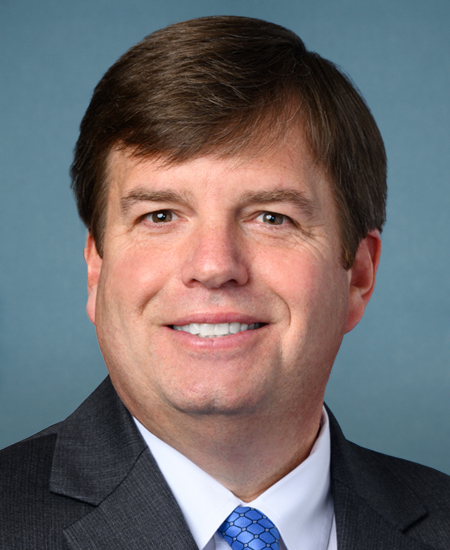
Rep. Dale W. Strong
Sponsored bills
Maddy summaryHR 45 (FIND Act) requires federal government contractors to certify they do not discriminate against firearm businesses (including manufacturers, dealers, and trade associations) in their policies or practices. The bill mandates that contractors and subcontractors (for contracts over 10% of the prime contract value) certify they have no discriminatory policies and will not adopt them during the contract term. Violations could lead to contract termination and potential debarment. This applies to all federal procurement contracts awarded after the bill's enactment, excluding sole-source contracts. The law aims to ensure firearm businesses are treated equally in government contracting without restricting legitimate business criteria like creditworthiness or legal compliance.
Maddy summaryThis bill designates the U.S. Postal Service facility at 379 North Oates Street in Dothan, Alabama, as the "LaBruce 'Bruce' Tidwell Post Office Building." It updates all official federal references to the building to reflect this new name. The bill has no funding, regulatory, or policy impacts - it is purely a ceremonial naming action. The change applies only to this specific post office location and its official documentation.
Maddy summaryHR 7177 consolidates the divisions of the Northern District of Alabama federal court, reducing the number of divisions from seven to five and updating the list of counties assigned to each division. It directly affects the administrative structure of the court by streamlining how cases are organized geographically within the district. The bill makes no changes to legal procedures or jurisdiction but adjusts county groupings for operational efficiency. This procedural adjustment simplifies court administration without altering the legal processes for cases heard in the district.
Maddy summaryThe First Responder Access to Innovative Technologies Act (HR 3254) establishes a review process for first responders - such as police, firefighters, and emergency medical personnel - to request grants for specialized equipment that doesn't meet existing national standards. The bill requires the Department of Homeland Security to evaluate applications based on factors including whether international standards exist, the nature of the capability gap being addressed, and whether the equipment better serves specific needs than standard alternatives. The review process must consider current or past federal use of the equipment, the absence of national standards, and other relevant factors outlined in the legislation. This law mandates an Inspector General report within three years assessing how many applications were reviewed, granted, or denied, and processing times for these requests.
Maddy summaryThis bill requires federal financial regulators to coordinate with state insurance regulators before collecting data from insurance companies, ensuring they first check if the data is already available through state agencies or public sources. It strengthens confidentiality protections by preventing the sharing of nonpublic data with federal regulators from waiving existing privacy rights under federal or state law. Insurance companies and state regulators are directly affected, as the law governs how data is shared between federal financial regulators and state agencies. The bill modifies existing rules to streamline data collection while maintaining privacy safeguards.
Maddy summaryThe FOCA Act of 2023 requires federal agencies to stop mandating or banning contractor agreements with labor organizations (like union contracts) in construction project bids and contracts. It directly affects federal contractors, subcontractors, and agencies managing construction projects funded by the government. The bill prohibits favoring or penalizing contractors based on their labor affiliation status, aiming to promote fair competition and reduce costs. It also mandates updates to federal contracting rules within 60 days of enactment to implement these changes.
Maddy summaryThis bill modifies federal grant programs for space transportation infrastructure, primarily affecting state and local governments building spaceports. It sets a maximum 80% federal cost coverage for projects (with national interest waivers allowed), expands eligibility to cover civil, national security, and commercial space needs, and requires annual $10 million appropriations. The bill mandates reports to Congress evaluating U.S. space transportation demand, funding options, and international competitiveness, updated every 2 years initially and then every 4 years. It also requires coordination between Transportation, Defense, NASA, and Commerce on project evaluations. The law renames the grant program to "Space Transportation Infrastructure Modernization Grants" and prohibits using user fees for funding.
Maddy summaryThe Pharmacists Fight Back Act (HR 9096) sets new rules for Pharmacy Benefits Managers (PBMs) working with federal health care programs like Medicare Part D and Medicaid. It requires PBMs to reimburse in-network pharmacies at a rate covering the drug's actual cost plus a small fee (capped at $25), and to reduce patient cost-sharing by at least 80% of rebates received from drug manufacturers. The bill bans PBMs from steering patients to specific pharmacies, charging patients more than pharmacies are paid, or using rebates to lower pharmacy payments after claims are processed. It also mandates public reporting of drug pricing data to improve transparency, ensuring patients and pharmacies receive fairer treatment under federal health programs.
Maddy summaryHR 8411, the Defending American Property Abroad Act, blocks U.S. government funding for activities involving foreign ports or terminals where a U.S. entity owns the land needed for access, and a foreign government has taken actions like nationalizing that land or nullifying a related contract. It requires the Homeland Security Secretary to designate such "prohibited property" within 60 days, then prohibits funding for vessels using these locations to import goods, dock, or receive maintenance. The bill mandates annual reports to Congress tracking designated properties, affected vessels, and the foreign actions triggering designations, along with assessments of economic and national security impacts. This directly affects U.S. businesses with foreign port access and U.S. agencies managing maritime activities.