

Maddy summaryHRES 1606 is a ceremonial resolution honoring the 5th anniversary of the U.S. Space Force (established December 20, 2019). It recognizes the Space Force's role in national security, commends its personnel ("Guardians"), and lists 12 specific installations supporting its mission. The resolution has no legal effect or policy changes - it is purely symbolic, expressing congressional support and acknowledging the Space Force's contributions. It directly affects no individuals or entities beyond the symbolic recognition of the service and its facilities.
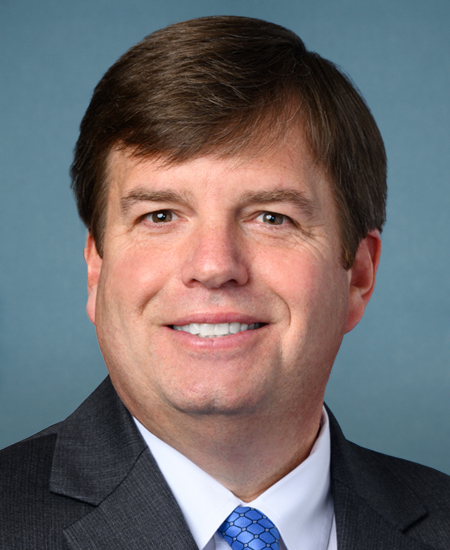
Rep. Dale W. Strong
Sponsored bills
Maddy summaryThis bill names the Department of Veterans Affairs community-based outpatient clinic in Guntersville, Alabama, as the "Colonel Ola Lee Mize Department of Veterans Affairs Clinic." It requires all federal references in laws, regulations, maps, and documents to use the new name after enactment, updating the clinic's official designation. The bill does not change clinic services, funding, or operations - it solely honors Colonel Ola Lee Mize through the clinic's name.
Maddy summaryThe Working Dog Commemorative Coin Act (HR 807) directs the U.S. Treasury to mint three types of commemorative coins honoring working dogs' service: $5 gold coins, $1 silver coins, and half-dollar coins with specific weight and composition requirements. Each coin will carry a surcharge ($35 for $5 coins, $10 for $1 coins, $5 for half-dollars) that will be paid directly to America's VetDogs to support their programs providing service dogs for veterans, the disabled, and others. The coins will be issued in 2027 with designs reflecting working dogs' roles in military, detection, therapy, and assistance work. The legislation specifies that all surcharge revenue must fund America's VetDogs' operations without creating new government programs. This is a commemorative measure focused on honoring working dogs' contributions through coin sales, with all surcharge funds going to a specific nonprofit organization.
Maddy summaryHR 10209 extends the required service period for participants in the Federal Cyber Scholarship for Service Program from 3 to 5 years. It also removes restrictions that previously limited scholarship recipients' access to full federal loans under the Higher Education Act, ensuring they can receive the full loan amount regardless of other education law limitations. This bill directly affects students who receive cybersecurity scholarships through the program, changing their post-graduation service commitment and simplifying their access to financial aid. The changes aim to strengthen the program's ability to recruit and retain cybersecurity talent for federal positions.
Maddy summaryHR 8706, the "Dismantle DEI Act of 2024," would prohibit federal agencies from maintaining diversity, equity, and inclusion (DEI) offices, programs, or training by requiring the closure of existing DEI offices within 90 days and banning federal funding for DEI-related activities. The bill defines "prohibited diversity, equity, and inclusion practices" as those that discriminate based on race, color, ethnicity, religion, biological sex, or national origin, or require training that asserts a particular group is inherently superior or inferior. It would rescind several executive orders related to racial equity and gender inclusion, and prohibit the use of federal funds for DEI-related activities across all federal agencies, contractors, and grant recipients. The bill contains limited exceptions for Equal Employment Opportunity offices and disability rights enforcement offices as historically organized and operated.
Maddy summaryThe Sunshine Protection Act of 2023 would end the practice of changing clocks twice a year for daylight saving time (DST) by making DST permanent nationwide, unless a state chooses to remain on standard time. It repeals the requirement to switch clocks back to standard time in the fall, directly affecting all U.S. states and territories that currently observe DST. The bill allows states that previously opted out of DST under the Uniform Time Act (like Arizona and Hawaii) to maintain their current time zone choices without further action. Key provisions include adjusting time zone offset language in existing law and granting states the authority to select either permanent DST or standard time based on their current arrangements. This change would eliminate seasonal time changes for most Americans, though states could still choose to stay on standard time if they prefer.
Maddy summaryHR 6174, the DHS Biodetection Improvement Act, requires the Department of Homeland Security (DHS) to assess its past use of Department of Energy national laboratories for biodetection research and develop a strategy to improve future collaboration. The strategy must identify effective detection technologies (informed by past studies like the 2021 BioWatch network review), create a plan to procure these tools for existing BioWatch systems, and establish regular reviews to address gaps. It directly affects DHS operations, BioWatch jurisdictions (which deploy these detection systems), and partnerships with national labs, universities, and state/local governments. DHS must submit the initial strategy to Congress within 180 days and provide annual updates on implementation progress.
Maddy summaryHR 10101, the Huntsville Federal Courthouse Conveyance Act, transfers ownership of the federal courthouse at 101 E. Holmes Avenue, Huntsville, Alabama, from the U.S. government to the City of Huntsville. The city must pay the fair market value (determined by an appraisal) or apply credits from a separate 4.76-acre parcel at 660 Gallatin Street toward the cost, and cover all transfer expenses. This procedural bill directly affects the City of Huntsville by enabling it to acquire the courthouse property through a formal federal transfer process.
Maddy summaryThis bill provides one-time financial assistance to U.S. farmers growing specific crops (like corn, soybeans, wheat, cotton, and rice) during the 2024 crop year if their expected costs exceed expected returns. Payments equal 60% of the difference between the expected cost of production per acre (based on USDA cost forecasts) and the expected gross return per acre (based on projected farm prices and yields). Payments are calculated using actual planted acreage plus 50% of acreage prevented from planting due to natural disasters, with annual caps of $175,000 or $350,000 depending on the farm’s primary income source. The program uses existing USDA data sources and applies standard farm payment limits.
Maddy summaryThis bill amends U.S. immigration law to treat non-citizen voting in violation of federal, state, or local election rules as a serious immigration violation. It adds "voting in violation of any Federal, State, or local constitutional provision, statute, ordinance, or regulation" to the list of "aggravated felonies" under immigration law. This change makes non-citizens who illegally vote in U.S. elections inadmissible (barred from entering the country) and deportable (subject to removal). The policy directly affects non-citizens who participate in elections contrary to applicable voting laws, without requiring prior criminal conviction for the voting violation.