

Maddy summaryThe Cyber PIVOTT Act creates the PIVOTT Program to build a cybersecurity workforce by providing full scholarships to students at community colleges and technical schools pursuing cyber or cyber-relevant associate's degree programs. The program covers tuition, fees, certification costs, and internship expenses, requiring participants to complete a two-year service obligation in a cyber role after graduation, with exceptions for military service. It mandates skills-based exercises like hackathons and labs, internship placements with government entities and critical infrastructure organizations, and maintains a database mapping training to job roles. The bill sets enrollment goals of 250 students in the first year, doubling annually until reaching 1,000 students, with a long-term target of 10,000 students annually. The program aims to address cybersecurity workforce gaps by creating direct pathways from education to government cyber positions.
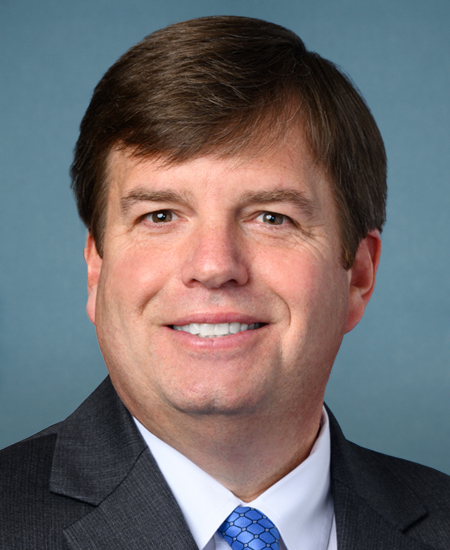
Rep. Dale W. Strong
Sponsored bills
Maddy summaryHR 9710, the Small Modular Reactor Demonstration Act of 2024, creates a federal program to accelerate the development and deployment of small modular reactors (SMRs) and micro-reactors (under 50 MW) in the U.S. The program, funded with $100 million annually from 2025-2027, supports demonstration projects through competitive awards for grid-scale SMR technology, requiring at least 50% non-federal cost share. It prioritizes projects using existing energy infrastructure, diverse designs (including cost, waste output, and site compatibility), and collaboration with utilities, national labs, and institutions of higher education for workforce training. The bill directly affects nuclear developers, electric utilities, and research institutions by reducing regulatory barriers and aiming for commercial deployment by 2034.
Maddy summaryHR 9699, the Pay Our Troops Act, ensures military personnel and key support staff continue receiving pay during government funding gaps in fiscal year 2025. It appropriates funds to cover pay and allowances for active-duty troops, Department of Defense civilians, and qualifying contractors supporting military operations, if regular appropriations aren't enacted. The funding remains in effect until the earliest of: a new appropriations law, a funding resolution without such funding, or January 1, 2026. This bill does not change pay rates or create new policies - it guarantees existing pay continuity during budget transitions.
Maddy summaryThis bill (HJRES 163) is a congressional disapproval resolution targeting an Environmental Protection Agency (EPA) rule finalized on May 9, 2024. The EPA rule established new emissions standards for greenhouse gases from fossil fuel power plants (both new and existing) and repealed a previous rule called the Affordable Clean Energy Rule. The resolution would block this EPA rule from taking effect by invoking the Congressional Review Act (Chapter 8 of Title 5, U.S. Code). If passed, it would prevent the EPA rule from being enforced, directly affecting fossil fuel power plant operators and the EPA’s regulatory authority over emissions.
Maddy summaryHRES 1456 is a symbolic resolution designating September 17, 2024, as "Constitution Day" to honor the signing of the U.S. Constitution on September 17, 1787. It calls for the people of the United States to observe the day with ceremonies and activities, recognizing the Constitution's historical significance and foundational role in American governance. This resolution does not create new laws or affect any individuals or policies; it is purely a non-binding expression of support by the House of Representatives.
Maddy summaryThis bill adds the Secretary of Agriculture to the Committee on Foreign Investment in the U.S. (CFIUS) for transactions involving agricultural land, biotechnology, or agriculture-related infrastructure (like transportation, storage, or processing). It requires the Secretary to notify CFIUS about transactions where a foreign person from China, North Korea, Russia, or Iran acquires U.S. agricultural assets, as defined by existing law. CFIUS then decides whether to review such transactions or take other action. The provisions apply only to transactions involving those four countries and sunset once they are removed from the official list of "foreign adversaries" in federal regulations.
Maddy summaryThis bill blocks U.S. Department of Homeland Security (DHS) funding to colleges and universities that maintain relationships with Confucius Institutes or "Chinese entities of concern" (defined as institutions linked to China's military or defense sectors). It requires affected schools to terminate such relationships within 12 months of the bill's enactment to regain eligibility for DHS funds. The law directly impacts higher education institutions receiving DHS funding, not all schools or federal programs. Key provisions mandate DHS to deny funding to institutions with ongoing ties to these entities, with eligibility restored only after relationship termination.
Maddy summaryHR 7130, the FAIR Labels Act of 2024, requires clear labeling for plant-based and lab-grown products marketed as meat or poultry. It mandates that products not containing actual meat or poultry - such as plant-based "burgers" or "chicken" alternatives - must prominently display "imitation" or "cell-cultured" on labels, alongside disclaimers stating they do not contain meat or poultry. This applies to all such products sold in interstate commerce, with no exceptions allowed. The bill also specifically requires "cell-cultured" or "lab-grown" labeling for meat grown from animal cells outside a live animal, while clarifying that existing meat inspection rules still apply to conventional meat products.
Maddy summaryHR 9376, "Lulu’s Law," requires the Federal Communications Commission (FCC) to update wireless emergency alert regulations within 60 days of enactment. It specifically adds "shark attack" as an event eligible for emergency Alert Messages under FCC rules. This change directly affects how emergency alerts are categorized and transmitted to the public via wireless devices. The bill modifies existing FCC regulations (Title 47, Part 10) to include shark attacks as a triggering event for emergency alerts, without altering other alert types or requirements.
Maddy summaryThis is a commemorative resolution (HRES 1369) honoring Corey Comperatore, a volunteer firefighter, U.S. Army Reserves veteran, and community leader from Sarver, Pennsylvania, who died on July 13, 2024. The resolution formally mourns his passing and celebrates his life, noting he left behind his wife, Helen, and two daughters, Allyson and Kaylee. It recognizes his service to the Buffalo Township Volunteer Fire Department, his military service, and his role as a devoted member of Cabot Methodist Church. As a ceremonial resolution, it has no policy impact or direct effect on legislation or constituents beyond this formal acknowledgment.