

Maddy summaryHR 2928, the Responsible Borrower Protection Act of 2023, blocks the Federal Housing Finance Agency (FHFA) and mortgage enterprises (Fannie Mae and Freddie Mac) from implementing specific changes to mortgage credit fees announced in January 2023. The bill directly affects mortgage borrowers and lenders by reversing a pricing framework update that would have altered fees for single-family mortgages. It prohibits the FHFA from enforcing the January 2023 pricing changes detailed in FHFA's announcement and related lender letters. The bill clarifies that enterprises may still use risk-based pricing for mortgage fees, but the specific fee adjustments from the 2023 framework are canceled. This is a direct policy change to mortgage fee structures, not a broader reform.
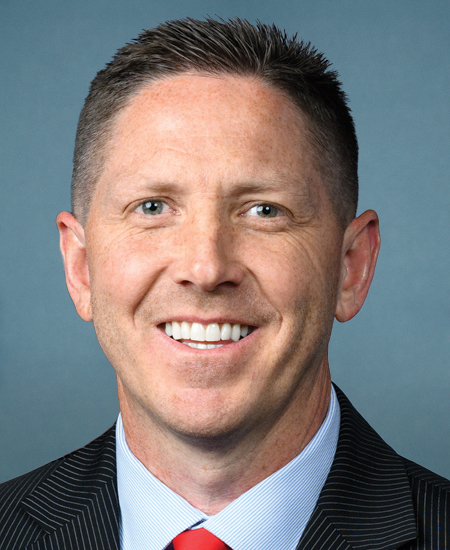
Rep. Josh Brecheen
Sponsored bills
Maddy summaryHR 734, the Protection of Women and Girls in Sports Act of 2023, amends Title IX to prohibit federally funded schools and athletic programs from allowing individuals assigned male at birth to participate in women's or girls' sports teams. The bill defines "sex" for this purpose as "reproductive biology and genetics at birth," making it a violation of federal law to permit such participation in designated women's or girls' programs. It allows males to train with women's teams only if no female is deprived of a roster spot, competition opportunity, scholarship, or other benefit tied to the team. This law directly affects public and private schools receiving federal financial assistance that operate athletic programs.
Eliminating the RFS and Its Destructive Outcomes Act This bill repeals the Environmental Protection Agency's Renewable Fuel Standard program, which requires transportation fuel to contain a minimum volume of renewable fuel.
Maddy summaryHR 2779 would repeal the federal corporate average fuel economy (CAFE) standards, which require automakers to meet specific fuel efficiency targets for new vehicles. This bill directly affects automobile manufacturers by removing their legal obligation to comply with these fuel efficiency regulations. The key provision eliminates Chapter 329 of Title 49, U.S. Code - the section that established the CAFE program - without creating new requirements. If enacted, it would end the current federal mandate for vehicle fuel economy, shifting regulatory oversight away from the government.
Maddy summaryHR 2712, the Work Not Woke Act, prohibits federal agencies, contractors, and grant recipients from using workplace training that promotes specific "divisive concepts," such as claiming inherent superiority of a race or sex, blaming individuals for historical actions, or suggesting meritocracy is racist. It directly affects federal contractors (requiring contract clauses banning such training), federal agencies (mandating review of diversity training), and grant recipients (requiring certification against using federal funds for prohibited training). Key mechanisms include a Department of Labor hotline for complaints, mandatory contract provisions for contractors, and a ban on using federal funds for three executive orders focused on racial equity. The law permits diversity efforts that do not promote the banned concepts and requires agencies to certify compliance with its provisions.
U.S.A. Beef Act This bill modifies label requirements for meat food products of cattle. Specifically, the bill prohibits the label of cattle meat or a meat food product of cattle from bearing the phrase Product of U.S.A. unless such meat or meat food product is exclusively derived from one or more cattle born, raised, and slaughtered in the United States. The requirement does not apply to cattle meat or a meat food product of cattle that is intended and offered for export to a foreign country.
Maddy summaryHJRES 27 is a congressional resolution seeking to block a federal rule that redefined which waterways fall under the Clean Water Act's protections. It targets a rule submitted by the Army Corps of Engineers, Department of Defense, and Environmental Protection Agency (EPA) on January 18, 2023, which aimed to revise the "Waters of the United States" definition. The resolution would formally disapprove this rule under a specific federal procedure (Chapter 8 of Title 5), preventing it from taking effect. This would directly affect how federal agencies regulate pollution and development near water bodies, including wetlands and smaller streams.
Maddy summaryHJRES 53 seeks to block an Environmental Protection Agency (EPA) rule that would establish new emissions standards for heavy-duty vehicles like trucks and buses. If passed, the resolution would prevent the EPA's rule from taking effect by invoking a congressional disapproval process under Title 5 of U.S. law. The rule, published in the Federal Register on January 24, 2023, aimed to reduce air pollution from new heavy-duty engine standards. This disapproval would halt the implementation of those specific vehicle emissions requirements.
Maddy summaryHR 2581, the ALVIN Act, prohibits all federal funding for the Manhattan District Attorney’s Office. It cancels unspent federal funds allocated to the office and requires the office to repay all federal money spent since January 1, 2022. The bill directly affects the Manhattan DA’s Office by cutting its federal financial support and mandating reimbursement for past expenses. It does not change any laws or policies but alters the funding relationship with the federal government.
Maddy summaryThis bill terminates the national emergency declared by the President on March 13, 2020, under the National Emergencies Act. It ends the executive branch's authority to use emergency powers related to that specific declaration. The resolution passed both chambers in early 2023 and took effect April 10, 2023, without creating new policies or affecting specific groups.